
Learning from the masters: TESDA opens new avenues for indigenous skills training
From weaving to brass casting, the Indigenous Skills Transfer Program opens opportunities for a new generation to learn directly from National Living Treasures and other cultural masters, helping keep these traditions alive in the communities that have sustained them.

At the Juana Creatives Hub at the TESDA complex in Taguig City, visitors to the GAMABA product exhibit and skills demonstration were able to meet some of the country’s Manlilikha ng Bayan, or National Living Treasures, and see how they worked, as well as the crafts they and their communities made.
Opening the exhibit, Technical Education and Skills Development Authority (TESDA) deputy director general for Partnerships and Linkages Nelly Nita N. Dillera invited visitors to slow down and pay attention to what went into each piece.
“I hope we will take the time to watch, to listen, to ask questions, and to appreciate the knowledge, patience, discipline, and meaning behind every piece,” she said.
That invitation to learn directly from the masters is at the heart of TESDA’s Indigenous Skills Transfer Program. TESDA, the Philippine government agency tasked with managing and supervising technical-vocational education and training (TVET), launched the program’s implementing guidelines with a three-day event, “GAMABA: Honoring the Masters, Sustaining the Legacy,” including a two-day exhibit, a declaration signing among the concerned agencies, and a fashion show, in time for the celebration of National Indigenous Peoples Month.
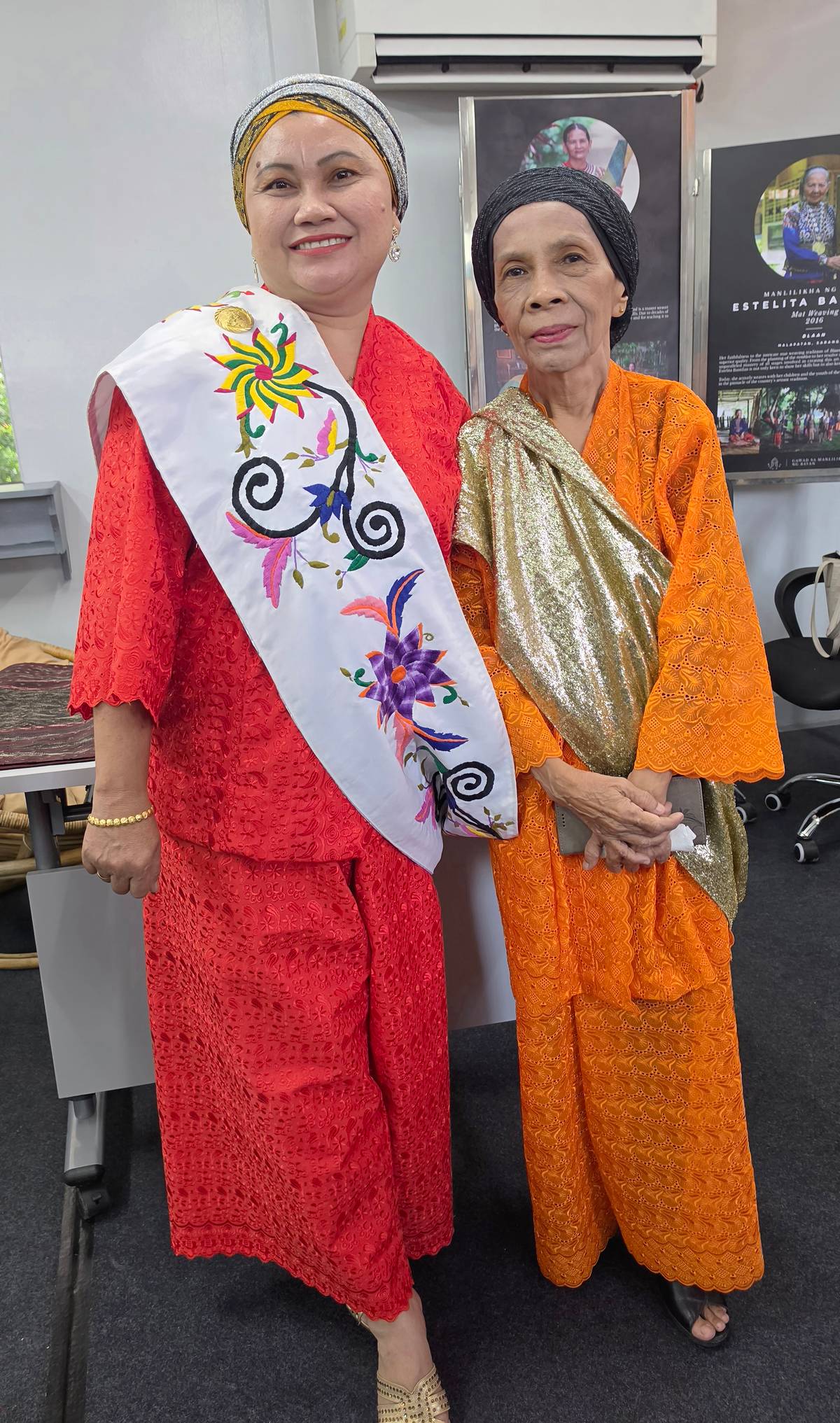
SAMA traditional dancer and Manlilikha ng Bayan Sakinur-Ain Delasas with veteran igal dancer Nursida Diamson Jaluddin at the exhibit.
The program taking shape
Dillera traced the initiative to 2025, when TESDA brought together and recognized cultural masters and bearers honored with the Gawad sa Manlilikha ng Bayan (GAMABA), the country’s highest recognition for indigenous traditional artists, artisans and practitioners. That gathering led the agency to consider what it could do to help the masters pass on their skills.
“The next question was: What do we do after recognition?” Dillera said. “How do we document the process, not just the finished product? How do we create opportunities for learners to learn directly from the masters?”
TESDA also considered how its training and scholarship programs could make those encounters possible. Behind the discussions was a concern that some practices could disappear as fewer people learned them.
“We want to move from recognition to transmission, and from transmission to continuity,” she said.
Dillera recalled how, in her earlier work in trade and industry and in tourism, she saw the potential of traditional skills to help people earn a living. She traced those skills to the everyday lives of communities, from the clothes people wore and the baskets they used to the performances that brought them together and the rituals through which they expressed their beliefs.
“These were skills learned out of necessity, shaped by culture, and perfected through generations,” she said. Passing them on, she added, could help communities sustain their traditions while creating opportunities for livelihood and enterprise.

BOLTS of handwoven cloth from Pinili, Ilocos Norte, in a range of colors and patterns.
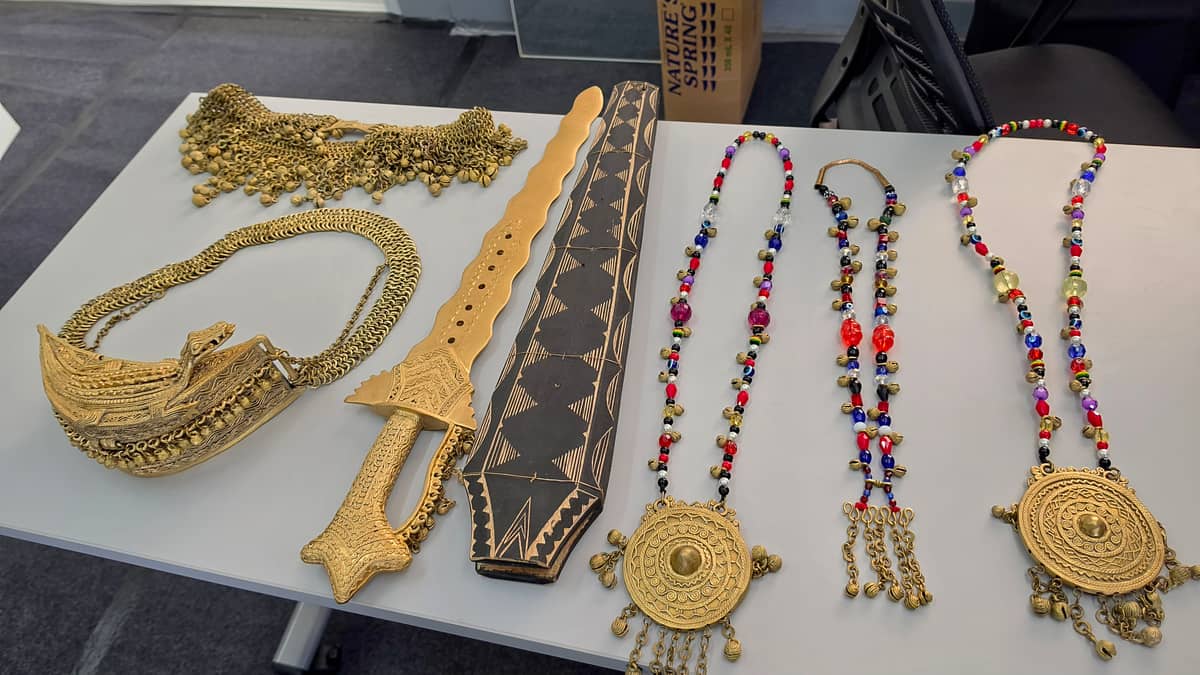
T’BOLI brasswork by Manlilikha ng Bayan Bundos Fara.
Learning directly from the masters
The guidelines give National Living Treasures and other cultural masters and bearers a formal role in skills development. Learners will have opportunities to observe the masters at work, practice techniques themselves, and receive guidance as they learn. The guidelines also support documenting how traditional skills are taught and developing scholarships, with respect for each community’s cultural protocols and ownership of its knowledge.
“Many of the skills that make our country unique have been developed and perfected in our communities, passed on by our elders, and nurtured through generations of practice,” Dillera said.
She urged those involved in the program to recognize the masters as teachers and to give them and their communities a say in how their knowledge is documented and shared. “Let us listen to their stories. Let us value their time and their knowledge. And let us ensure that our efforts to document and teach their skills are undertaken in partnership with them and their communities.”
At the launch, TESDA and National Commission on Indigenous Peoples (NCIP) signed a joint declaration on 16 October at the Hilton Manila Hotel in Pasay City, strengthening collaboration in the preservation and transmission of indigenous skills. The National Commission for Culture and the Arts (NCCA), which administers and manages the GAMABA, expressed its support. The signing was led by TESDA director general and secretary Jose Francisco “Kiko” B. Benitez, NCIP executive director Mervyn Espadero, Dillera, and NCCA chairman and executive director Eric B. Zerrudo.
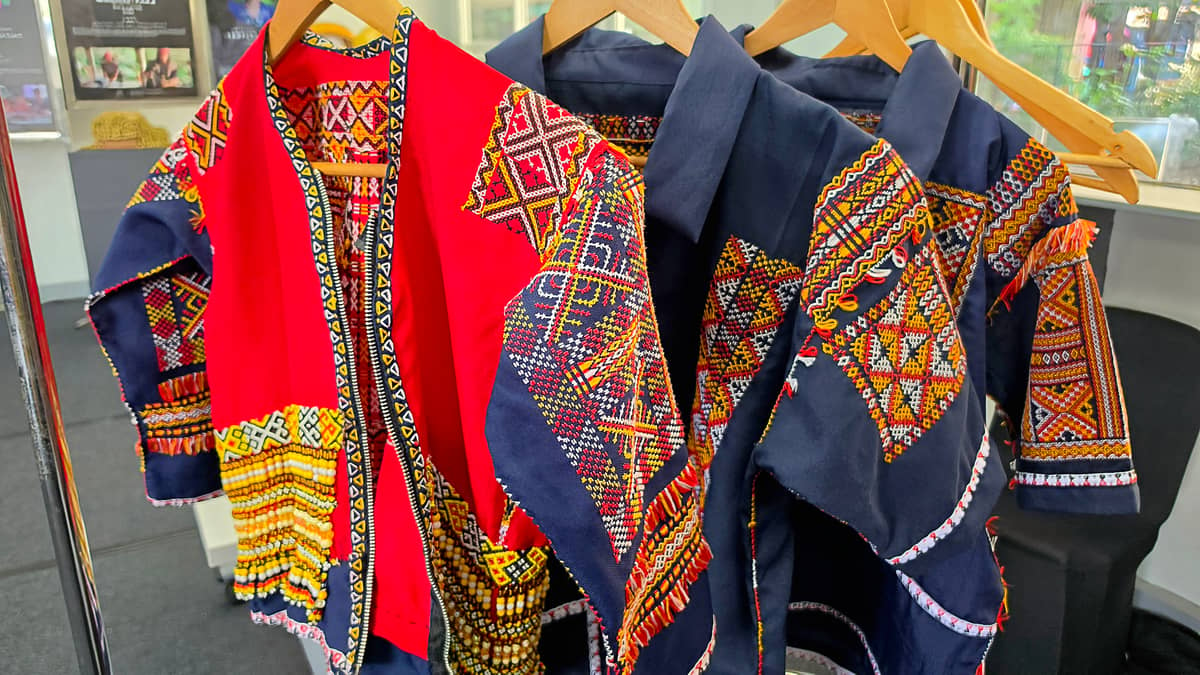
MANDAYA embroidery adorns the garments.
Weaving a showcase
The 14 and 15 October exhibit offered a glimpse of the range of practices the program seeks to sustain such as textile weaving, mat making, embroidery, beadwork, brassware, and traditional performing arts. Among the awardees who joined Dillera at the opening were Sama traditional dancer Sakinur-Ain Delasas, Ilocano dallot practitioner Adelita Bagcal, T’boli brass caster Bundos Fara, T’boli chanter Rosie Sula, Mandaya textile weaver Samporonia Madanlo, Higaonon Manobo mat weaver Marife Ganahon, Blaan mat weaver Estelita Bantilan, Ilocano gourd hat maker Teofilo Garcia, and T’boli textile weaver Barbara Ofong.
The launch concluded with a product and fashion showcase at Hilton Manila, where traditional craftsmanship was presented in contemporary fashion and design. It featured designs by Maverick Francisco Oyao, Moda Mindanaw and MANA Mindanao, using traditional handwoven textiles such as the T’boli t’nalak, Ilocano inabel and Yakan tennun.
At the exhibit opening in Taguig, Dillera had spoken of what it would take for those traditions to continue beyond the three-day event.
“Heritage is alive when people continue to practice it,” she said. “It becomes stronger when it is shared. And it has a future when the next generation is given the opportunity to learn it.”