
Thousand taps for a century: National Museum marks Old Legislative Building centennial with commemorative Beep card
The limited-edition transit card is a pocket-sized tribute to a landmark that has housed lawmakers, survived war and found renewed purpose as a home for Philippine art.
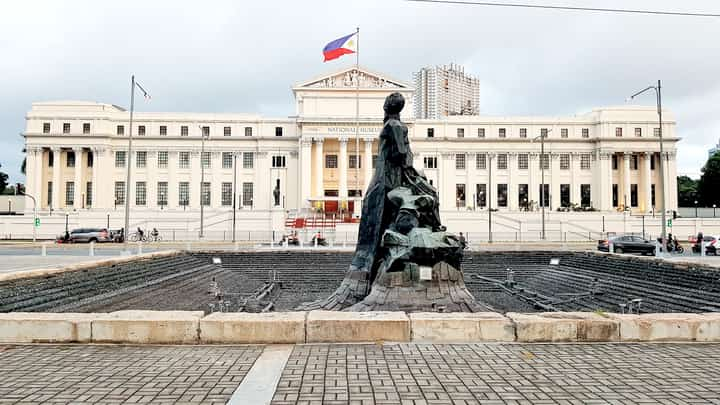
A century of history can now slip into a commuter’s pocket. To mark the centennial of the Old Legislative Building, the National Museum of Fine Arts (NMFA) and the National Museum Employees Multi-Purpose Cooperative (NMEMPC) released a limited-edition Beep Card on 11 November, featuring the Manila landmark that has housed lawmakers, witnessed presidential inaugurations, survived war, and become a home for Philippine art.
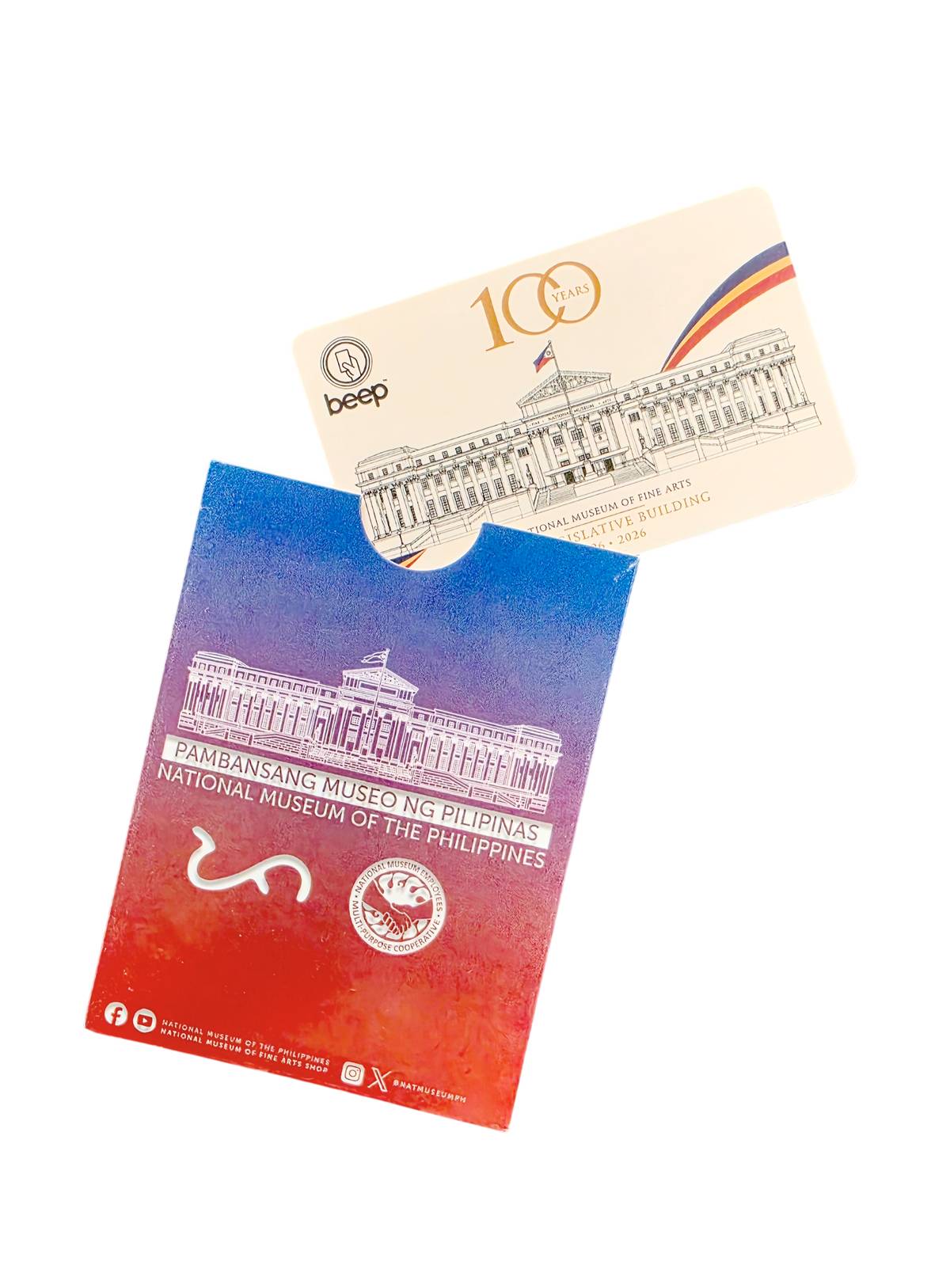
THE commemorative Beep card and its sleeve carry illustrations of the Old Legislative Building, marking its centennial in 2026.
Standing along Padre Burgos Avenue within the Rizal Park Complex in Ermita, the building was inaugurated on 16 July 1926. Its imposing façade, familiar to generations of commuters and museumgoers, takes center stage in the commemorative card. Designed by Jay R. Errea, a black-and-white architectural line drawing captures the building’s façade on the front side and the pediment on the back, accented by a gold “100 Years” emblem and a ribbon with blue, yellow and red stripes that connects the front to the back side. The card comes in a blue-and-red sleeve featuring a white line drawing of the NMFA.
Priced at P400 and limited to 1,000 units, the card is available exclusively at the National Museum of Fine Arts Shop in Manila, where a miniature model of the building now serves as a centerpiece. Aside from being a collector’s item, it functions as a regular stored-value card for the LRT-1, LRT-2, MRT-3 and participating bus and modern jeepney services, as well as purchases at partner retail outlets.
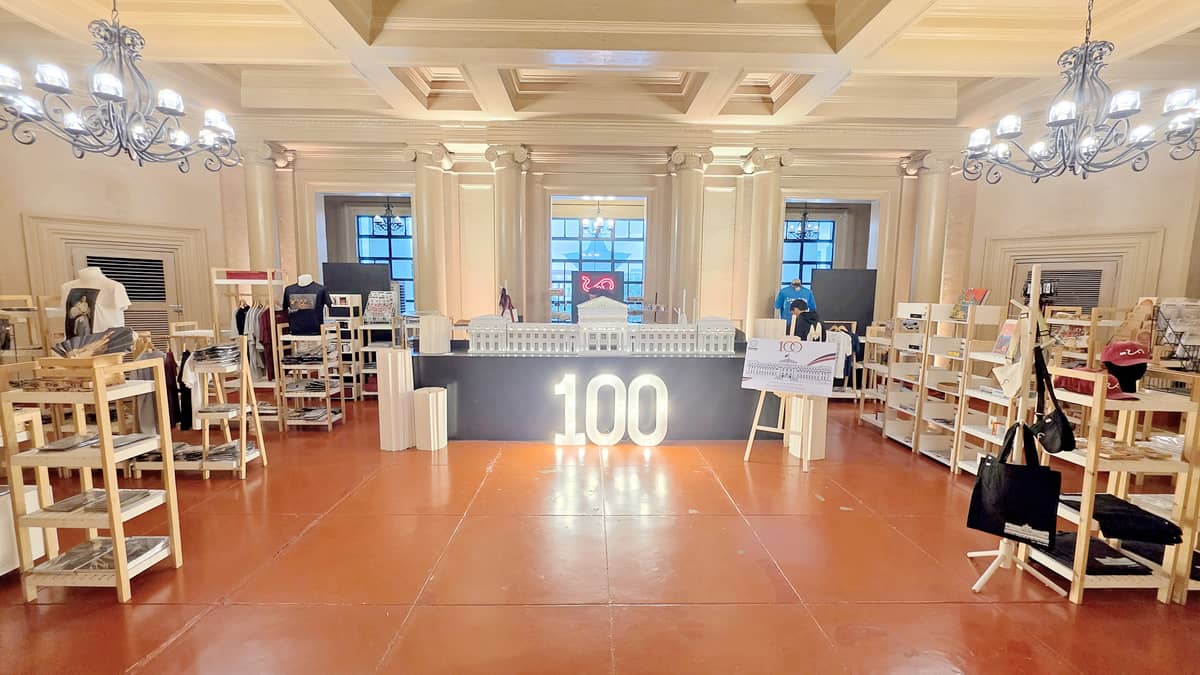
A SCALE model of the Old Legislative Building anchors the centennial display at the National Museum of Fine Arts Shop.
The small card carries the image of a building whose own journey reflects the country’s changing political and cultural life. The structure was originally intended as a public library. American architect Ralph Harrington Doane, then consulting architect of the Bureau of Public Works, prepared its design with the assistance of Antonio Toledo. Construction began in 1918 but was repeatedly interrupted by a lack of funds. When the government decided to use it for the legislature, Juan Arellano was tasked with revising the plans.
Part of Daniel Burnham’s plan for Manila, the building cost P4 million by the time of its inauguration, which coincided with the opening of the second regular session of the Seventh Philippine Legislature. The Senate and House of Representatives occupied the upper floors, while the National Library used the ground floor. Two interior courtyards flanked the central section containing the legislative chambers, with offices arranged around them.
Its neoclassical design gave the legislature a commanding presence. A broad approach of stairs and ramps leads to the main entrance, marked by a portico of four Corinthian columns. Above it, a triangular pediment bears allegorical figures that the encyclopedia identifies with Luzon, Visayas and Mindanao, as well as law, learning, commerce and agriculture. The building’s classical forms expressed the dignity and authority associated with its public purpose.
Within and before its walls, important moments in Philippine history happened. The 1934 Constitutional Convention met here, and Manuel L. Quezon took his oath as President of the Commonwealth on its front steps in 1935. A decade later, the building suffered extensive damage during the Battle of Manila. Rebuilt after the war, it retained its overall form, although some architectural details were simplified, including the replacement of rounded engaged columns with flat pilasters.
Its uses and names changed with successive governments. Known as the Congress of the Philippines in the postwar Republic, it became the Executive House during Martial Law and served as the office of the prime minister. It also accommodated other government offices before being turned over entirely to the National Museum of the Philippines (NMP).
Restoration and retrofitting beginning in 2003 helped adapt the former legislative building, together with the nearby former Finance and Agriculture buildings, for the NMP Complex. The old Senate Session Hall regained its original soaring proportions and restored ornamentation, including its moldings, statues, and balustrades. Today, the building’s galleries bring visitors face to face with the nation’s artistic heritage, adding another chapter to a century of public service.
The NMFA Building centennial card joins a series produced through the partnership between the NMP and AF Payments Inc., the operator of Beep.
The inaugural collection, released in October 2023 for Museums and Galleries Month, comprised four color-coded designs pairing museum branches with iconic objects or subjects associated with their collections. The hematite-red card featured the NMFA and National Artist Guillermo Tolentino’s sculpture Lualhati. The brown card showcased the National Museum of Anthropology with the Manunggul Jar, the prehistoric secondary burial jar recovered from the Tabon Cave Complex in Palawan. The green card highlighted the National Museum of Natural History and the preserved remains of Lolong, the giant saltwater crocodile. The blue card featured the National Museum in Cebu and the Cebu flowerpecker, a critically endangered bird endemic to the island.
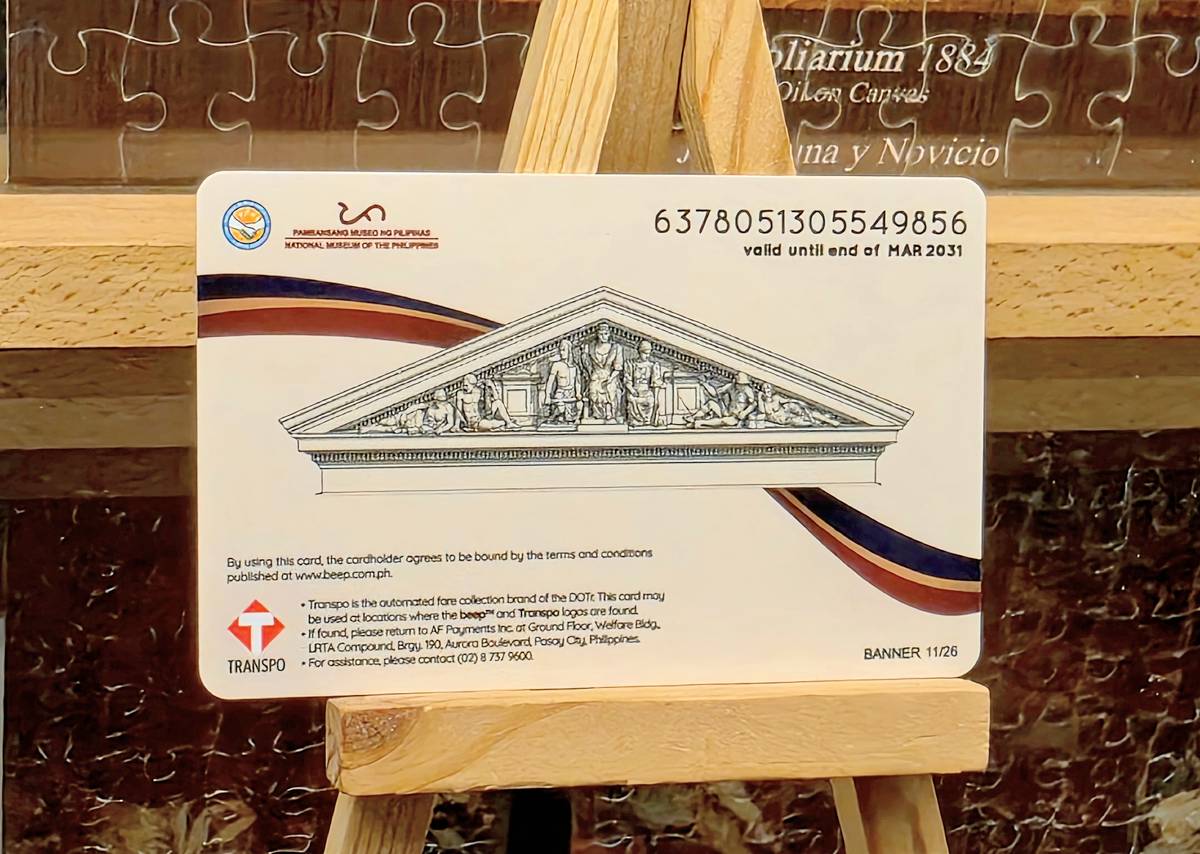
THE reverse of the commemorative Beep card features a detailed illustration of the building’s sculpted pediment.
A card featuring Juan Luna’s Spoliarium followed in May 2024, commemorating the 140th anniversary of the painting’s gold-medal win at the Exposición Nacional de Bellas Artes in Madrid. It proved to be very popular, selling out quickly and prompting additional batches later that year for the museum’s founding anniversary. Another Luna work, Una Bulaqueña, appeared on a limited-edition card launched on 25 August 2025, National Heroes Day.
With the NMFA Building centennial edition, architecture takes its turn in this pocket-sized gallery. The card is a useful travel tool as well as an invitation to step inside the building it celebrates. With every tap, it reminds us of a landmark that has endured the upheavals of history and found renewed purpose in caring for the nation’s art.