
SEA, partners expand trade, technology, energy links
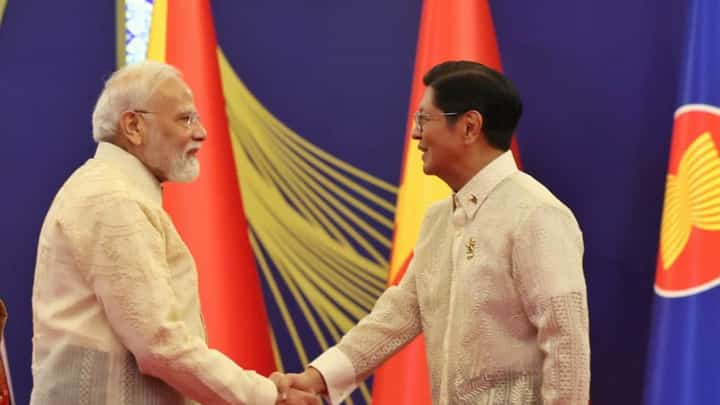
Indian Prime Minister Narendra Modi on Tuesday called for stronger economic, security, and people-to-people cooperation with Southeast Asia, citing India’s Act East policy as a key driver of closer ties during the 23rd ASEAN-India Summit in Manila.
Modi said India and ASEAN, which together account for about a quarter of the world’s population, could help promote regional peace and stability amid global uncertainties.
“Today, what the world needs most is peace, stability and predictability,” he said.
Since 2014, India has undertaken more than 100 initiatives to strengthen people-to-people relations, launched over 250 quick-impact projects and provided more than 10,000 skills development scholarships.
Modi also cited the alignment between ASEAN Community Vision 2045 and India’s Viksit Bharat initiative, which aims to make India a developed country by 2047.
The summit was among a series of meetings in Manila where ASEAN and its major dialogue partners pursued closer cooperation in trade, energy, technology and regional security.
Korea FTA
At the 27th ASEAN-Republic of Korea Summit on Monday, South Korean President Lee Jae Myung confirmed that negotiations had begun to upgrade the ASEAN-Korea Free Trade Area, a nearly two decade-old agreement intended to strengthen trade ties and respond to changes in the global economy.
The proposed upgrade would improve access to the South Korean market for Philippine agricultural products, processed food, manufactured goods, electronics and garments.
Philippine exports to South Korea totaled $3.3 billion in 2025, according to the United Nations Comtrade database.
During the 6th ASEAN-Australia Summit, President Ferdinand Marcos Jr. highlighted the Philippines’ potential contribution to the global clean energy transition, saying cooperation on critical minerals and energy could attract investments and create jobs.
ASEAN adopted a declaration on developing an ASEAN Critical Minerals Strategy to strengthen regional capabilities across the minerals value chain. The partnership also covers energy security, artificial intelligence governance, digital transformation, and resilient supply chains.
Two-way trade between ASEAN and Australia reached A$197.5 billion last year, Marcos said, citing the upgraded ASEAN-Australia-New Zealand Free Trade Area as another mechanism to expand market access.
“Through the Aus4ASEAN Futures Initiative, Australia supports our digital transformation, our energy transition and the ASEAN Power Grid,” Marcos said.
AI safety backed
Japanese Prime Minister Sanae Takaichi, meanwhile, pledged stronger cooperation with ASEAN on maritime security, economic resilience, artificial intelligence, and regional connectivity during the ASEAN-Japan Summit.
Takaichi announced the Japan-ASEAN AI Safety and Security Partnership and said Japan would work with ASEAN to strengthen supply chains, particularly for critical minerals, and address vulnerabilities caused by export restrictions.
Japan also intends to review the ASEAN-Japan Comprehensive Economic Partnership Agreement and expand cooperation on maritime safety, disaster preparedness, cybersecurity and transnational crime.
Marcos welcomed the initiatives, reaffirming ASEAN’s commitment to regional unity and centrality and highlighting the 50th anniversary of the Fukuda Doctrine in 2027 as an opportunity to strengthen ties with Japan.
The discussions formed part of the Philippines-hosted 49th ASEAN Summit and Related Summits under the theme “Navigating Our Future, Together.”