
Romualdez gone, but pork lives on
Romualdez’s fall would have left behind a convenient fiction: that the scandal was of one man’s making, and that his removal means the problem has been solved. The insertions say otherwise.
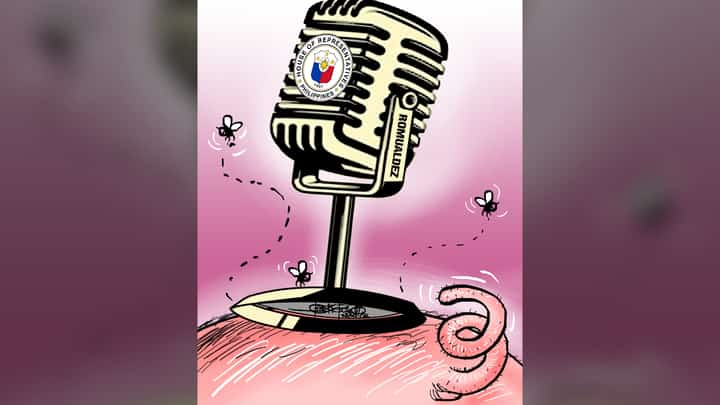
Former House Speaker Martin Romualdez is in jail, made the poster boy of the flood control scandal and of the budget insertions that helped earn the 2025 national budget its reputation as “the most corrupt in Philippine history.”
If Romualdez was the big fish, why does the same stench linger in the 2027 budget?
The People’s Budget Coalition’s revelation that about P1 trillion in the budget proposal constitutes “pork” — including P695 billion in politicized infrastructure and P210 billion in patronage-driven aid — suggests that the machinery that produced the scandal has survived its most prominent casualty.
Romualdez may be gone from the Speaker’s office, but the insertions remain. The question is no longer simply who engineered the old system. It is who is keeping it alive: someone whose rank, influence or family ties may exceed those of a House Speaker, an unseen hand orchestrating all of this.
Nothing illustrates the problem better than the reported P4.37 billion in projects allocated to the Ilocos Norte district of Rep. Sandro Marcos, the largest allocation among the 405 Department of Public Works and Highways (DPWH) infrastructure projects scrutinized by Kenneth Abante’s People’s Budget Coalition.
Critics have called it a “windfall,” even “manna from heaven.” Sandro Marcos is the President’s son, House majority leader and chair of the powerful Committee on Rules. The allocation demands an explanation, not just because his name is Marcos, but because public funds should withstand scrutiny regardless of whose district receives them.
The scandal was supposed to have exposed the dangers of unchecked insertions. Instead, the 2027 budget proposal suggests that the practice remains entrenched. If Romualdez’s arrest was meant to demonstrate accountability, the persistence of the same questionable practices raises an uncomfortable question: Was the system being dismantled, or was one man simply being made to answer for it?
Ombudsman Jesus Crispin Remulla has vowed to form a “budget watch” group to investigate those who “gamed” the budget. That is welcome, but the public has heard enough promises. Remulla must move beyond studying the Supreme Court’s recent decision and file cases where the evidence warrants it.
President Ferdinand Marcos Jr. also faces a test. The separation of powers prevents him from dictating legislative amendments, but his veto power gives him a constitutional means of rejecting questionable appropriations.
The proposed P190 billion in undocumented infrastructure projects, involving nearly 7,000 insertions without published attachments, should not become law without adequate scrutiny.
The President cannot claim ignorance while his administration defends a budget process whose opaque allocations reproduce the conditions that enabled the flood control scandal.
Malacañang has offered little reassurance. Palace press officer Claire Castro said insertions are “not generally bad” and become bad only when the money is “inserted into a politician’s pocket.”
That is a remarkably low bar for a government confronting a scandal over public works funds.
The Supreme Court has struck down a P449.5 billion increase in unprogrammed appropriations in the 2024 budget and a P17.99 billion increase in the DPWH Special Road Fund in the 2025 budget. Yet the DPWH is seeking P643.95 billion for 2027.
Waiting to see whose pocket the money falls in is how scandals are born. The point of transparency and oversight is to prevent abuse, not merely to discover it after the money has disappeared.
Romualdez’s arrest cannot be the end of the story. If the system that enabled questionable insertions remains intact, removing one figure changes little. The public deserves to know who really controls the process, who benefits from it, and who is prepared to ram it all down the collective throats of Filipinos.
Romualdez’s fall would have left behind a convenient fiction: that the scandal was of one man’s making, and that his removal means the problem has been solved. The insertions say otherwise.