
Bank profits rise 5.2 percent despite mounting bad loans
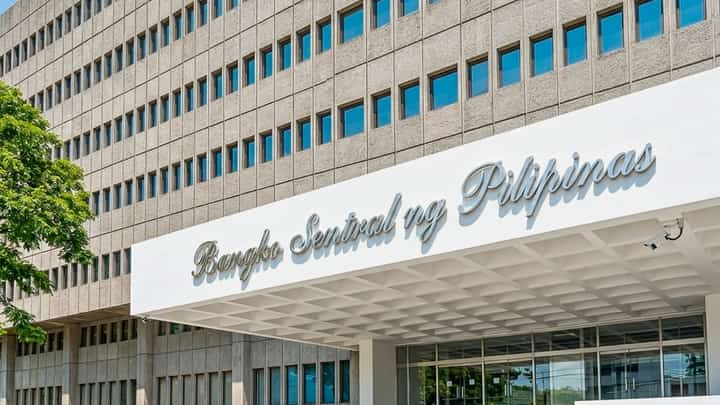
Philippine banks posted a 5.2 percent increase in combined net profit to P208.5 billion in the first half of 2026, as loan growth and higher interest income supported earnings despite mounting problem loans in selected consumer lending portfolios.
In its Report on the Philippine Financial System for the First Semester of 2026, the Bangko Sentral ng Pilipinas (BSP) said the banking system remained sound and resilient, supported by continued lending, stable domestic funding, profitable operations, ample liquidity and adequate capital.
“Lending remained the main driver of expansion, supporting households and productive sectors of the economy,” the BSP said in the report, adding that credit growth continued to be funded largely by domestic deposits.
Banking system assets reached P31.1 trillion as of end-June, up 10.3 percent year-on-year. Loans grew faster than deposits, while time deposits accounted for much of the increase in funding as customers shifted toward higher-yielding products.
The BSP said credit expansion would need to be matched by stable funding, adequate capital and borrowers’ capacity to repay.
Total interest income rose 8.8 percent to P871.6 billion, driven by continued loan growth, particularly in higher-yielding consumer segments. Income from credit card receivables increased 23.5 percent to P96.1 billion, while income from other consumer loans surged 67 percent to P21.8 billion. Interest income from securities measured at fair value through other comprehensive income also climbed 25.8 percent to P87.2 billion.
Securities investments also supported bank earnings and liquidity management. Holdings of securities measured at fair value through other comprehensive income grew 22.8 percent, while government-issued securities accounted for 77.9 percent, or P6.8 trillion, of banks’ total portfolio investments.
Banks continued to expand lending to households and businesses, including the electricity, real estate, wholesale and retail trade, transportation and manufacturing sectors.
Consumer loans also grew, although the BSP said expansion had moderated amid greater selectivity across products and borrower groups. Credit cards remained the main growth driver, supported by higher utilization among existing cardholders and continued customer activity, while salary-based and digitally originated consumer loans also expanded.
Despite the continued expansion in lending, the banking system’s nonperforming loan (NPL) ratio remained at 3.3 percent, even as the amount of bad loans rose 10.3 percent to P585 billion as of end-June.
The BSP said the increase was concentrated in selected portfolios rather than across the overall loan book, noting that some unsecured consumer lending segments were showing pressure as earlier high-growth lending vintages matured.
Consumer NPLs, including nonperforming residential real estate loans, increased 19.6 percent, or P37.3 billion, to P227.4 billion. Credit card receivables were the largest contributor to the increase in consumer bad loans, while residential real estate loans accounted for the biggest share of consumer NPLs.
NPL ratios stood at 5.3 percent for credit card receivables and 6.2 percent for residential real estate loans.
The central bank said banks had responded through more selective underwriting, closer portfolio monitoring and stronger collection and recovery efforts.
“While these pressures remain contained,” the report said, developments in the affected portfolios underscored the importance of prudent underwriting, proactive provisioning, effective collection practices and timely resolution of problem accounts.
Banks increased their allowances for credit losses by 7 percent to P541.2 billion. However, the overall NPL coverage ratio eased to 92.5 percent from 95.4 percent in 2025.
The BSP said the banking system remained well-capitalized and liquid, with prudential ratios comfortably above regulatory requirements. Total capital rose 5.3 percent to P3.7 trillion, supported by a 13.5 percent increase in retained earnings. Stable and diversified funding, together with ample high-quality liquid assets, continued to support banks’ liquidity, the central bank added.
BSP Governor Eli M. Remolona Jr. said the banking system remained capable of providing financing to households and businesses.
“The Philippine banking system remains in a strong position to provide funding to Filipino households and firms,” Remolona said.
“As financial services become more digital and accessible, the BSP will continue to promote both financial stability and financial inclusion. We will continue to support innovation while ensuring that strong governance, sound risk management, and operational resilience remain in place,” Remolona added.