
Marcos, Razon mark Malampaya gas breakthrough
The President credited Filipino engineers, professionals and workers for their role in the project, saying it demonstrated the country’s technical capabilities.
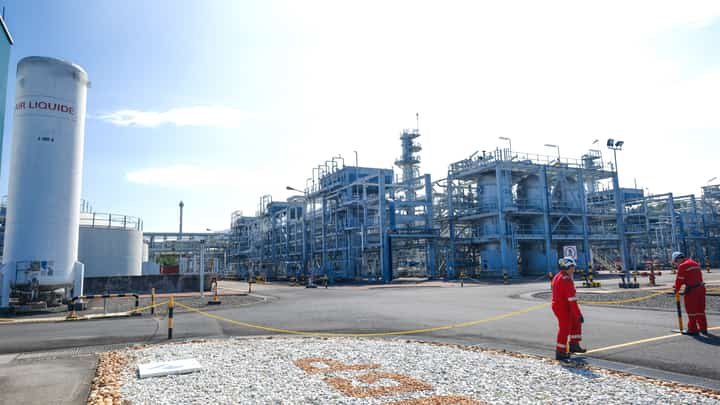
President Ferdinand Marcos Jr. on Thursday witnessed the first flow of natural gas from the Malampaya Phase 4 (MP4) project, a development expected to strengthen the domestic energy supply, reduce dependence on imported fuel, and make electricity rates more competitive.
Marcos, accompanied by Prime Infra chief Enrique Razon, inspected the project at the Malampaya Onshore Gas Plant in Barangay Tabangao Ambulong, Batangas City, where gas from the newly developed Malampaya East-1 and Camago-3 wells off Palawan entered the existing production system.
The President said the additional indigenous gas would help provide more reliable electricity to the Luzon grid and cushion consumers from volatile international energy prices.
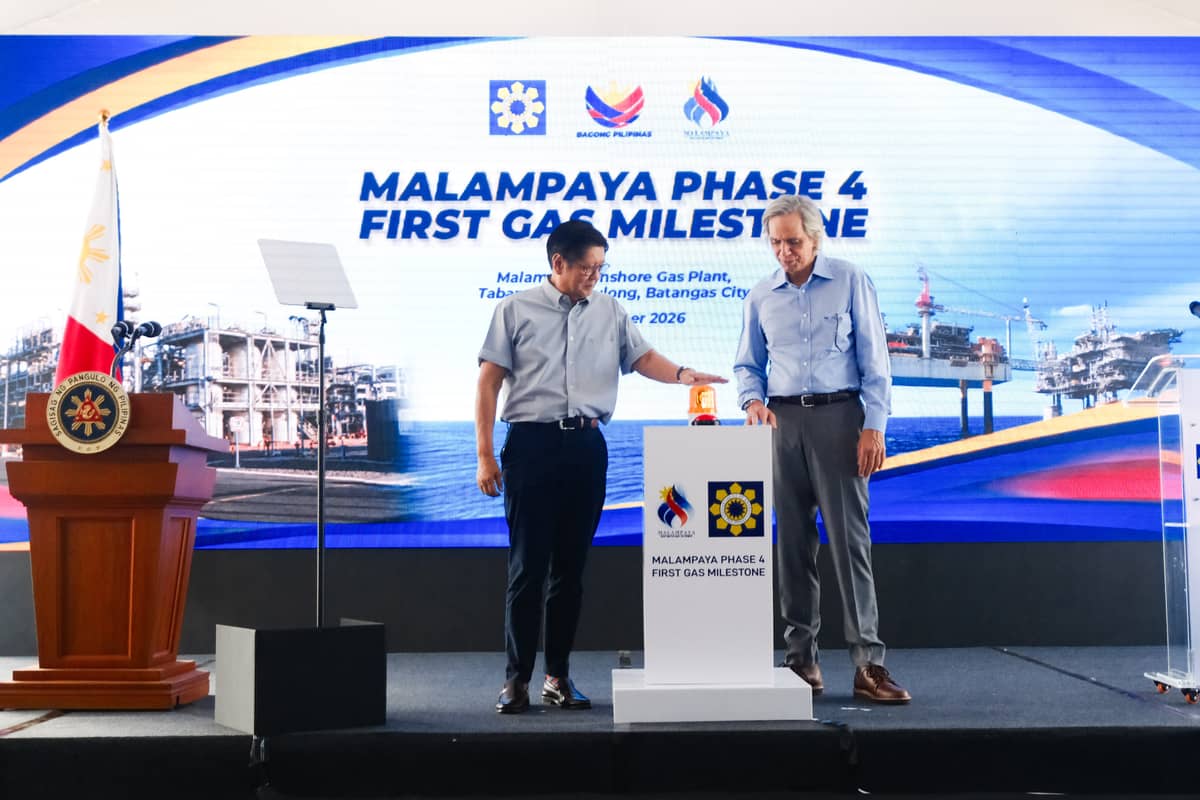
FUELING tomorrow President Ferdinand Marcos Jr. and Prime Infra Chairman Enrique Razon lead the ceremonial switch-on of Malampaya Phase 4 in Batangas City.
“Using our own gas means more reliable electricity and greater energy security for our country,” Marcos said, adding that maximizing Malampaya gas could contribute to more competitive power rates by reducing reliance on imported energy.
The two wells were drilled and tested in the first quarter of 2026, yielding an estimated 222 billion cubic feet of recoverable natural gas.
They were connected to the existing subsea production system in June. The additional reserves could extend the productive life of the Malampaya gas field until 2034, according to earlier government projections.
Worth close to $1 billion, MP4 involved drilling two deepwater wells and installing subsea infrastructure. Its estimated reserves could generate about 31.46-billion kilowatt-hours of electricity, enough to power 13.11-million households for a year.
Prime Energy said the project was completed in 27 months, five months ahead of schedule. It also marked the Philippines’ first offshore drilling campaign in more than a decade, drawing on suppliers and technical expertise from 17 countries.
Marcos used the milestone to reaffirm the administration’s push for domestic energy exploration, citing 14 petroleum service contracts covering oil, natural gas, and native hydrogen.
He also highlighted the Philippine Gradiometry and Seismic Survey Project, which aims to identify potential exploration areas.
The President credited Filipino engineers, professionals, and workers for their role in the project, saying it demonstrated the country’s technical capabilities.
Marcos also cited the Philippine Natural Gas Industry Development Act, which prioritizes domestically produced natural gas for gas-fired power plants, and called for continued government-private sector cooperation to secure the country’s long-term energy requirements.
Beyond energy security, Marcos said the project would generate jobs, develop local expertise, and contribute to government revenues.