
Marquez vows judiciary reforms, better benefits for court employees
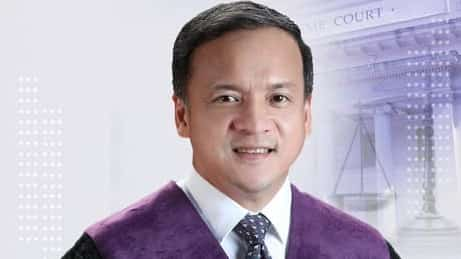
Supreme Court Associate Justice Jose Midas P. Marquez anchors his platform on restructuring court staffing patterns, standardizing employee benefits and rationalizing compensation across the entire judiciary.
This vision highlights his strategy to revitalize the judicial branch as he emerges as a contender to become the 28th Chief Justice of the Philippines, backed by two nominations from members of the legal community.
Retired Supreme Court Associate Justice Arturo D. Brion and the Association of Retired Regional Trial Court Judges of the Philippines have formally nominated Justice Marquez to the Judicial and Bar Council (JBC).
The endorsements highlight Marquez’s 11-year tenure as Court Administrator from 2010 to 2021, during which he managed the day-to-day operations and welfare of lower courts nationwide.
During his JBC interview, Marquez unveiled a comprehensive five-year judicial reform plan that identifies court officials and employees as the judiciary's most valuable asset.
Drawing from his experience defending the judiciary's annual budget before Congress, Marquez committed to leveraging legislative frameworks, particularly Republic Act No. 12233, or the Judiciary Fiscal Autonomy Act, to improve the welfare of court workers.
If appointed chief justice, Marquez vows to implement major institutional personnel reforms:
Salary and benefit rationalization: He intends to review, equalize and standardize employee benefits across the judicial system to ensure fair compensation for all ranks.
Standardizing allowances: He proposes a comprehensive study to implement standardized allowances for judges nationwide, reducing the judiciary's reliance on localized and disparate arrangements currently provided by various local government units (LGUs).
A culture of service and welfare: Marquez pledged to establish better working conditions and robust employee wellness programs.
"We will strive to give them the best working conditions, but we will also demand from them the best service for court users and the public," he said.
A key component of Marquez’s roadmap is his pledge to ensure that the Philippines will have no more overburdened courts by 2032.
To achieve this alongside personnel upgrades, his plan relies on a data-driven approach that includes expanding artificial intelligence-assisted information portals, accelerating electronic filing and digitizing non-sensitive court records.
Following the endorsements from Brion and the Association of Retired RTC Judges, the JBC officially included Marquez in its five-member shortlist submitted to Malacañang on 29 October 2026.
Marquez is vying for the country's highest judicial post alongside Senior Associate Justice Marvic Leonen and Associate Justices Alfredo Benjamin Caguioa, Rodil Zalameda and Japar Dimaampao.
President Ferdinand Marcos Jr. has until the mandatory retirement of incumbent Chief Justice Alexander Gesmundo on 6 November 2026, to appoint his successor from the JBC shortlist.