
SC aspirant wants anti-dynasty law to cover appointees
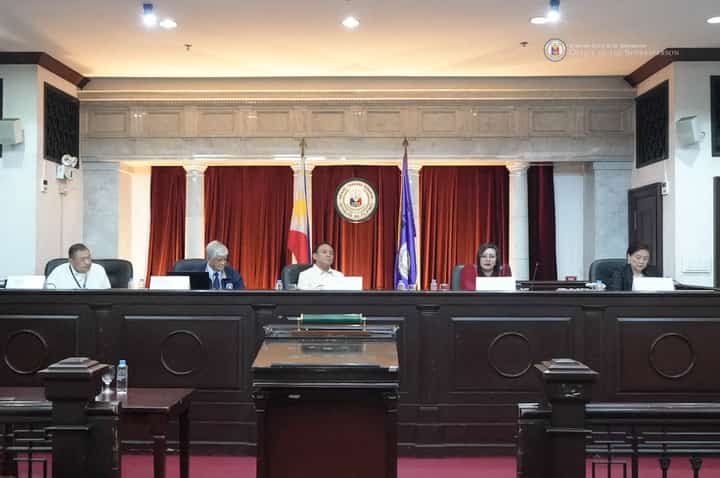
Judicial and Bar Council members led by Justice Secretary Frederick Vida on the second day of the panel interview of the candidates for the position of Supreme Court Associate Justice vice Associate Justice Amy C. Lazaro-Javier.
Government Corporate Counsel Solomon Hermosura has called for an anti-political dynasty law covering both elected and appointed government positions as he seeks a seat on the Supreme Court.
Hermosura made the statement during his public interview Thursday, 15 October, for the position to be vacated by Associate Justice Amy Lazaro-Javier, who is scheduled to retire on 16 November 2026.
“I think that the anti-political dynasty should cover both elected and appointed positions,” Hermosura said.
However, he cautioned against overly restrictive provisions that could prevent qualified relatives from pursuing public office.
He said the proposed law should consider family relationships and the different branches and levels of government, stressing that Congress must ultimately determine the scope of the restrictions.
Article II, Section 26 of the Constitution mandates the state to prohibit political dynasties as defined by law. However, Congress has yet to enact legislation implementing the provision.
Hermosura said he would generally defer to Congress' judgment on the matter if appointed to the high court.
He also weighed in on proposals to impose stricter qualifications for national elective positions, warning that higher requirements could limit opportunities for Filipinos seeking public office.
“I hope we can do so without restricting access also to public service,” he said.
Hermosura pointed out that educational qualifications and other requirements could disproportionately affect individuals with limited financial resources.
Four decades of legal experience
Hermosura cited his 40 years of experience in private legal practice, corporate governance, government service and legal education as qualifications for the Supreme Court.
His career includes nine years in private legal practice, approximately two decades in corporate governance and nearly three years in government service.
Before heading the Office of the Government Corporate Counsel (OGCC), which provides legal services to at least 78 government-owned and controlled corporations, Hermosura served as general counsel and a member of the management committee of Ayala Corp. and its affiliates.
He said his professional experience had exposed him to matters involving corporate governance, accountability and fiduciary responsibility, areas where he hopes to contribute to Supreme Court jurisprudence.
Hermosura stressed that his loyalty as a magistrate would be to the Constitution, the law and the facts rather than to any particular stakeholder.
He also expressed support for the Supreme Court's Strategic Plan for Judicial Innovations 2022-2027, which aims to improve judicial efficiency, innovation and access to justice.
Asked about judicial activism, Hermosura said justices should decide cases based on legal principles rather than automatically adopting either an activist or restrained approach.
On corruption, he said his background in governance and accountability could help strengthen jurisprudence involving public institutions and corporate responsibility.
He also emphasized the judiciary's role in protecting constitutional rights amid advances in technology and enforcing laws addressing technology-related offenses.
Hermosura has taught commercial law at the University of the Philippines College of Law and corporate governance, civil law and commercial law at other institutions for more than 15 years.
He maintained that his experience across the private and public sectors had equipped him with the judgment and perspective needed to serve on the Supreme Court.