
COA chief Cordoba seeks Supreme Court seat
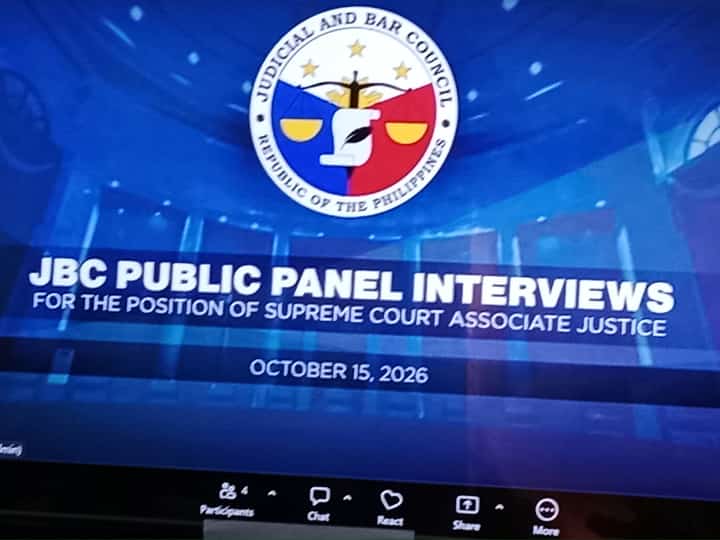
Commission on Audit (COA) Chairman Gamaliel Cordoba is banking on his decades of experience in government and regulatory agencies to strengthen his bid for a seat on the Supreme Court.
During his public interview before the Judicial and Bar Council (JBC), Cordoba said his background in executive agencies, quasi-judicial bodies and the constitutional audit commission would bring a different perspective to the high court.
“I feel that it's time to go to a higher level of public service,” Cordoba said, explaining his decision to seek appointment as an associate justice.
He said he wanted to expand his public service, reach more Filipinos and leave a lasting legacy.
Cordoba previously served in the Office of the President, Philippine Amusement and Gaming Corp. (Pagcor) and National Telecommunications Commission (NTC) before becoming COA chairman in October 2022.
He argued that his experience would be valuable in resolving cases involving government agencies, regulatory bodies and constitutional commissions.
Asked about judicial activism, Cordoba said courts should exercise restraint when the law is clear, although judicial intervention may be necessary in certain circumstances.
“If the law is very clear, and the answer is in the Constitution, or it's in the jurisdiction, I would exercise judicial restraint,” he said.
Anti-corruption efforts
Cordoba also highlighted COA's efforts to combat corruption, particularly irregularities involving government flood-control projects.
He said the commission had removed personnel implicated in irregularities and conducted fraud audits in areas where questionable transactions were identified, including the Department of Public Works and Highways' first district engineering office in Bulacan.
According to Cordoba, the Office of the Ombudsman has used COA's audit findings in preliminary investigations and prosecutions before the Sandiganbayan.
He said the commission had also issued notices of disallowance and suspension involving hundreds of billions of pesos in DPWH transactions over the past five years.
Cordoba described fraud audits as an effective deterrent against corruption, stressing that irregularities undermine public confidence in government.
He estimated that 65 to 70 percent of disallowed public funds had been recovered, noting that many cases involved bonuses and allowances granted to government personnel.
He also claimed that about 90 percent of COA-related cases elevated to the Supreme Court were resolved in favor of the government because the commission generally based its decisions on established jurisprudence.
Judicial reforms
Cordoba expressed support for continuing and expanding the Supreme Court's Strategic Plan for Judicial Innovations 2022-2027, particularly efforts to digitalize court operations and improve access to justice.
He proposed establishing a Supreme Court YouTube channel where justices could explain decisions affecting ordinary Filipinos, including cases involving loans, credit card obligations and property disputes.
He also supported making court decisions available in Filipino to help citizens who have difficulty understanding legal English.
Cordoba acknowledged that the Supreme Court's judicial authority extends far beyond the quasi-judicial powers exercised by COA and the NTC.
However, he maintained that his experience across different branches and institutions had given him a broader understanding of government operations.
Previous cases
During the interview, Cordoba also addressed complaints filed against him over his tenure on Pagcor's board in 2008 and 2009.
He said the cases stemmed from complaints filed against previous management and board members following a leadership change in 2010.
Cordoba maintained that most of the cases had been dismissed by the Department of Justice or the Ombudsman.
He cited a dispute involving the use of casino players' reward points to purchase movie tickets, saying Pagcor's board had approved the use of earned points but management subsequently used corporate funds instead.
According to Cordoba, the implementation differed from what the board had authorized.
He also advocated stricter qualifications for national elective positions, arguing that increasingly complex governance demands higher standards for public officials.
Cordoba acknowledged that such changes would require an amendment to the Constitution.