
Youngest chief justice nominee banks on decades of judicial experience
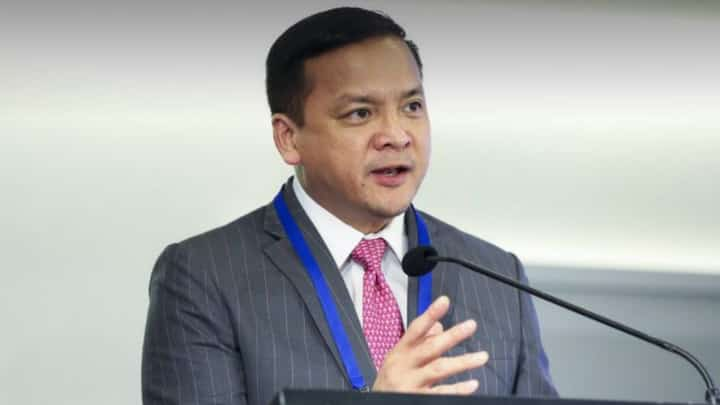
Supreme Court Associate Justice Jose Midas Marquez, the youngest of five candidates shortlisted for chief justice, is banking on more than three decades of judicial experience and a comprehensive reform agenda as President Ferdinand Marcos Jr. prepares to choose the country's next top magistrate.
At 60, Marquez is also the most junior Supreme Court justice among the nominees seeking to succeed Chief Justice Alexander Gesmundo, who will retire on 6 November upon reaching the mandatory retirement age of 70.
Despite his relatively short tenure on the Supreme Court bench, Marquez brings extensive administrative experience, having served as court administrator for nearly 12 years before his appointment as associate justice in November 2021.
His responsibilities included overseeing the operations of lower courts nationwide, managing administrative concerns and coordinating programs affecting judges and court personnel.
Marquez began his career in the judiciary in 1991 as an apprentice at the Supreme Court before rising through various positions, including law clerk, court attorney, spokesperson and court administrator.
His institutional experience has drawn endorsements from retired Chief Justice Reynato Puno, retired Supreme Court Justice Arturo Brion and the Association of Retired Regional Trial Court Judges of the Philippines.
In a letter to Marcos dated 14 October, Puno cited Marquez's familiarity with judicial operations and his experience coordinating with the executive and legislative branches.
The retired magistrate emphasized the need for judicial leadership capable of improving the delivery of justice through institutional cooperation.
Marquez has also outlined a five-year modernization agenda aimed at addressing chronic court congestion, improving working conditions for judicial employees and accelerating digital transformation.
His proposed Strategic Plan for Judicial Innovations 2.0, covering 2028 to 2032, seeks to build on the reforms introduced under Gesmundo.
Central to the proposal is reducing excessive court caseloads through improved case monitoring, additional judicial resources and expanded digital services.
Marquez has set a target of eliminating overburdened courts by 2032.
The plan also prioritizes reviewing staffing structures, standardizing employee benefits and strengthening the judiciary's fiscal autonomy.
Marquez has emphasized that court personnel, including clerks, stenographers and trial judges, play a critical role in ensuring the efficient administration of justice.
He also proposed expanding electronic filing, digitizing court records and improving public access to judicial information.
An economics graduate who later earned his Juris Doctor degree from Ateneo de Manila University, Marquez has emphasized the importance of institutional efficiency and resource management in implementing judicial reforms.
His administrative background distinguishes his candidacy from those of other shortlisted magistrates, although judicial experience, independence and leadership remain central considerations in selecting the next chief justice.
The Judicial and Bar Council submitted its shortlist to Marcos on 29 October, naming Marquez alongside Senior Associate Justice Marvic Leonen and Associate Justices Alfredo Benjamin Caguioa, Rodil Zalameda and Japar Dimaampao.
Under the Constitution, the President must appoint Gesmundo's successor within 90 days of the vacancy.
If appointed, Marquez could serve until his mandatory retirement in 2036, giving him nearly a decade to pursue his proposed judicial reforms.