
Agriculture sector prepares for intensified El Niño
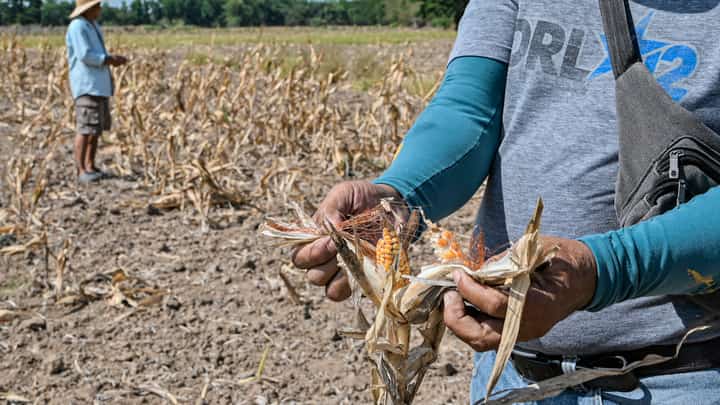
Crop losses The El Niño dry spell lays to waste an entire corn harvest recently in San Antonio, Nueva Ecija. Agricultural losses have amounted to billions of pesos, according to the Department of Agriculture.
JAM STA ROSA/AGENCE FRANCE-PRESSE
The Department of Agriculture (DA) is stepping up preparations for a potentially severe El Niño, expanding food reserves, securing farm inputs and deploying targeted measures to protect agricultural production as the dry spell is expected to persist into the first half of 2027.
Agriculture Secretary Francisco P. Tiu Laurel Jr. said the agency is applying lessons from the previous El Niño, when he entered government in November 2023 and faced prolonged dry conditions early in his tenure.
“We are now more prepared,” Tiu Laurel said, noting that the DA has already made advance purchases of rice, fertilizer and other agricultural inputs.
The government has also provided the DA with an additional P6.2 billion for fuel subsidies and other assistance for farmers, fisherfolk and agricultural truckers affected by higher fuel costs arising from the conflict in the Middle East and the initial effects of El Niño.
The agency is adjusting its farm interventions based on local conditions, including the use of foliar and soil ameliorants and bio-based, non-urea products. Fertilizer and seed applications may also be increased in areas where conditions require additional support.
Tiu Laurel said the DA is preparing for the worst-case scenario, with weather-related disruptions expected to affect crops, livestock and fisheries and reduce projected palay production by about 700,000 metric tons during the main harvest in the second half of the year.
“At the end of the day, we are looking at the worst-case scenario, so we expect that overall production will still be lower,” he said.
The government is also strengthening food storage. The National Food Authority now has 365 active warehouses, up from around 300, following the addition of 165 rented facilities. New cold storage facilities are likewise being opened to help preserve meat and vegetables.
Cloud seeding operations have started in drought-affected areas, including Isabela and Negros, and will be conducted when cloud formations contain enough moisture to generate rainfall.
“We will do anything that is needed to help the situation,” Tiu Laurel said.
Meanwhile, recent monsoon rains have replenished major dams, potentially providing adequate water for irrigated areas during the next planting season.
Tiu Laurel said the improved water situation offers some relief, but emphasized that preparations must be made ahead of the drought’s peak.