
No time to play? Read RPG instead

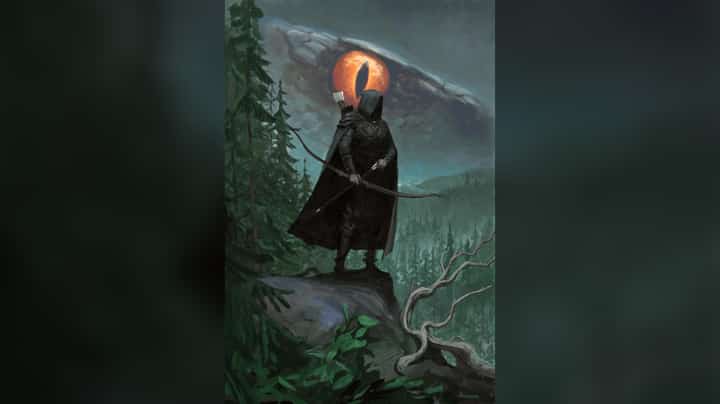
SET in a massive multiverse where Earth is part of the 93rd Universe, the LitRPG series packs in everything a gamer could obsess over: gods, races, levels, skills, equipment rarities, artifacts and the rewarding grind toward becoming ridiculously overpowered.
Photograph courtesy of Aethon Books
There was a time when spending hours inside a role-playing game did not feel like a luxury.
A player could create a character in the afternoon, spend the evening exploring an unfamiliar world and somehow still be awake past midnight comparing two pieces of equipment because one offered slightly better stats.
Then adulthood arrived, and gaming became harder to fit into everyday life.
Work consumes much of the day. Responsibilities continue after office hours, and the gaming sessions that once stretched deep into the night become increasingly rare. The desire to enter another world remains, but finding several uninterrupted hours to actually do it becomes another matter entirely.
The Entertainment Software Association reported in 2026 that the average American video game player is now 37 years old. Gaming also remains widespread well into adulthood, with 71 percent of millennials, 56 percent of Gen X and 50 percent of boomers playing at least an hour every week.
A broader 2025 survey of more than 24,000 active players across 21 countries found an even higher average age of 41. After having fun, one of the most common reasons respondents gave for playing was stress relief and relaxation.
The gamers grew up. The desire to play apparently did not.
For the adult who still misses disappearing into an RPG but cannot always find the time, Zogarth’s The Primal Hunter offers an interesting alternative because reading it sometimes feels remarkably similar to playing one.
The LitRPG series follows Jake Thayne, an office worker whose ordinary existence ends when Earth is integrated into a vast multiverse governed by the System.
Humanity suddenly encounters rules that would immediately feel familiar to an RPG player. Characters gain levels, choose classes and professions, unlock skills, acquire equipment and grow increasingly powerful.
The scale of the universe makes the nerd inside come alive.
Earth belongs to the 93rd Universe, which immediately suggests just how enormous the playground is. There are gods, different races, monsters, factions and civilizations. Skills have different rarities. Equipment has different rarities. Characters evolve, abilities develop and valuable artifacts can fundamentally alter what someone is capable of doing.
For someone who misses RPGs, it scratches a very specific itch.
One of gaming’s greatest pleasures has always been progression. A character starts with little, but every battle and decision contributes toward becoming stronger.
There is also nothing quite like defeating an enemy and discovering that it dropped something exceptional. The player checks the item, studies the stats and realizes that the weapon or armor he has been carrying for hours has finally become obsolete.
The Primal Hunter recreates that rewarding feeling through words.
The reader cannot control Jake or distribute his statistics, but the mechanics encourage the same thought process. When Jake receives a new skill or considers an evolution, an experienced RPG player instinctively begins thinking about the build.
He wonders which ability would synergize with another. He considers what an upgrade might eventually become. He imagines how powerful the character could be several evolutions later.
Then there is the objective familiar to almost every RPG player: the road to becoming ridiculously overpowered.
That journey is satisfying precisely because the reader remembers where the character started. Enemies that once seemed terrifying become manageable. Rare equipment becomes replaceable. Skills that once appeared extraordinary eventually become foundations for something greater.
Perhaps that is why The Primal Hunter works so well for an adult who misses gaming.
Adulthood may have taken away those endless nights in front of a computer or console, but it did not necessarily remove the desire to explore another world, develop a character, collect powerful artifacts and experience the small dopamine rush of getting an absurdly good item.