
Informed citizenry: Good governance key
Citizens must recognize how corruption, incompetence, and oppression in government erode not only national progress but also individual well-being.

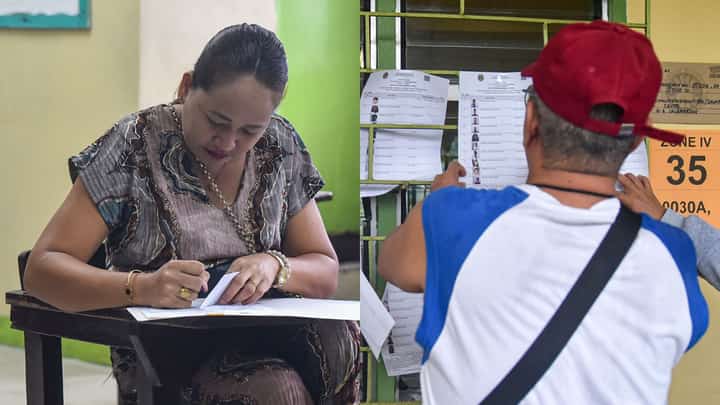
The most prominent recent local news have been about the impeachment trial, the corruption allegations against several government officials, and the devastation caused by the flooding. These issues primarily concern public governance, with the blame placed on both elected and appointed government officials.
In a democracy, public governance is carried out by officials elected by the people. The elective officials, in turn, choose the officials for appointive posts. Thus, under this system, power is supposed to rest with the people as they elect their barangay, municipal, city, provincial, and national officials.
There is a saying that “the government you elect is the government you deserve.” This dictum ties governance to the ballot box, implying that the people’s election choices have brought us the governance problems we now face.
For a democracy to work well, it should have an informed citizenry that understands the stakes, discerns the real issues, and selects its leaders wisely. Citizens must recognize how corruption, incompetence, and oppression in government erode not only national progress but also individual well-being.
Equally, they should appreciate, as demonstrated by progressive democracies, how good governance uplifts lives and strengthens the collective welfare. Sadly, this awareness appears diminished in our country today.
If there was a time of heightened civic consciousness, it was the period immediately after the assassination of Ninoy Aquino in 1983, culminating in the People Power Revolution of 1986.
There must be an effort to rekindle that spirit of awareness now. Modern technology offers powerful tools for disseminating information. However, it also enables the rapid spread of misinformation and disinformation that cloud the truth and confuse the public.
I have long argued that the most potent force in our country for developing an informed and principled citizenry is the Catholic Church and other faith communities of similar beliefs.
Totaling over 90 percent of the population, they have the numbers. More importantly, they have the divine mandate. Matthew 28:19-20 clearly states: “Therefore go and make disciples of all nations, baptizing them in the name of the Father and of the Son and of the Holy Spirit, and teaching them to obey everything I have commanded you.”
The baptism has been by and large carried out. It is the teaching to obey the commandments that must be strengthened.
The educational sector likewise bears a vital responsibility. Teachers and all others in the educational field must go beyond imparting technical knowledge. They must instill in their students the values necessary to build a law-abiding, God-centered and prosperous nation.
Finally, every Filipino who understands what is right and just must contribute to educating the public by providing the information needed to not only elect worthy leaders, but to oppose wrongdoing in government.
As Thomas Jefferson wrote: “I know of no safe depository of the ultimate powers of the society but the people themselves; and if we think them not enlightened enough to exercise their control with a wholesome discretion, the remedy is not to take it from them, but to inform their discretion by education.”