
Cardinal David calls for ‘ecological conversion’ to address flooding
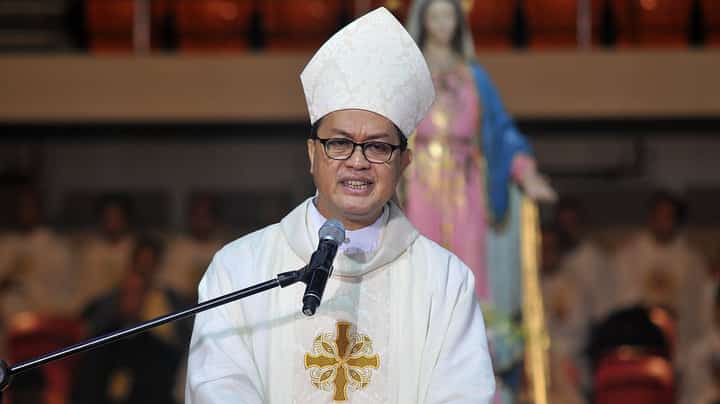
Cardinal Pablo Virgilio David on Sunday, 6 September, said “ecological conversion” is needed to address the country’s worsening flood problems.
“What we need is not merely flood control,” David said in his Sunday homily.
“We need ecological conversion,” stressed David, who pointed out that “flooding is, first of all, an ecological issue.”
David reminded the faithful that “God placed us in this world not to rule over it as absolute masters, but to care for it as stewards.”
“Unfortunately, what has often been emphasized in the creation story is dominion—humanity’s power over nature: ‘Have dominion over all other creatures,’” he said.
The prelate warned that when dominion loses its sense of responsibility, it becomes domination, resulting in abuse and exploitation.
“And now we are seeing the consequences,” David lamented.
The Cardinal observed that politics and corruption continue to seep into the country’s flood problems.
“Politics must adjust to science, engineering, ecology, and the common good,” he declared.
“If every politician pursues his or her own projects according to personal political interests, then we should not be surprised that we spend billions upon billions on flood control while the flooding grows worse every year,” he warned.
The prelate agreed that “preventing floods is an engineering issue.”
“We need dikes, drainage systems, pumping stations, dredging, and flood-control projects,” David said.
David pointed out that, based on experience, “these will accomplish little if they are not part of a comprehensive master plan for our country’s eighteen major river basins.”