
Devastating flood of lingering impunity
The Palace assures us that investigations are ongoing. But where are the convictions? Where are the jail sentences?

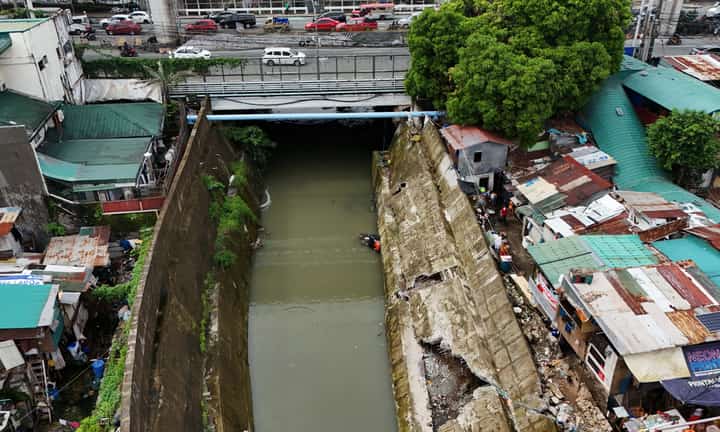
COLLAPSED portions of the revetment wall of the Tullahan River in Barangay North Fairview, Quezon City, speak volumes as to the gravity of the flood control scandal facing Public Works Secretary Manuel Bonoan. The official has refused to resign despite the billions of pesos that corrupt DPWH officials, lawmakers and contractors have allegedly pocketed from such projects.
Photographs by analy labor for DAILY TRIBUNE
Another monsoon season, another deluge. And again, the same tired question haunts the Marcos Jr. administration: Why do the floods persist despite the billions poured into flood control projects?
Millions of individuals have been affected, thousands of houses damaged or destroyed, with infrastructure losses and agricultural damage in the billions. But these figures, as numbing as they are, fail to capture the true cost — the families stranded on rooftops, the children whose education has been interrupted, the mothers and fathers watching their life’s savings wash away in murky water.
The psychological toll is immeasurable. How many more times must these people rebuild their homes? How many more nights must they spend in evacuation centers, wondering if the rain will ever stop?
What makes these events unforgivably tragic is that they were entirely preventable.
P1.939 trillion — nearly two trillion pesos — was funneled into the government’s flood control program under three presidents from 2011 to 2025. And what do we have to show for it?
Uncontrolled floods. Defective seawalls that collapse barely two months after completion. Newly built structures crumbling in the first heavy rainfall. And perhaps the most unconscionable act of greed: The “ghost” projects that only appear on paper — nonexistent structures built to line pockets rather than protect lives.
The flood control scandal is a failure of governance and a demonstration of how unconscionable greed was masqueraded as a noble act of public service. Lawmakers and contractors used the climate crisis as cover to push forward flood control projects that turned out to be defective or nonexistent. The unholy collusion between erring public officials and private contractors has become the biggest corruption scandal in the country to date.
And the injustice? It is multiplied many times over. The poor bear the brunt of the flooding while those responsible for the corruption live comfortably in their mansions — unashamedly flaunting their ill-gotten wealth.
In Metro Manila, work and classes are halted by rainfall alerts. In Bulacan, residents are almost permanently submerged year-round because mitigating infrastructure was never built to standards. In Pampanga, floodwaters have risen waist-deep across most towns, and public frustration has spilled over.
The Palace assures us that investigations are ongoing. But where are the convictions? Where are the jail sentences? The public anger that flared when the scandal first broke has largely dissipated because nothing has fundamentally changed. The system that enabled this corruption remains intact. The disease is systemic corruption that has been normalized across administrations.
The takeaways: First, accountability must be tangible. Not the kind that targets small fish while the big ones get away unscathed. Second, it is time to put in place a mechanism for a binding, long-term master plan for all infrastructure projects to make them outlast presidents and their political whims.
And finally, we must stop romanticizing Filipino resilience. Resilience, while commendable, is not a license for government neglect. It cannot excuse corruption. And it is not a justification to accept the unacceptable.
The public has grown increasingly cynical of empty promises. With what we see in the news and the real experiences shared over social media, taken against the backdrop of “ghost” projects and allegations that public money intended to protect communities ended up in private pockets, trust evaporates like the morning dew.
Ultimately, the question is whether everyone guilty — all those who facilitated and profited off this tragedy — will finally be held accountable for the billions stolen while our country drowns. That is the only answer that matters.