
Flash floods in Nepal and Manila
Nepal reminds us that nature does not wait for governments to finish studying, arguing or stealing.

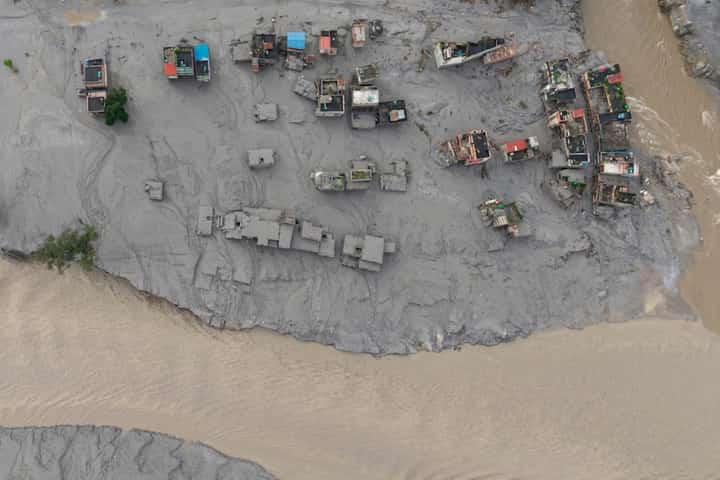
Mudman Nepal Army personnel rescue a man (inset) stranded by massive floods and landslides along the Nepal-Tibet border on 26 August 2026. The disaster killed nearly 200 people and left hundreds missing from the mud- and water-swept banks of rivers (main panel).
PHOTOGRAPH COURTESY OF AGENCE FRANCE-PRESSE
-The videos from Nepal are terrifying. Flash floods caused by a suspected glacier collapse sent a massive torrent of water, mud, ice and debris sweeping away homes, roads and bridges within minutes, killing hundreds and leaving thousands missing. These horrendous images have shown the world how quickly nature can erase what people took generations to build.
We Filipinos understand that fear, even if our recent floods have not approached Nepal’s destruction. We have routinely watched rivers rise during typhoons, vehicles disappear beneath muddy water and families climb onto rooftops while waiting for rescue. Every new disaster should therefore force us to ask whether government is truly preparing for nature’s growing fury or merely “budgeting” for the next flood.
Congress is now reviewing the proposed P7.2 trillion budget for 2027, which restores P107.4 billion for flood control. This includes a reported P83.84 billion for locally funded projects and P19.6 billion for ongoing foreign-assisted works, while the MMDA would separately receive P3.41 billion for pumping stations and other flood mitigation facilities.
DPWH Secretary Vince Dizon told the House that duplicate projects have been removed and that the new budget would contain neither leadership funds nor parametric allocations. These reforms are necessary after the ghost project scandal, but removing corruption-prone items does not automatically produce a coherent flood control program. Congress must determine whether every remaining project forms part of a scientific river basin plan or is simply another structure selected for a political district.
Landscape architect Paulo Alcazaren has warned that Metro Manila lost around 20 kilometers of esteros and canals over five decades. He advocates restoring waterways, widening easements, reforesting watersheds, creating retention areas and combining green infrastructure with conventional engineering. Water follows the landscape from ridge to reef, not the boundaries of cities, congressional districts or local political territories.
Architect and urban planner Felino “Jun” Palafox Jr. similarly argues that Metro Manila’s flooding is largely the product of poor planning and political discontinuity. He has pointed to around 150 recommendations that remain unimplemented, including the Parañaque Spillway, which has appeared in government plans for roughly 50 years. His estimate that meaningful flood mitigation may take another 25 to 50 years is sobering, but it reflects the scale of the neglect accumulated across administrations.
The ongoing budget hearings should therefore examine more than project costs and locations. Congress should require a published metropolitan and river basin master plan, geotagged construction records, independent technical audits and measurable explanations of how every project reduces flooding beyond the district receiving it. Long-term projects must also survive changes in presidents, secretaries, mayors and congressional majorities.
Nepal reminds us that nature does not wait for governments to finish studying, arguing or stealing. Metro Manila may not be saved within one presidency, but the 2027 budget can begin an honest commitment lasting several generations. The first step is to stop funding flood control as a collection of projects and start building it as one national plan.