
The crazy marble aesthetics of Romblon

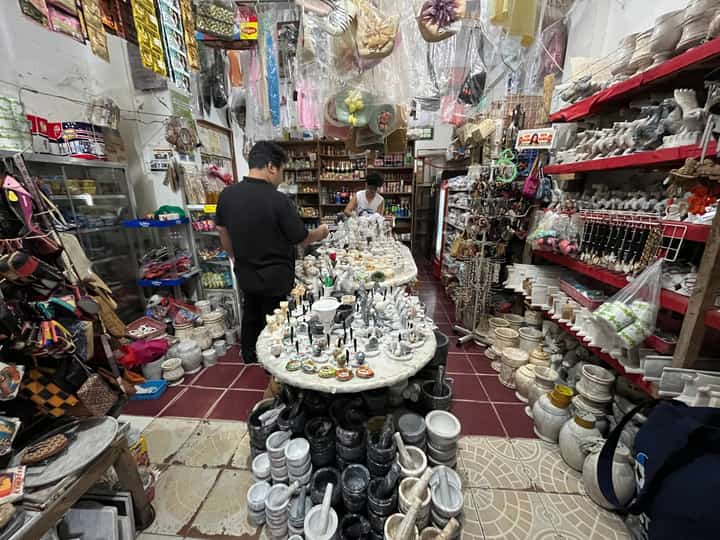
A marble store near the Port of Tablas features various kinds of marble products, ranging from sacred items to lamps, jars and figurines.
Photographs by Abegail Esqierda for DAILY TRIBUNE
Considered the marble capital of the Philippines, Romblon is more than just an island province at the heart of MIMAROPA, it is home to its own distinct treasures.
From 17 to 19 August, the Department of Science and Technology (DoST) MIMAROPA conducted its first-ever simultaneous multi-island celebration of the Regional Science, Technology and Innovation Week across its five provinces. With Odiongan, Romblon serving as the host province, the event highlighted both the beauty of its natural stone and the craftsmanship of its local artisans.
In Romblon, artisans can craft almost anything from marble at prices significantly lower than in Manila. A six-inch lamp costs P500, while small cups and figurines range between P230 and P270. Popular souvenir items include classic keychains, mortars and pestles, soap dishes, dispensers, as well as urns, and detailed statues.
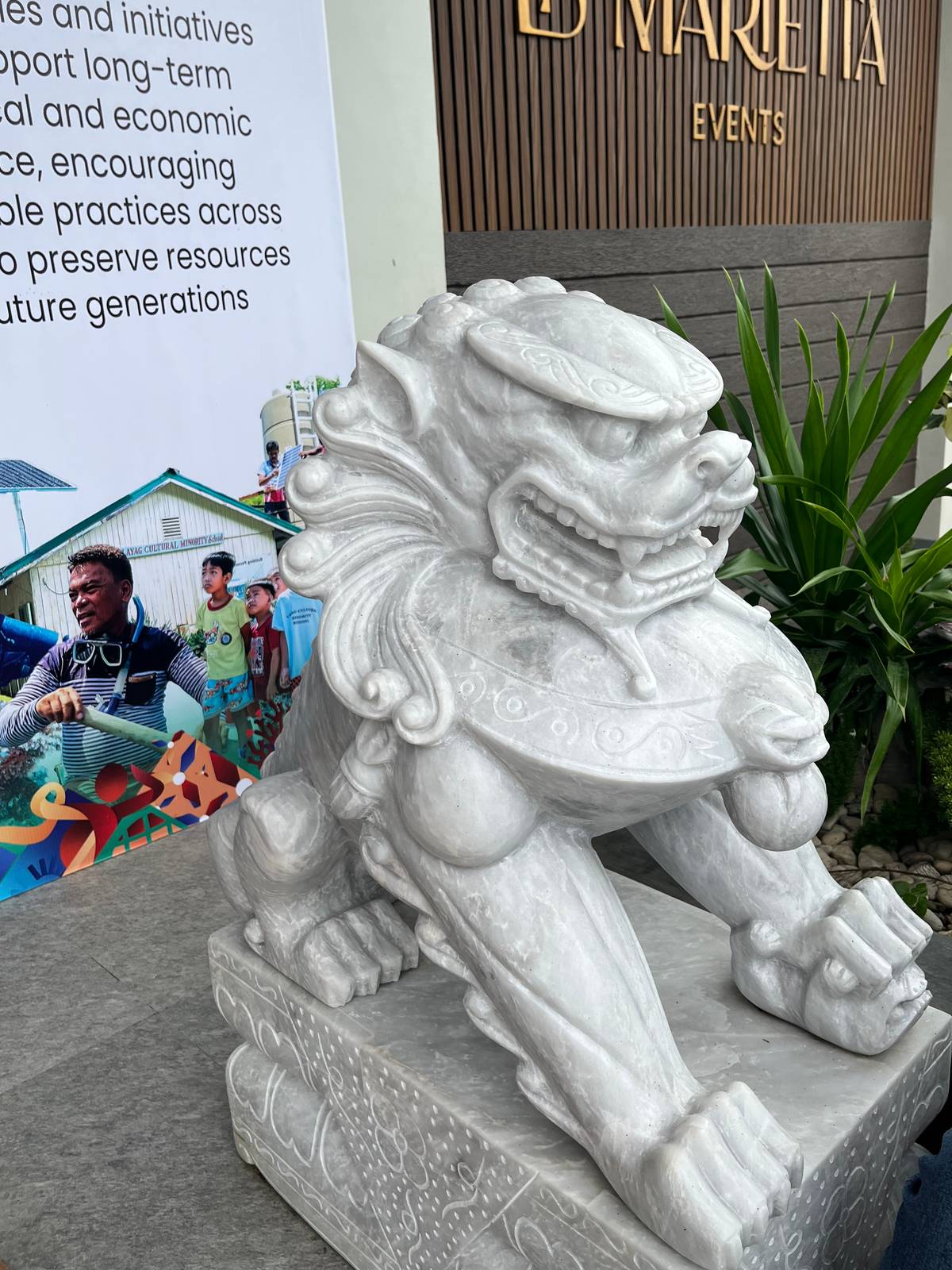
Outside La Marietta Events Place, where the RSTW is being conducted, stand two dragon-shaped marble statues.
Marble craftsmanship extends to local architecture as well. The historic St. Joseph Cathedral in Romblon, Romblon, features an interior adorned with marble altars and a marble pulpit, while its outer walls are built from coral limestone. Due to its architectural value as well as its historical and cultural significance, the structure was declared a National Cultural Treasure by the National Museum of the Philippines.
Despite the industry’s rich tradition, local artisans face growing challenges. DoST provincial director Dr. Marcelina Servañez noted a decline in the number of active carvers, pointing out that current compensation is not sufficient to retain talent.
Marble products for sale during the DoST-RSTW exhibit.
The Odiongan Town Plaza features local stonework that welcomes visitors.| Photo by Abegail Esquierda
To address this issue, DoST MIMAROPA initiated the development of “The 10-Year Sustainable and Globally Competitive Future Roadmap of Romblon’s Marble Industry,” launched in 2025. Servañez explained that the initiative involves organizing the Romblon Marble Industry Council, which is drafting policies for the roadmap to be finalized this year.
Servañez emphasized that the roadmap aims to support micro, small and medium enterprises by boosting production, reducing operational costs, and streamlining processes through AI, robotics, and automation. At the same time, the framework prioritizes environmental protection, acknowledging that natural marble requires millions of years to form.
In partnership with Romblon State University, the agency is also exploring ways to process marble waste into ground calcium carbonate for use in paints and pharmaceuticals.
Ultimately, these initiatives aim to elevate Romblon’s local craftsmanship into world-class products and position the province on the international stage.