
Gov’t hospitals offering cosmetic surgery lambasted

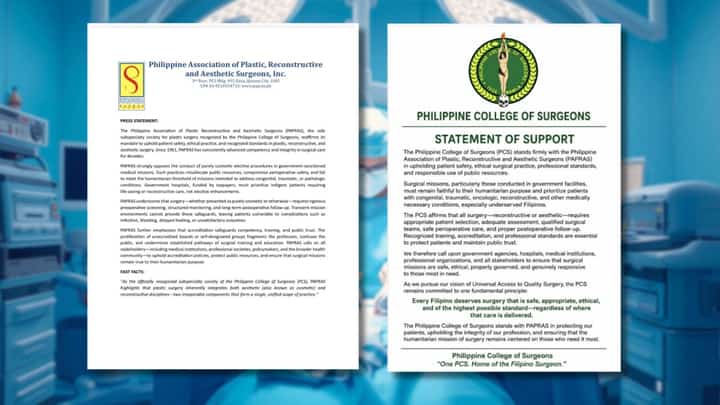
The Philippine Association of Plastic, Reconstructive and Aesthetic Surgeons (PAPRAS) has opposed free elective cosmetic procedures in government hospitals, saying limited public resources should be reserved for patients requiring medically necessary care.
The group issued the statement after the Philippine Academy of Aesthetic Surgery (PAAS) announced a cosmetic surgical mission offering procedures including free rhinoplasty.
The Philippine College of Surgeons (PCS) backed PAPRAS, saying surgical missions in government hospitals should prioritize underserved patients with congenital, traumatic, oncologic, reconstructive and other medically necessary conditions.
“It is not a humanitarian need,” a surgeon who opposed the mission told the DAILY TRIBUNE, questioning the use of hospital beds and doctors’ schedules for elective procedures while public hospitals are treating patients requiring essential care.
“It’s a waste of hospital beds and hospital resources,” the surgeon said.
PAPRAS said purely cosmetic elective procedures in government-sanctioned medical missions could misallocate public resources and compromise patient safety.
Enhancements
“Government hospitals, funded by taxpayers, must prioritize indigent patients requiring life-saving or reconstructive care, not elective enhancements,” the group said.
PAPRAS also warned that cosmetic surgery requires rigorous preoperative screening, monitoring and postoperative follow-up. It said temporary medical missions may not provide adequate safeguards against complications such as infection, bleeding and delayed healing.
The PCS said all surgery, whether reconstructive or aesthetic, requires proper patient selection, assessment, qualified surgical teams, safe perioperative care and postoperative monitoring.
The dispute also raised questions about professional accreditation. PAPRAS is the plastic surgery subspecialty society recognized by the PCS, while PAAS is not accredited by the college, although both are affiliated with the Philippine Medical Association.
The surgeon interviewed by the DAILY TRIBUNE said recognized training standards were important in determining who should perform such procedures.
“They lack the recognized training and are not recognized under the gold-standard framework set by the PCS,” the surgeon said.
PAPRAS also warned against “unaccredited boards or self-designated groups,” saying these could confuse patients and undermine established surgical training standards.
Pushback
PAAS defended its missions, saying that it had conducted annual cosmetic surgical missions in hospitals nationwide since 2016 for patients who might otherwise have difficulty accessing such procedures.
The group said its participating surgeons are licensed physicians and that host hospitals do not shoulder the cost of equipment and surgical materials.
“The Academy and its participating members provide the necessary equipment, expertise, and other resources required to safely conduct the procedures,” PAAS said.
The PCS, however, maintained that recognized training, accreditation and professional standards are necessary to protect patients.
“Every Filipino deserves surgery that is safe, appropriate, ethical, and of the highest possible standard, regardless of where that care is delivered,” it said.