
David Sison on the business lessons that built Mama Lou’s
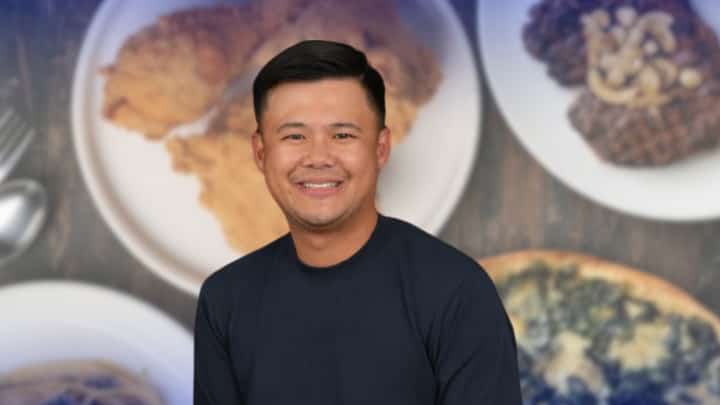
RESTAURATEUR David Sison, founder of Mama Lou’s, shares that passion, discipline and commitment have helped grow the restaurant from a family venture into a thriving Filipino dining brand.
PhotographS courtesy of FB/MAMA LOU’S, FB/life over whiskey
David Sison’s journey in the restaurant industry began with a simple appreciation for good food and a desire to share meaningful dining experiences with more Filipinos.
In an exclusive interview with DAILY TRIBUNE, David looked back on how his passion for Italian cuisine and his partnership with his wife, Crystal, became the foundation of their restaurant venture.
Family empire
Mama Lou’s started in 2010 as a house-turned-restaurant, inspired by his wife’s family who had previously operated a restaurant in BF Homes back in 2001.
“I used to visit their family restaurant, and that was where I was introduced to Italian cuisine for the first time. I remember trying pasta cooked simply with olive oil, garlic and seafood. That experience was very enlightening for me because it showed me how simple ingredients, when prepared properly, could create something flavorful and memorable,” David said.
The family restaurant eventually closed, but when they decided to reopen it, Crystal took on the role of managing the business, while David stepped in to help build its foundation and create systems that would allow the restaurant to grow and prosper.
“I was helping her build the systems. Eventually I took up my master’s. My thesis was about Mama Lou’s,” David shared.
“That was the beginning, that was 2013. Now, we have around 31 branches. Mama Lou’s started from that,” he said.
SEAFOOD pasta
SPINACH and goat’s cheese pizza
Freshness is non-negotiable
Building a restaurant brand that lasts is not simply about serving good food for David. It is about protecting quality, understanding the customer, and creating a business that Filipinos can grow with.
He shared the principles behind Mama Lou’s approach to food, from sourcing ingredients in Italy to keeping dishes freshly prepared in its restaurants. At the heart of it all is a belief that scaling a business should never mean compromising what made people love it in the first place.
“We’ve always been about freshly cooked,” David said.
While central kitchens and commissaries can make it easier for restaurants to scale, David believes freshness remains non-negotiable. “One thing that stuck to me is that the quality will degrade if you don’t put emphasis on freshness. I’ve tried to centralize and bring it back to the restaurant.”
For Mama Lou’s, that means preparing food fresh in the restaurant rather than relying heavily on frozen products.
“I do not believe in freezing. I don’t believe that you freeze the food. For me, it has to be fresh,” he said.
That philosophy extends to the restaurant’s pizzas and pastas. “It has to be freshly made. It has to be freshly cooked. My realization for our pizzas, it has to be freshly made in the restaurant. It has to be freshly baked in the restaurant.”
But freshness, according to David, begins long before a dish reaches the kitchen. It starts with the ingredients.
To maintain the quality he envisions for Mama Lou’s, David traveled to Italy to source pasta and other key ingredients. The restaurant now imports Pasta di Martino, which he describes as one of the best-quality pasta brands, as well as Gustaroso tomatoes.
“It starts with the right ingredients. But it’s easy to say the right ingredients. But for me, I really went to Italy to identify, to pick the right ingredients.”
Knowing who you’re selling to
For aspiring entrepreneurs, David believes one of the biggest questions is not simply what they want to sell, but who they want to serve.
“The most important first step if you want to go into business is to understand, it’s not what you sell, it’s who you sell to.”
He points to the difference between targeting a niche market and building a mass-market product as an important consideration for anyone entering business.
David also sees opportunities in the digital economy, particularly for younger entrepreneurs.
“There is a big economy in the online space such as TikTok. TikTok now, Lazada, Shopee. Because that is the easiest thing to venture into.”
But beyond platforms and trends, Sison believes businesses should keep an eye on the next generation of consumers.
“For me, I would go into businesses where you get the kids. Again, we have to win over the younger generation. Because these generations are going to be the paying generation.”
Discomfort as part of growth
David said challenges and discomfort are unavoidable parts of building a business. One of his personal challenges was stepping outside his comfort zone, especially in dealing directly with customers.
“I love to eat. I’m actually not the type of person that goes table to table to talk to customers. I mean, I’m not that kind of person.”
However, he emphasized the importance of building a strong team to complement his weaknesses.
“That is very important. In every organization, it is not a single person that makes the business, the brand, and the dishes and the food successfully. It is the team behind it that really complements each other.”
Turning complaints into business advantage
Perhaps one of David’s most striking philosophies is his perspective on criticism.
“You know, the biggest gift that a customer can give you is a complaint. Because if they don’t complain to you, they don’t care.”
Rather than viewing negative reviews as an attack, David sees them as opportunities to identify what needs to improve.
“It starts with awareness. In every business, you have to embrace feedback. Complaints especially.”
He recalled a recent instance when he responded to a customer who complained about an undercooked fried chicken order. The post eventually gained around one million views — but for David, the attention was secondary to the lesson behind it.
“For me, that’s a blessing. And that’s feedback because we are not perfect.”
His response to criticism is grounded in humility and accountability.
“I handle it, of course, number one, with open arms and humility. And with sincere learning in making our products, our people, our team, and of course, our protocols better.”
If Mama Lou’s were a dish
Asked to describe himself — or even the Mama Lou’s brand — as a dish, David chose the Spaghetti Seafood Olio.
“It’s a very simple dish. It’s just pasta, olive oil, and garlic. You can add a bit of chili, a bit of white wine, and butter if you want. But it’s a dish that is very simple yet so flavorful, executed well.”
For David, the dish represents something larger: Accessibility without sacrificing quality.
“I believe it democratizes.”
He hopes Mama Lou’s can embody the same spirit. “I’d love our brand to be something like that. It’s like the Uniqlo of restaurants.”
The comparison captures David’s broader vision for the brand: Something accessible to different kinds of Filipinos, without losing the quality and identity behind it.
“Whether you’re an A-market, a D-market, a C-market, or maybe even a D-market, we can go to a Uniqlo and it democratizes everything because it’s cheap. But it’s not cheap.”
Ultimately, the balance between quality and accessibility, tradition and growth is what David wants Mama Lou’s to represent as it expands.
“That is how we built our business and that is how strong I think our foundation is. That is how we envision our brand as we scale and let the rest of the Filipinos experience it.”
Stay disciplined
For David, the foundation of a successful business is not only passion but also discipline.
“The simple ingredient to a successful business is really, of course, profitability,” he said “There’s no business that will continue to have longevity without profit,” he added.
He stressed that entrepreneurs must avoid making decisions based solely on emotions and remain focused on long-term growth.
“You have to have fanatic discipline,” David said.
Using the idea of a “20-mile march,” he explained that businesses succeed through consistent progress rather than sudden bursts of effort.
He adds that building a lasting brand is ultimately about patience, discipline, and continuously improving while staying grounded in what customers value most.