
Pinoys radiate pride at Lion City
Filipinos work in Singapore across various sectors, including healthcare, hospitality, information technology, engineering, finance and logistics.
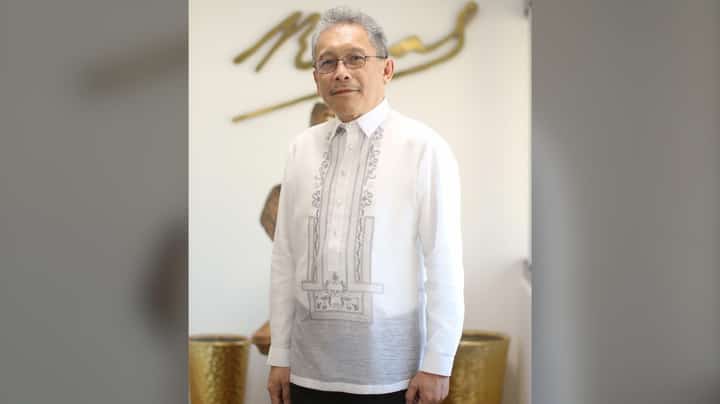
PINOY factor Philippine Ambassador to Singapore Medardo Macaraig said Filipino migrants, similar to anywhere else where the diaspora is strong, contribute greatly to the development of the progressive city-state.
Photograph courtesy of Philippine Embassy in Singapore
SINGAPORE — If there is one thing Philippine Ambassador to Singapore Medardo Macaraig takes pride in, it is the dignity and peaceful lives of Filipinos in the city-state.
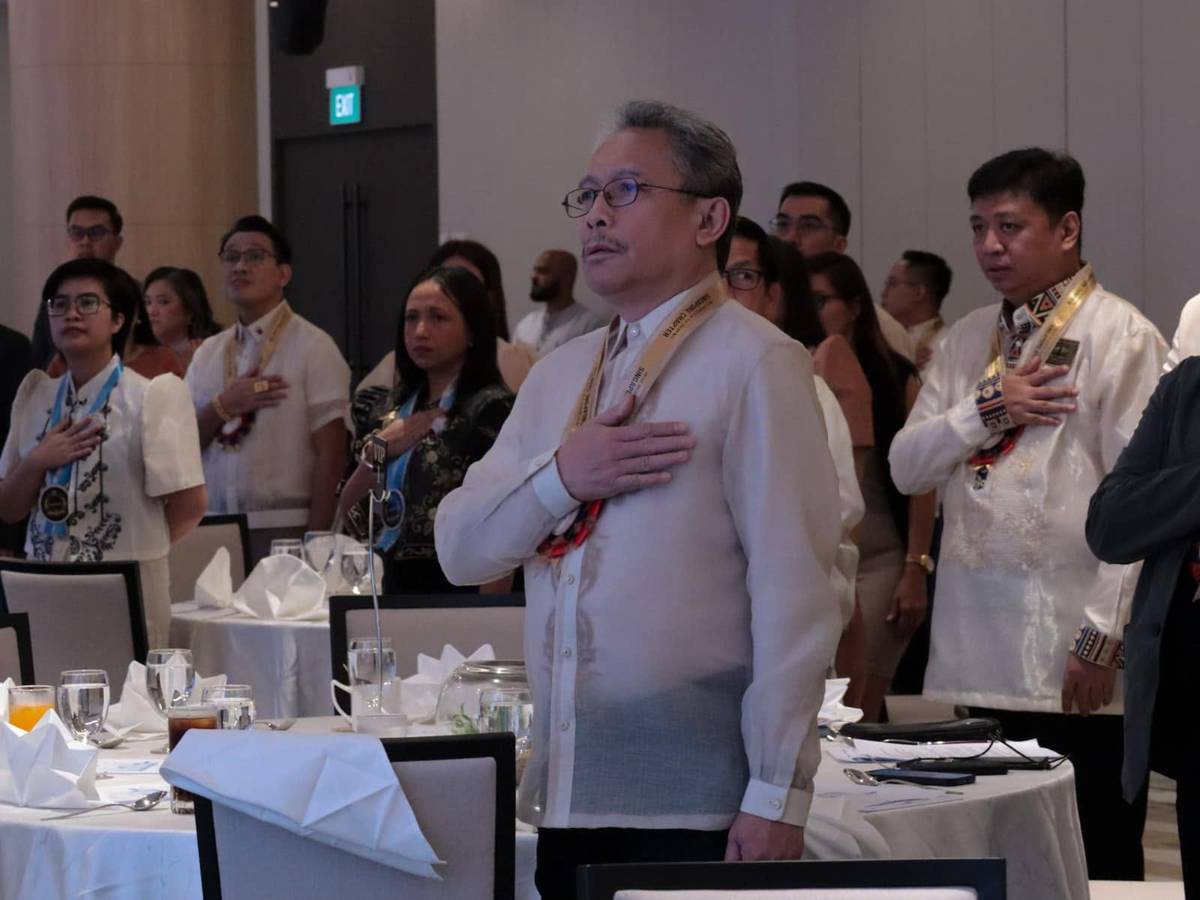
FRUITFUL life at home Since the income of overseas Filipino workers depends on their health, Philippine Ambassador to Singapore Medardo Macaraig said the priority under his term is to provide the migrants with options when they return home. At a gathering of the United Architects of the Philippines chapter in Singapore, Macaraig said expatriates' achievements inspire many Filipinos abroad who, despite being far from home, continue to pursue their dreams and elevate the country’s presence on the global stage.
Photograph courtesy of UAP Singapore Chapter
In an interview at the newly built Philippine Embassy in Singapore, Macaraig said more than 60 percent of Filipino workers in the country are professionals, highlighting their contributions to both the Singaporean and Philippine economies.
“More than 60 percent of overseas Filipino workers (OFWs) here are professionals. They contribute significantly to the economies of both Singapore and the Philippines. We continue to uphold their rights through our coordination with Singapore’s Ministry of Manpower, Immigration and Customs Authority, and Singapore Police Force, to ensure that their welfare is continuously upheld,” he said.
Filipinos work in Singapore across various sectors, including healthcare, hospitality, information technology, engineering, finance and logistics.
In healthcare, they work as nurses, healthcare assistants and caregivers in hospitals and eldercare facilities. Others work in hospitality and food and beverage establishments as hotel receptionists, housekeepers, baristas, bartenders, and kitchen staff.
Filipino professionals also work as engineers, IT specialists, project managers, accountants and financial analysts. In the services and logistics sectors, they hold positions such as customer service representatives, administrative staff, warehouse assistants and operations personnel. Some Filipinos also work as domestic helpers.
Isolated instances
Ambassador Macaraig said the number of Filipinos involved in trouble in Singapore is now much lower than before.
A report from The Independent Singapore last week stated that five Filipinos have been arrested after stealing Singapore $155,600 in cash from a male victim at the underpass near Tang Plaza on 25 September, with police recovering S$152,800 of the stolen amount and charging all five in court the following day.
Police Division officers used CCTV and Police camera footage to establish the identities of the five suspects: one male Filipino national and four female Filipino nationals aged between 31 and 57.
“All of them were arrested within the same day. The five persons were charged in court on 26 September with theft with common intention under Section 379 read with Section 34 of the Penal Code 1871. The offense carries imprisonment of up to three years, a fine, or both,” the report read.
However, Ambassador Macaraig clarified that the arrested Filipinos are not permanent residents but tourists.
“They will face the court again this 9 October for their Theft case. They were arrested immediately because Singapore has many CCTVs and strong law enforcement measures. But this is an isolated incident. There are now more than 220,000 Filipinos here, the highest number recorded during my time in Singapore. The Singapore government provided them free legal assistance. They are now in jail,” he said.
Integration program
The Ambassador also said the Embassy’s top priority is the reintegration program for OFWs living here, which the Overseas Workers Welfare Administration (OWWA) is pushing.
“We are trying to get them into entrepreneurship so that when they get back to the Philippines, they can start their own business. Because their bones and bodies won’t stay strong forever,” he said.
“In fact, next week, there will be an agri-business forum here. Last year, the Franchise Corporation of the Philippines arrived here and taught OFWs how to own franchise businesses. Aside from that, financial literacy programs continue here, as well as an information drive about financial scams,” he added.
Place Filipinos can call home
The Philippine Embassy is now serving more people after the Marcos administration completed construction of a new, larger building, Macaraig underlined.
Macaraig said consular services have increased capacity for Filipinos, including passport appointment slots, as well as services provided by OWWA, PhilHealth and the Commission on Elections.
“There are now more passport appointment slots available than before because we have expanded the number of service locations. Previously, we could only accommodate as many applicants as our limited facilities allowed,” Macaraig added.
Macaraig also noted that the embassy maintains continuous coordination with various agencies to bring their services closer to the Filipino community in Singapore.
Additionally, the ambassador proudly highlighted the recent SG Mark for Excellence in Design award for the newly constructed Philippine Embassy.
The ambassador said Monocle Magazine featured the building in April 2026 as one of only eight buildings selected from thousands of candidates for best foreign embassies in its “Good Embassies Guide.”
Singapore is home to an estimated 220,000 Filipinos who contribute significantly to the local economy and bilateral ties, Macaraig said, citing information from the Department of Migrant Workers (DMW).
In terms of remittances, Filipinos in Singapore ranked second, behind the US, the ambassador said, citing Bangko Sentral ng Pilipinas records.
“More than 60 percent of Filipinos working here are professionals. That is why they make such a significant contribution to Singapore’s economy and, of course, to our own country’s economy,” he added.
From ranks
Macaraig is a career diplomat with 30 years of experience at the Department of Foreign Affairs (DFA).
He arrived in Singapore on 1 February and presented his credentials to President Halimah Yacob as Ambassador Extraordinary and Plenipotentiary of the Republic of the Philippines to the Republic of Singapore on 14 February 2023.
Before his assignment as Philippine Ambassador to Singapore, he served as Assistant Secretary for the DFA’s Office of Asset Management and Support Services.
Ambassador Macaraig held various positions in Manila and abroad. He was Minister and Consul General at the Philippine Embassy in Kuala Lumpur, Malaysia (16 October 2013–30 September 2015); Consul General at the Philippine Consulate General in Saipan, CNMI (26 July 2009–15 October 2012); and Third Secretary and Vice Consul and later as Second Secretary and Consul at the Philippine Embassy in Ottawa, Canada (30 August 1999–30 August 2005).
At the DFA in Manila, he served as Senior Special Assistant to the Undersecretary for Administration (01 October–31 December 2015); Executive Director of the Office of Personnel and Administrative Services (12 September 2005–25 July 2009); Acting Director of the Property, Maintenance and Transportation Division (20 December 1996–29 August 1999; and Conference Officer of the APEC-National Organizing Commission Executive Committee (20 November 1995 to 19 December 1996).
Before joining the DFA, he served at the Metropolitan Manila Commission (later renamed the Metropolitan Manila Authority) from 20 May 1985 to 5 February 1995.
Ambassador Macaraig obtained a Bachelor of Science in Architecture degree from the University of the Philippines in Diliman, Quezon City.