
SC ruling risks separation of powers — prosecutor
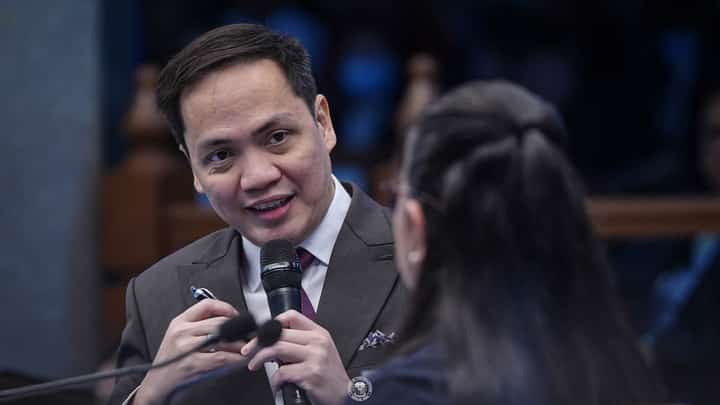
A private prosecutor in Vice President Sara Duterte’s impeachment trial said Thursday that the Constitution does not explicitly fix 16 votes as the threshold for conviction, but acknowledged that lowering the requirement could trigger a constitutional dilemma.
In a chance interview on the sidelines of a forum hosted by the Rotary Club Manila, Atty. Amando Virgil Ligutan said the defense could bring the dispute to the Supreme Court, which serves as the country’s final arbiter of legal questions. He cautioned, however, that doing so could put the high court in a position of encroaching on the Senate’s exclusive authority to try and decide impeachment cases.
“The issue here is: if the impeachment court decides to lower the threshold, can the Supreme Court take cognizance of that? That has been a perennial issue,” Ligutan told reporters.
While the Constitution does not expressly bar a Senate impeachment court ruling from being challenged before the Supreme Court, Ligutan said such a prohibition is implied by the doctrine of separation of powers.
He agreed, however, that only the Supreme Court can ultimately determine whether the threshold issue is a political question or a justiciable matter subject to judicial review.
Ligutan’s remarks came amid renewed efforts by the prosecution panel to lower the conviction threshold, citing the frequent absence of some senator-judges from the ongoing trial and the detention of others.
The number of senator-judges has dropped from 24 to 21 following the arrests of Senators Jinggoy Estrada and Rodante Marcoleta on plunder charges. Senator Bato dela Rosa, meanwhile, remains in hiding amid an outstanding warrant from the International Criminal Court.
Under Article XI, Section 3(6) of the 1987 Constitution, conviction requires the concurrence of two-thirds of all members of the Senate. With 24 senators, this translates to 16 votes.
Critics of the fixed threshold, however, argue that the circumstances have effectively altered the Senate’s practical composition.
“It is the constitutional principle that we interpret the Constitution not on the basis of absurdity, but it must be on the basis of a realistic approach,” Ligutan said.
The private prosecutor also dismissed the possibility of another “EDSA 3” should Duterte be convicted, saying the Constitution itself empowers Congress to remove an erring official from a top government post, particularly when the official on trial is someone “whose guilt is so obvious.”
“I don't want to see another EDSA. Not in this lifetime. Maturity of our nation is measured by the way we change leaders through constitutional means,” he said. “I am hoping that we will not arrive at that point.”
Legal experts remain divided over whether the conviction threshold can be lowered. Most senators, including Senate President Win Gatchalian and impeachment court presiding officer Chiz Escudero, have maintained that the 16-vote requirement will apply regardless of how many senators are present during the trial.
Escudero settled the issue at the start of the trial on July 6, citing the Supreme Court’s 2000 ruling in Bayan v. Zamora, which affirmed that the Senate is composed of 24 members.
Impeachment court spokesperson Atty. Reginald Tongol likewise warned that the prosecution’s renewed push to reduce the threshold would be “dangerous,” saying it would require the court to amend its rules in the middle of the trial, which he said is “not allowed.”
Although Tongol said Escudero’s ruling could be reversed by a majority vote of the senators without resorting to the Supreme Court, he noted that it remains unclear whether the impeachment court would permit such a challenge, given that ordinary courts impose strict periods for appeals.
Earlier, former Supreme Court Associate Justice Adolfo Azcuna told the Daily Tribune that the Senate impeachment court “cannot lower the threshold for conviction unless it expels a member or possibly declares him or her as resigned.”
Azcuna, one of the framers of the 1987 Constitution, said, however, that several legal experts from their group, Citizens’ Jury, believe senators who are unable to actively participate in the proceedings should not be included in the count.
As for absent senators, their votes are automatically counted as abstentions, according to Azcuna.