
Mariefrance Ballester: Turning Filipino musical heritage into sustainable future
‘It’s not true that there’s no food on the table if you are a musician. It’s just the system and infrastructure that we are building.’

Through Musicondalla, Mariefrance Ballester is helping Filipino music find its place in the modern world while honoring the traditions that shaped it.
PHOTOGRAPHS BY JUSTIN FABIAN FOR DAILY TRIBUNE
For Mariefrance Ballester, preserving Filipino musical heritage goes beyond keeping traditional instruments and performances alive. It means creating an ecosystem where musicians can earn from their craft, composers can protect their work, and Filipino music can reach audiences in new ways.
A cum laude graduate of the University of the Philippines College of Music and a Berkeley-trained music business professional, Ballester grew up surrounded by music. Her mother was a rondalla trainer, while her family, the Vasquez Family Ensemble, participated in national music competitions beginning in 1973.
Her own musical journey started remarkably early. At just three, she was already playing the bandurria and singing. She later learned the octavina, competed in cultural music events, and became a grand champion at the 2005 National Music Competition. Her passion eventually led her to pursue a Bachelor of Music in Music Education at UP, with voice as her concentration and piano and bandurria as minors.
But Ballester’s relationship with music eventually evolved from performer to entrepreneur.
During the pandemic, she enrolled in Berklee Online’s Master of Arts in Music Business program. The experience changed the way she viewed the possibilities within the industry, challenging the familiar belief that music could not provide a sustainable livelihood.
“I wanted to remove the notion of ‘wala para sa music,’” Ballester said, recalling the idea she had repeatedly heard growing up that music could not put food on the table.
Her answer to that mindset became Musicondalla, a venture she envisioned as a bridge between cultural advocacy and business.
The idea began in 2018, when Ballester noticed a problem among rondalla musicians, particularly those in the provinces: access to repertoire. Many groups struggled to find sheet music and had to travel to Manila just to obtain physical copies.
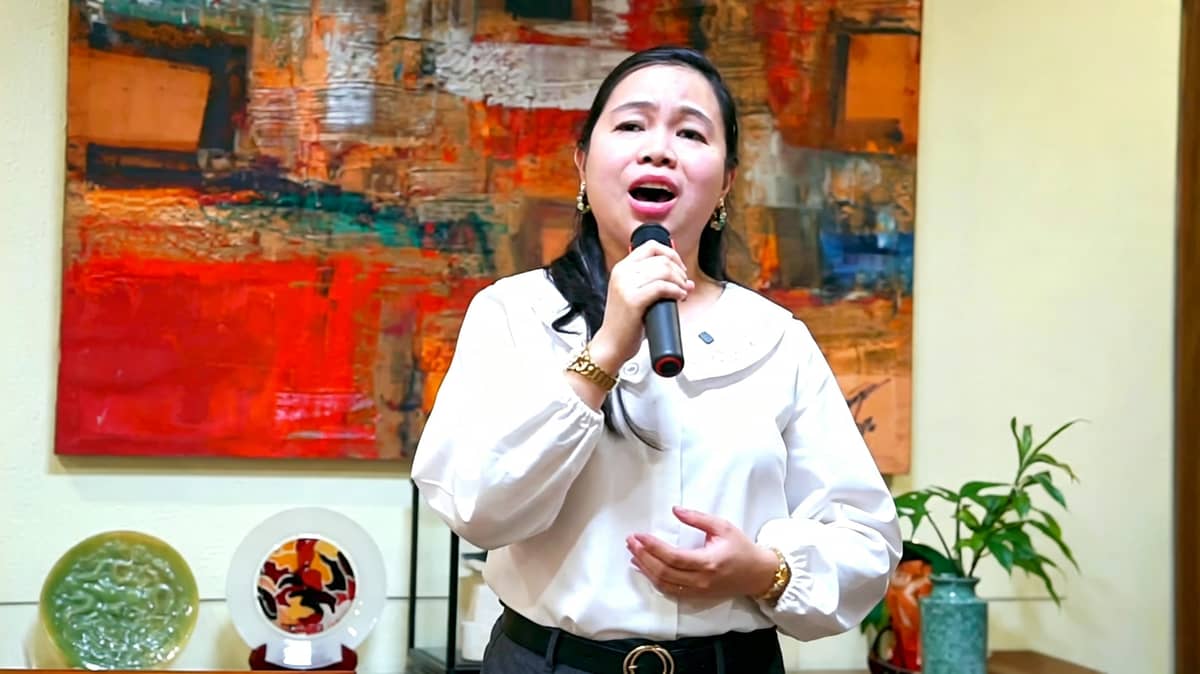
MarieFrance Ballester is using music, business, and advocacy to make sure Filipino traditions continue to resonate — not only on stages, but as a sustainable profession for artists.
She responded by creating an online sheet music platform that could make Filipino Rondalla repertoire accessible anytime and anywhere.
One of the people who helped shape that vision was composer Dr. Alfredo Buenaventura. Ballester approached him about making his compositions available digitally, eventually helping expand the repertoire available to Rondalla musicians beyond the limited pieces commonly performed for churches, airports, and traditional events.
But accessibility was only one part of Ballester’s mission. She also wanted to address a deeper problem: how Filipino composers and musicians could be properly compensated for their work.
Her studies in music business law introduced her to the importance of copyright and intellectual property. She saw how established artists could benefit from music publishing, while many classical and traditional Filipino composers remained without similar systems.
Through Musicondalla, she began conducting workshops and developing ways to bring greater awareness to copyright and the value of original musical works.
Today, Ballester envisions Musicondalla as more than a performance group. She describes it as a “cultural advocacy with business discipline,” a platform where Filipino musicians can see their passion as a profession rather than simply a hobby.
“It will also serve as this business ecosystem for Filipino musicians,” she said.
That ecosystem now includes intellectual property, performances, education, entertainment, instruments, and technology. Musicondalla has also expanded into performing groups, including the Musicondalla Performing Group and Misico Filipina Rondalla, which cater to corporate and cultural events.
For Ballester, each performance becomes an opportunity to introduce audiences to the richness of Filipino musical traditions while creating actual work for musicians.
Her vision is ultimately about changing perceptions, both about traditional music and about the livelihood of Filipino artists.
“It’s not true that there’s no food on the table if you are a musician,” she said. “It’s just the system and infrastructure that we are building.”
As Musicondalla grows, Ballester hopes to prove that cultural preservation and entrepreneurship do not have to exist separately. With the right systems, Filipino musical heritage can be protected while also creating sustainable opportunities for the people who keep it alive.
For a musician who began playing the bandurria at three, the mission has come full circle: from learning the traditions passed down by her family to building an enterprise that can help ensure those traditions continue for generations to come.