
Lolita Delgado-Fansler: A century of mission, a lifetime of service
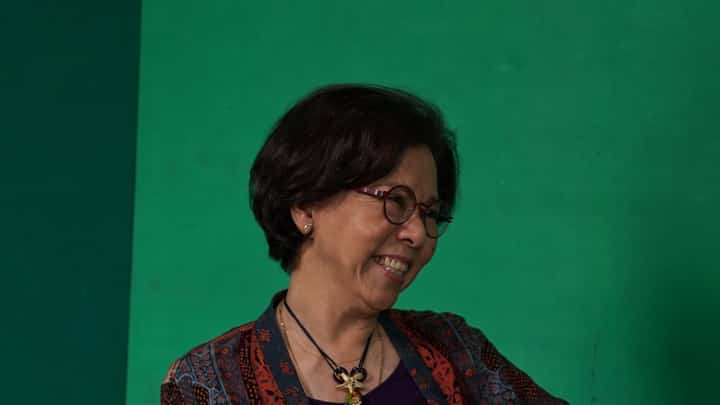
LOLITA Delgado Fansler continues a lifelong commitment to service, carrying forward the values of education, community and social responsibility.
Photograph by Andrea Adriano for DAILY TRIBUNE
Long before “social development” became a familiar field and before foundations and NGOs became part of the country’s wider civic landscape, Lolita Delgado-Fansler was already asking a simple question: How can I help?
That question would eventually shape decades of foundation work, community involvement and advocacy. At the center of it was an education she received from the Maryknoll sisters, who taught her that education was not only about building a career, but also about using that career to serve others.
Fansler’s entry into foundation work began through her family. Her father established the Jose Antonio Delgado Memorial Foundation after the death of her brother, one of the Boy Scouts who died in a plane crash. When Fansler eventually took on the work, she gave it the trade name Ala-Ala Foundation.
At the time, foundation work was hardly a familiar career path. Fansler recalled that people would sometimes misunderstand what she meant when she said she worked in the field.
“I’ll say, ‘Oh, I do foundation work,’ and they’ll say, ‘Oh, is that construction, makeup, or undergarments?’” she recalled. She would then explain that she meant a philanthropic organization, similar in concept to the Rockefeller Foundation or Ford Foundation, but operating on a smaller Philippine scale.
The challenge was that Fansler had no formal training for the work.
She had studied English Literature and Philosophy and was pursuing graduate studies in social anthropology. None of those fields, she realized, had taught her how to actually run a foundation.
So she turned to people who already knew how to do it.
Fansler reached out to foundation leaders, corporate executives, and university presidents, interviewing them and learning from their experiences. That search for knowledge eventually led her to establish the Association of Foundations. What began as an effort to understand foundation work grew into an organization that she said now has nearly 300 members and more than five decades of history.
Her work eventually took her beyond managing a foundation and into communities where she could see social and economic challenges firsthand.
Fansler became involved with projects in Negros, where she observed the difficulties faced by communities affected by the decline of the sugar industry. She also worked with indigenous communities, including the Mangyans, expanding her involvement into broader social development and cultural advocacy.
These experiences reinforced the importance of understanding communities on their own terms and connecting people and institutions that could respond to their needs.
The values behind that work can be traced back to Maryknoll College (now Miriam College).
Fansler remembers Maryknoll as a place that prepared women not only for family life but also for professional lives and meaningful work. Whether in business, medicine, teaching, the arts, or community service, she believes its alumnae continue to carry forward what the sisters began.
She saw that influence firsthand in Negros, where women educated by the Maryknoll sisters told her that while their mothers had been raised to become wives of hacenderos, they had been taught by the nuns to find ways to help the poor.
That connection between education and service would eventually bring Fansler back to Maryknoll in another way.
As executive producer of “A Century of Mission,” Fansler is helping document the history and legacy of the Maryknoll sisters in the Philippines. Her involvement began when the sisters were planning activities for their centennial in the country. Rather than producing a one-time play, she advocated for something more lasting.
She eventually provided the project’s first grant, describing it as her way of expressing gratitude to the sisters who had helped shape who she became.
For Fansler, preserving that history is also a way of passing its lessons forward. She hopes the project will help younger Filipinos understand the sacrifices made by the Maryknoll sisters when they came to the Philippines and the lasting impact of their work.
That makes “A Century of Mission” more than a look back at an institution. It mirrors Fansler’s own journey.
Her life has been shaped by the same idea at the heart of the film: A mission is not simply something you inherit. It is something you carry forward.
From building networks among foundations to working with communities and supporting projects that preserve the stories of those who came before, Fansler has continued to turn that education into action.
Decades after Maryknoll helped shape her understanding of service, she remains committed to a mission of her own. One that is built around creating opportunities, strengthening communities, and ensuring that what was given to her can continue to be passed on to others.