
Spillway program revived by DA, LLDA
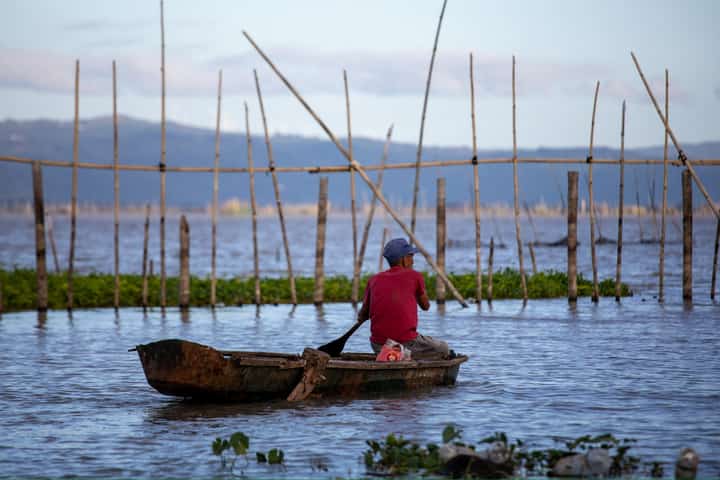
FISHERMAN in Laguna de Bay. Around 8 million Filipinos are directly and indirectly dependent on marine and coastal resources.
PHOTOGRAPH by JOHN LOUIE ABRINA for the Daily Tribune
A P90-billion spillway infrastructure project is now being revived by the Department of Agriculture and the Laguna Lake Development Authority (LLDA) for Metro Manila and nearby provinces.
First proposed in the 1970s, the 10.5-kilometer spillway would run at least 50 meters and is reviving the long-delayed Parañaque Spillway Project, arguing that the proposed P90-billion infrastructure could deliver far more than flood control by transforming Laguna de Bay into a more productive fisheries hub and a dependable freshwater reservoir, linking Laguna de Bay to Manila Bay.
The project is expected to take at least a decade to complete once construction begins.
According to Agriculture Secretary Francisco Tiu Laurel Jr., the renewed push reflects a broader shift in how policymakers view major water infrastructure, not simply as flood mitigation projects but as investments that could simultaneously improve food security, water management, and climate resilience.
Tiu Laurel Jr. noted that the spillway would ease recurring flooding in lakeshore communities across Laguna, Rizal, and Metro Manila while helping restore the ecological health of the country’s largest freshwater lake. “Laguna de Bay is one of Metro Manila’s most important food baskets and our most affordable source of bangus. If we restore the lake’s health by improving water circulation and managing floods better, we can raise fish production, increase fisherfolk incomes, and improve raw water quality, which could eventually help lower water treatment costs for consumers,” the secretary said.
Hurdles
The project, however, continues to face political and social hurdles. Residents of Muntinlupa City, where the tunnel would draw water from the lake, and Bacoor City, where excess water would be discharged into Manila Bay, have long raised concerns over community displacement and the possibility of shifting flood risks from one area to another.
LLDA general manager Leopoldo Parumog said the spillway has become even more critical with the planned Manggahan Control Gate Structure, a Japanese-funded project designed to divert up to 2,400 cubic meters of floodwater per second from the Marikina River into Laguna de Bay to protect Metro Manila from severe flooding.
That volume of water is equivalent to the content of one Olympic-size swimming pool per second being dumped into the lake.