
Hog industry bleeds P27.9B amid import surge
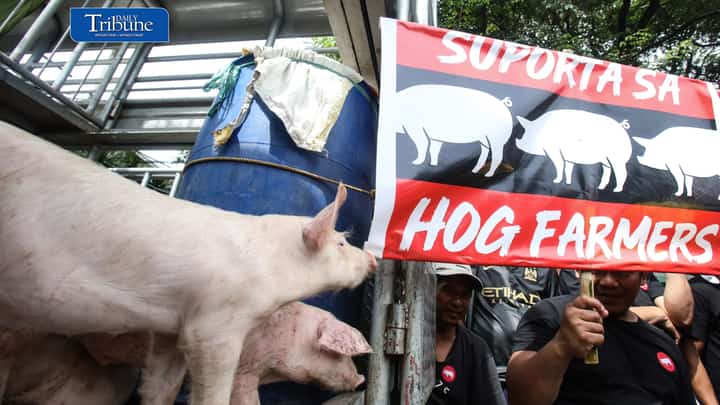
The Philippine hog industry lost an estimated P27.9 billion in the first seven months of the year as surging pork imports drove down farmgate prices, prompting the government to impose a 60-day restriction on foreign shipments to protect struggling local producers.
The Department of Agriculture (DA) said Monday the temporary restriction seeks to prevent further damage to an industry still recovering from African Swine Fever (ASF), as imported pork increasingly displaces domestic production.
Agriculture Secretary Francisco Tiu Laurel Jr. signed the order on Saturday, authorizing a provisional safeguard measure under Republic Act 8800, or the Safeguard Measures Act.
“The preliminary findings show that the surge in pork imports is putting severe pressure on our local producers. We cannot allow an import surge to undermine an industry that is still struggling to recover from years of ASF-related losses,” Tiu Laurel said.
DA data showed pork imports surged 42 percent to 836,240 metric tons (MT) in 2025 from 589,675 MT in 2023.
Imports reached 65 percent of domestic production in the first half of 2026, up from 39 percent in 2021.
The country’s pork self-sufficiency also plunged to 54 percent in the first eight months of 2026 from 74.3 percent in 2021, underscoring the industry’s weakening position against foreign suppliers.
The influx pushed frozen pork inventories to 121,000 MT in July, up 38 percent from a year earlier, with imported products accounting for 94 percent of stocks.
As supplies piled up, average farmgate prices dropped to P175.75 per kilogram in the first half from P198.30 in 2025. Some producers reported prices collapsing by half to P120 per kilogram.
The DA warned that industry losses could double to P55.8 billion by year-end if weak prices persist. Industry submissions indicated potential losses of as much as P100 billion.
The restriction covers specified fresh and frozen pork cuts, carcasses, and edible offal. It will take effect upon issuance of a Bureau of Customs order or 15 days after publication in two newspapers of general circulation, whichever comes first.
Tiu Laurel acknowledged that the 60-day restriction might not be enough to stabilize the industry, although extending the measure could affect consumers and meat processors.
“We can extend the period, just as we did with the rice import ban last year. But this requires a delicate balancing act because we also have to consider the needs of consumers and meat processors,” he said.
The case will proceed to the Tariff Commission for a formal investigation to determine whether longer-term safeguards are justified.
Tiu Laurel also renewed his push to raise pork tariffs to 30 percent for in-quota shipments and 40 percent for out-quota imports, from the current 15 percent and 25 percent, respectively.
“Rebuilding the hog industry requires more than short-term price interventions. We are working through the necessary legal, regulatory, and industry reforms to bring the national hog population back to its pre-ASF level of about 13 million heads by the end of 2028,” he said.