
PHL firms face trust crisis over pricing
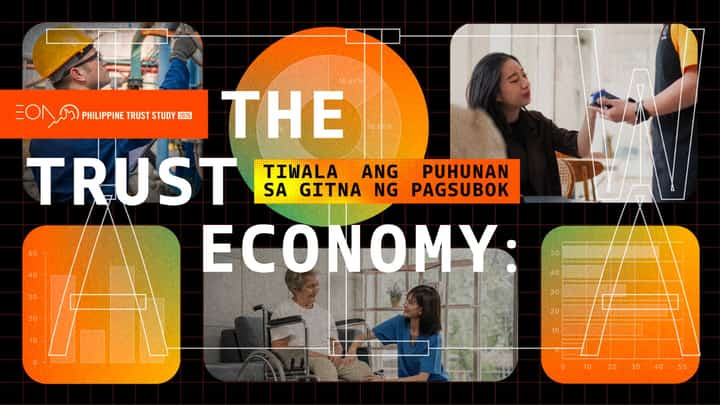
Philippine businesses are facing mounting pressure to justify their prices and deliver better value, as a nationwide study found that high costs, hidden charges, and questionable transactions are eroding consumer confidence across major industries.
The 2026 Philippine Trust Study by EON Group and Ateneo de Manila University revealed that public confidence in businesses remains conditional, with the country’s first Business Trust Index scoring just 72 out of 100.
None of the nine industries surveyed achieved a robust trust rating, highlighting the challenge companies face in retaining customers as inflation squeezes household budgets and raises scrutiny over corporate pricing practices.
Among 375 respondents who identified a least-trusted sector, 19.7 percent cited unreasonable prices as their primary concern, while 14.7 percent pointed to unclear fees and 11.7 percent complained about hidden charges.
Another 14.4 percent cited dishonest or nontransparent transactions, suggesting that consumer distrust extends beyond affordability to how businesses deal with their customers.
The findings take on greater significance as Philippine inflation accelerated to 7.8 percent in October, putting additional pressure on household spending and forcing consumers to weigh the cost and quality of goods and services.
“Are customers staying because they trust a business, or because they have no other choice? Businesses are part of the systems that keep our country moving, but being essential to people’s everyday lives does not make a business trustworthy.
Filipinos should not have to keep absorbing the cost of poor value and unclear pricing. It is up to businesses to give people real reasons to choose them, and to keep choosing them,” EON Group President and COO Malyn Molina said.
The trust problem cuts across industries, although some sectors face greater challenges than others.
Real estate and construction registered the weakest confidence score at 67.7, followed by business process outsourcing, information and communications technology, and tourism and travel, both at 68.6.
All three fell within the study’s Fragile Trust category, indicating that public confidence in these industries is particularly vulnerable.
Financial technology scored 70.8, while manufacturing registered 70.9, placing both sectors near the threshold for fragile trust.
Even the highest-rated industries failed to secure robust public confidence. Food and agriculture led with 75.6, followed by healthcare and pharmaceuticals at 75.4 and commerce, e-commerce and retail at 75.0.
Energy and utilities scored 73.0.
Likewise, the study found that Filipinos place greater importance on corporate honesty and actual service delivery than brand recognition.
About 34.6 percent of respondents ranked honesty as the most important factor in determining whether a business deserves their trust. Product and service quality followed, while brand prestige and public image ranked last among 16 attributes.
“The prominence of honesty in the findings is significant. It tells us that Filipinos place great importance on whether businesses can be trusted to deal with them truthfully.
But honesty is not judged in isolation. It is reinforced—or undermined—by the quality of products and services, the consistency of what businesses deliver, and how they treat the people affected by their decisions,” said Wilfred Luis Clamor of Ateneo’s Department of Sociology and Anthropology.
The findings also suggest that bigger companies cannot rely on their size or established brands to win consumer confidence.
Large enterprises recorded a trust score of 72.3, barely higher than the 71.7 registered by micro, small and medium enterprises.
The narrow gap reinforces the study’s broader finding that trust depends more on business conduct and customer experience than corporate stature.
Conducted from May to August, the study surveyed 800 Filipino adults across 160 barangays in 84 cities and municipalities. It also included focus group discussions with 82 participants and interviews with 18 business executives.