
Anti-political dynasty bill among 24 Marcos legislative priorities
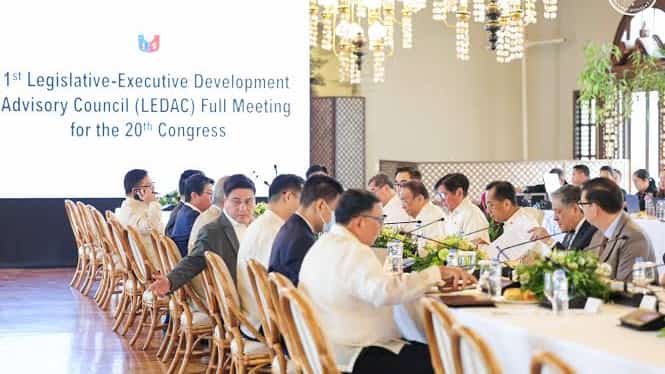
President Ferdinand Marcos Jr. convened the fourth meeting of the Legislative-Executive Development Advisory Council (LEDAC) on Thursday, identifying 24 priority legislative measures for the 20th Congress.
Palace Press Officer and Presidential Communications Office Undersecretary Claire Castro said the priority agenda includes the Anti-Political Dynasty Law, Party-List System Reform Act, People's Freedom of Information/Right to Information Act, and amendments to the Bank Deposits Secrecy Law, also known as the BRIGHT Act.
Also included are the Philippine Budgeting Code, the Promoting Growth, Revenue, and Equity Towards Socio-Economic Sustainability (PROGRESS) Bill, General Tax Amnesty, including estate tax amnesty, the Travel Tax Abolition Act, amendments to the Coconut Farmers and Industry Trust Fund Act, and revisions to the Fisheries Code.
In line with priorities outlined in the President's fifth State of the Nation Address, LEDAC also identified amendments to the Electric Power Industry Reform Act (EPIRA), including the proposed abolition of system loss charges and measures to strengthen the Energy Regulatory Commission, as well as the Sariling Kuryente Act and the Waste-to-Energy Bill.
Education-related measures include amendments to the Masustansyang Pagkain para sa Batang Pilipino Act, the Classroom-Building Acceleration Program Act, the Government Assistance to Students and Teachers in Private Education (GASTPE) Act, the Universal Access to Quality Tertiary Education Act, the Presidential Merit Scholarship Program, and the proposed National Coordinating Council for Education Act.
Other priority bills cover amendments to the Anti-Online Sexual Abuse or Exploitation of Children and Anti-Child Sexual Abuse or Exploitation Materials Act, the proposed National Center for Geriatric Health Act, the Assistance to Individuals in Crisis Situation (AICS) Act, amendments to the Pantawid Pamilyang Pilipino Program (4Ps) Act, the proposed Bagong Balikbayan Act, and amendments to the National Building Code.
The President last convened the full LEDAC on 10 February, when 21 priority measures were identified.
Created under Republic Act No. 7640, LEDAC serves as the government's primary mechanism for coordinating the legislative agenda between the Executive and Congress to support the country's socioeconomic development. It is required to meet at least once every quarter or as convened by the President.
The meeting was attended by key Cabinet officials and congressional leaders, including Senate President Sherwin Gatchalian, House Speaker Bodjie Dy, and members of both chambers of Congress.