
Revilla wins bail petition
The guilt of an accused must be determined on the ‘weight’ of the evidence, which would ultimately convince the judges that none of the accused should be entitled to the provisional liberty prescribed in the Constitution.

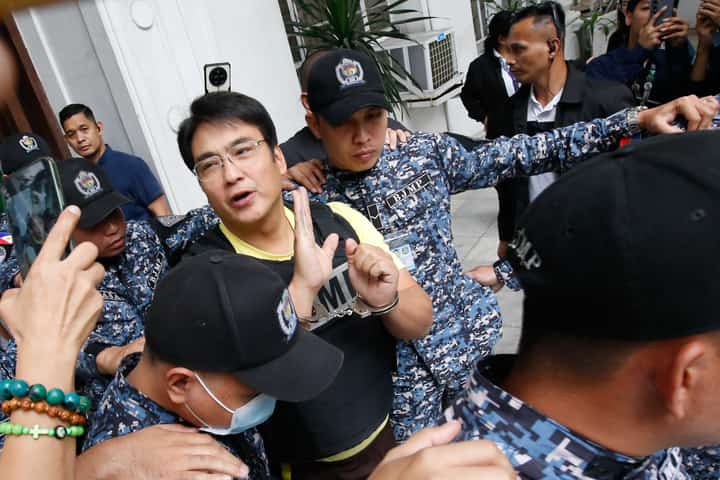
The Sandiganbayan Third Division granted the petition of former Senator Ramon “Bong” Revilla to post bail in his malversation case involving alleged kickbacks from a P92.8-million flood control project in Pandi, Bulacan.
In a 106-page resolution dated 31 July, the anti-graft court explained that the state prosecutors “fell short” when it came to presenting strong evidence that Revilla was guilty of the crimes that he was being alleged to have committed through the bail hearings.
It was further noted that the guilt of an accused must be determined on the “weight” of the evidence, which would ultimately convince the judges that none of the accused should be entitled to the provisional liberty prescribed in the Constitution.
When it came to the case of Revilla, however, the anti-graft court maintained that the evidence which was gathered from the testimonies of former and current Department of Public Works and Highways (DPWH) officials, such as Henry Alcantara and Roberto Bernardo, did not sufficiently establish that he committed the act of malversation.
“In accused Revilla’s case, there was no narration in the testimonies offered as to how accused Revilla facilitated the inclusion of the subject project for funding,” the resolution read.
Precedence cited
“Being the chairperson of the Senate’s Committee on Public Works does not automatically mean that he has the power to author a budget that is binding not only on said Committee but even on the Senate itself as a plenary body as well as the Bicameral Committee of Congress,” it added.
The resolution also stated that there was absence of proof that Revilla agreed that his co-accused in the case would commit the crime of malversation, which he himself is alleged of carrying out, in the future.
Such precedence, for the court, was said to be needed to satisfy the argument that there was “strong evidence of guilt” on the part of the former senator.
Another factor that the court pointed to in its decision to grant the petition of the former senator was the fact that the funds that were allegedly involved in the case were not “public” in nature given the fact that it was established through the proceedings that the funds were provided came from private contractors.
“At the time accused Revilla allegedly received his ‘commitments,’ the cash supposedly involved in the deliveries came from private persons as testified. At that time, the funds involved insofar as accused Revilla is concerned were not public in character,” the court stated.