
Seen by the world before home
Too often, a Filipino film becomes ‘must-watch’ only after a foreign festival says it is.


There is something both encouraging and bittersweet about this year’s Cinemalaya Independent Film Festival opening and closing films.
Before Filipino audiences get to watch them in Manila, opening film Enjoy Your Stay and closing film Filipiñana have already made their mark on the international festival circuit.
Enjoy Your Stay premiered in the Panorama section of the 76th Berlin International Film Festival, while Filipiñana debuted in the World Cinema Dramatic Competition of the 2026 Sundance Film Festival. Only after earning those coveted premieres do they return home as the bookends of Cinemalaya on opening night on 6 August and closing night on 18 August.
This has become an increasingly familiar journey for many Filipino independent films — they travel thousands of miles before finally reaching the very audience whose stories they tell.
But that is not a criticism of the filmmakers. If anything, it is a testament to the caliber of Philippine independent cinema. International festivals recognize these films because they offer stories that are deeply rooted in Filipino realities while speaking to universal human experiences, such as migration, family, class, power, sacrifice, identity, and survival — which transcend borders.
Filmmakers without borders
The films’ journeys mirror those of their filmmakers. Enjoy Your Stay is co-directed by Swiss filmmaker Dominik Locher and Filipino screenwriter and filmmaker Honeylyn Joy Alipio, whose collaboration brought together an international production with a distinctly Filipino story.
Filipiñana, meanwhile, is directed by Rafael Manuel, an Ateneo de Manila University graduate and London Film School alumnus whose award-winning 2020 short film of the same title won the Silver Bear Jury Prize at the Berlinale before becoming the feature that premiered at Sundance this year.
Their careers reflect a growing reality for Philippine independent cinema: Many of its most ambitious projects are now developed, financed, mentored and launched through international collaborations and film institutions before eventually returning home.
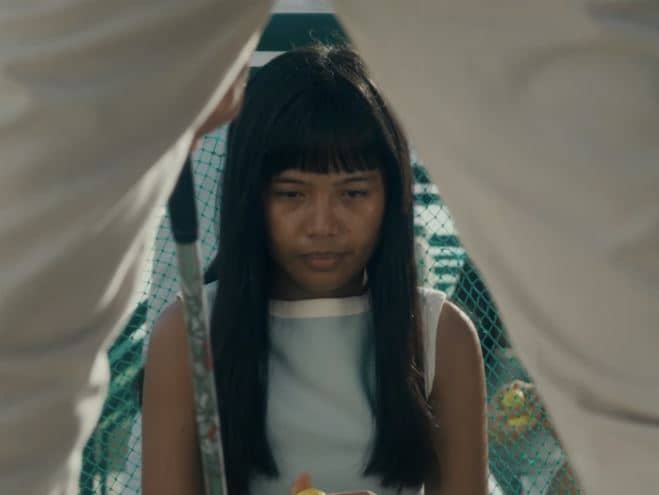
‘Filipiñana.’
The validation question
The question is why local audiences often encounter these films only after they have been celebrated abroad.
International premieres undeniably matter. Festivals such as Berlinale and Sundance give independent films visibility, credibility and opportunities for wider distribution, and recognition from these prestigious platforms can attract distributors, critics, and audiences who might otherwise overlook a modestly budgeted production. For many filmmakers, these festivals are not merely destinations but essential gateways.
Yet it is worth asking whether international acclaim has become an unintended prerequisite for local attention.
Too often, a Filipino film becomes “must-watch” only after a foreign festival says it is. Headlines highlighting selections, awards, and standing ovations generate excitement that the films may have struggled to receive on their own. The irony is difficult to ignore: stories about Filipinos frequently need overseas validation before they command sustained interest at home.
Beyond the laurels
Perhaps the real measure of success is not how quickly Filipino films reach Berlin or Sundance, but how confidently they can command attention at home without those names attached. As long as international recognition remains the strongest endorsement a local film can receive, Filipino audiences will continue to discover their own stories through someone else’s seal of approval.
After all, the world’s applause is meaningful. But no audience should matter more than the one these stories were born to reflect.