
DRIVING THE DREAM: Pato using sports to fuel economic engine
‘They will come even during challenging times, and they bring companions who stay longer and spend more.’


PATRICK ‘Pato’ Gregorio is using his expertise in both sports and then hospitality industry in driving the country’s economic engine through sports tourism.
PHOTOGRAPH courtesy of PSC
When Malacañang sought to overhaul the country’s economic and athletic roadmap, President Ferdinand “Bongbong” Marcos Jr. didn’t pick a career bureaucrat.
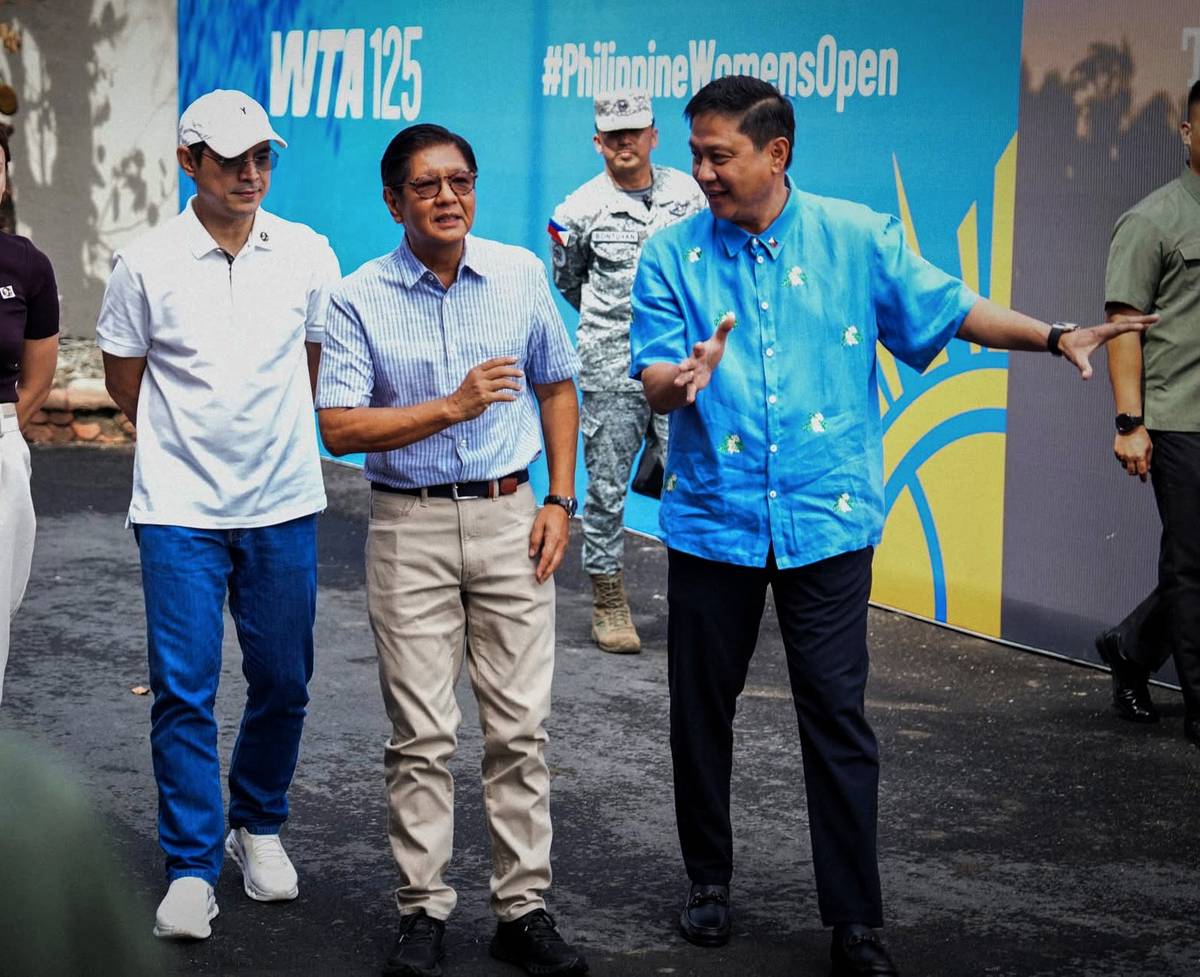
PHILIPPINE Sports Commission chairman Patrick ‘Pato’ Gregorio (right) gives President Ferdinand ‘Bongbong’ Marcos Jr. and Manila Mayor Francisco ‘Isko’ Domagoso (left) a tour of the newly-refurbished Rizal Memorial Sports Complex.
PHOTOGRAPH courtesy of PSC
He found his catalyst in seasoned sports executive Patrick “Pato” Gregorio.
Since taking the helm as the 13th chairman of the Philippine Sports Commission (PSC) in July of last year, Gregorio has emerged as the chief architect of an aggressive push to merge athletic competition with economic growth, positioning the country as a premier sports tourism hub in Southeast Asia.
The vision gained teeth on 29 October when the President issued Administrative Order No. 38, creating the National Sports Tourism Inter-Agency Committee (NST-IAC) and naming Gregorio as its chairperson. The mandate is precise: synchronize the capabilities of the PSC, the Department of Tourism, and the Philippine Amusement and Gaming Corporation to attract elite international sporting events while building up provincial capabilities.
For Gregorio, the assignment represents a perfect convergence of his dual expertise in sports management and hospitality.
“Athletes operate in their own ecosystem — they travel to compete for their country, for their families, and for medals,” said Gregorio, an award-winning hotelier before entering sports through the Samahang Basketbol ng Pilipinas and Association of Boxing Alliances of the Philippines. He also served as secretary general of the Philippine Olympic Committee and president of the Philippine Rowing Association before taking over the top sports agenda of the government.
“They will come even during challenging times, and they bring companions who stay longer and spend more.”
Under Gregorio’s watch, the strategy is actively rolling out across the archipelago.
The NST-IAC has already secured a string of high-profile wins, including the country’s first-ever WTA 125 tournament — the 2026 Philippine Women’s Open — while building momentum toward hosting the 2028 Asian Beach Games in Cebu. Gregorio is also actively laying the groundwork for a historic bid to host the 2033 World Games.
But transforming the landscape requires more than chasing multi-million dollar international bids.
Gregorio’s philosophy ties global hosting rights directly to the development of the countryside. During a multi-city tour through Davao, Iloilo and Cebu earlier this year, he underscored that regional training centers are the true lifeblood of the movement. From expanding aquatic facilities in Mindanao to upgrading historic pitches in football-crazy Iloilo, the objective is to transform local government units into self-sustaining sports destinations.
“It is a strategic starting point for fast-tracking regional training centers and sports development, spanning all levels,” Gregorio noted, branding the infrastructure push as vital preparation for the Los Angeles 2028 and Brisbane 2032 Olympic cycles.
By anchoring world-class hospitality with the grit of local athletes, Gregorio is proving that sports can be a primary vehicle for national transformation in stimulating the local economy.
In a local sporting landscape historically obsessed solely with the podium, this aggressive push shifts the entire paradigm: sports should no longer be considered as an expense, but rather as a national investment.