
Halfway to 2030, still stuck in traffic
This is what halfway to 2030 looks like. There are more options, but the commute is the same.


The new year begins with optimism. You wake up thinking this is the year you eat better, save more money, exercise regularly and leave the house earlier, hoping traffic is lighter.
By the first Monday back at work, reality steps in. Traffic is heavy again.
On New Year’s Day, one church held Mass with floodwater already inside. Some roads were already flooded again. The car in front of you is still braking for no clear reason.
Welcome to 2026. We are now closer to 2030 than to the pandemic years. That sounds cool until you actually drive to work.
The car industry keeps talking about the future. Cleaner mobility. Electrification. Smart systems. The ADAS (Advanced Driver Assistance Systems) buzzword all over the automotive internet.
On paper, the road to 2030 looks promising. Everything feels forward-looking and futuristic. Yet on the ground, cars barely move.
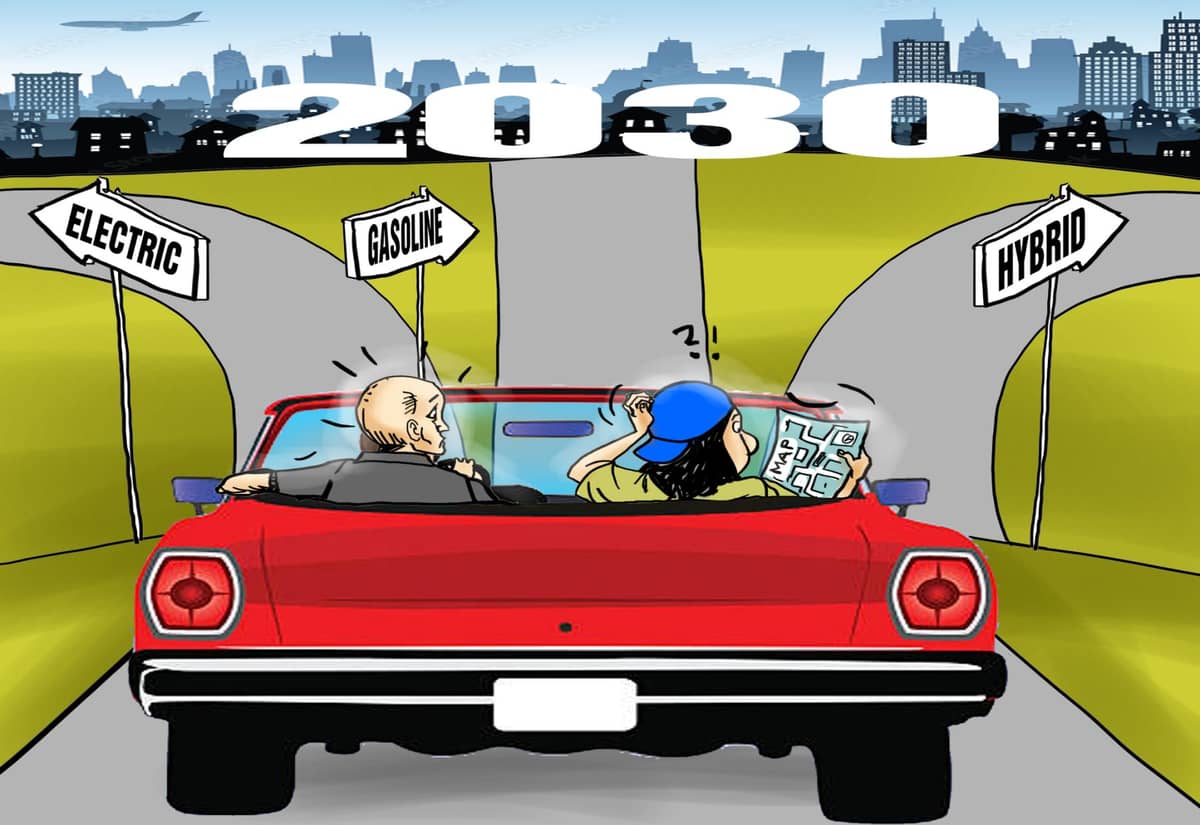
Illustration BY GLENZKIE TOLO
This is the phase we are in now. Cars are changing fast, but everyday driving has not kept up. We are moving toward a future where electric vehicles are expected to become common, while other power types continue to fill the gap.
Different kinds of cars are still on the road together. They face the same traffic and the same road conditions.
Electric vehicles promise a lot. Quiet drives. Lower running costs. No fuel stops. It works well in traffic. Charging still takes planning. Charging stations are limited.
Some are occupied or offline, while others are listed but unavailable. EVs work best when daily driving routines allow for charging.
Gasoline cars remain stubbornly useful. Fuel stations are everywhere. Refilling is quick. You do not need to plan for it.
The downside is obvious every time you look at the price. Fuel costs more, especially at the start of the year, when budgets are already tight from holiday spending or petsa de peligro is near.
Hybrids sit quietly in the middle, which is exactly why many people like them. Less fuel use. No charging anxiety. No radical lifestyle adjustments. They work well in traffic and on long drives.
The compromise is that they are not fully free from fuel costs or maintenance. They are practical, which is often the point.
What makes this moment interesting is that the industry itself seems undecided. Instead of one clear direction, we now have choices stacked on top of each other. Electric here, hybrid there and gasoline cars are still around.
Meanwhile, life goes on. Offices reopen. Schools resume. Roads flood again. Traffic goes back to normal. New Year’s resolutions start to slip.
This is what halfway to 2030 looks like. There are more options, but the commute is the same.
The future might sort itself out in the next few years. Maybe infrastructure will catch up. Maybe traffic will improve, although nobody is betting on that.
2026 starts the same way it always does. New goals. Old roads.
In Chinese astrology, 2026 is the Year of the Fire Horse. It is supposed to be fast and always in motion. The traffic, unfortunately, did not get the memo.
For now, we drive what we drive. We adapt. We complain. We make adjustments and hope for the best. The Fire Horse charges ahead. Meanwhile, traffic follows at its own pace and minds its own business.
And tomorrow morning, we still leave the house, hoping the commute feels lighter than yesterday, even if Fire Horse traffic is moving like a kalesa.