
Magalang’s Christmas event features ‘lubenas’ tradition, dazzling lanterns and orchestra concert
The town of Magalang held ‘Ing Banal a Batuin ning Magalang: Lubenas Ning Pasku,’ a cultural and religious event promoting the Pampangan Christmas tradition of lubenas and a showcase of showy lanterns


More than 400 bright Christmas lanterns, in the shape of stars, crosses and fish, and bearing intricate embellishments, lit up the streets in the town proper of Magalang on 13 December for “Ing Banal a Batuin ning Magalang: Lubenas Ning Pasku 2024 (The Holy Star of Magalang: The Christmas Lubenas).”
Organized by the municipal government of the town in the northern part of the province of Pampanga, the Christmas event aimed to promote the Pampangan Christmas tradition of lubenas, which would start in a couple of days on 16 December, and to celebrate the 161st founding anniversary of the town, the Aldo ning Magalang (Day of Magalang). It was able to gather 26 groups from almost all of its barangays for a grand procession and lantern competition.
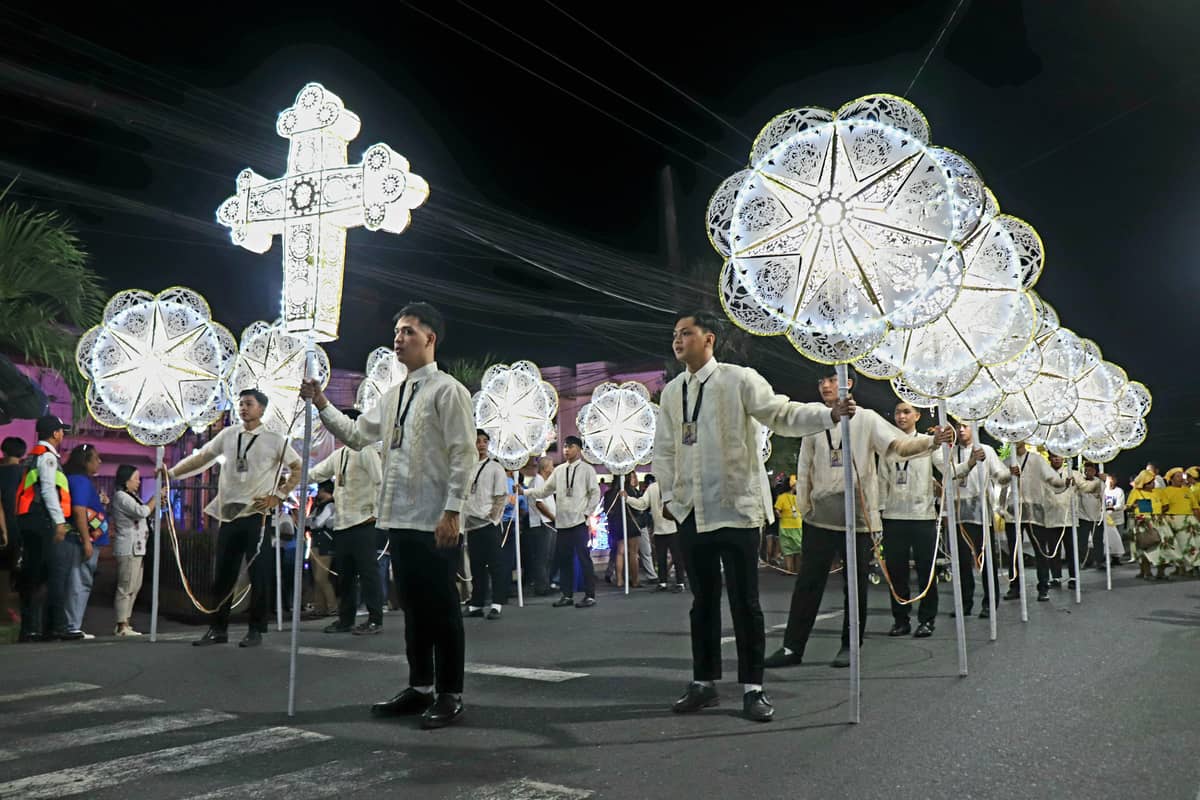
The contingent from the barangay of San Pedro II with their lanterns.
Photograph BY Roel Hoang Manipon for the Daily Tribune
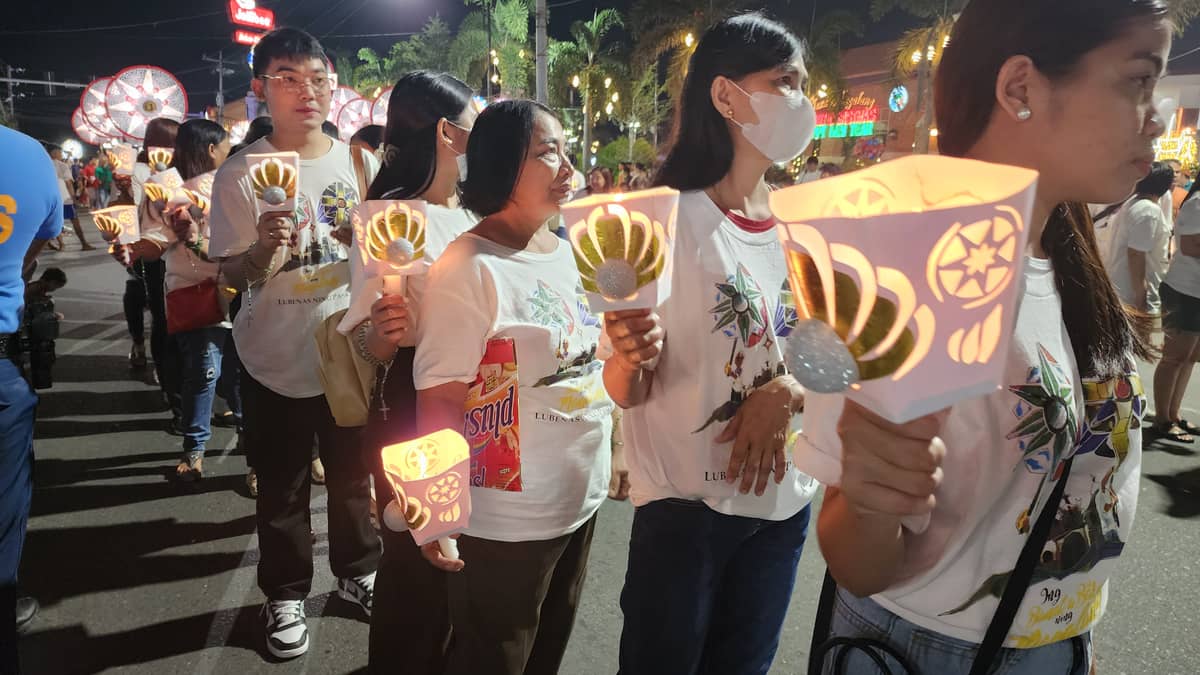
Early forms of Pampanga’s lanterns were lit by candlelight.
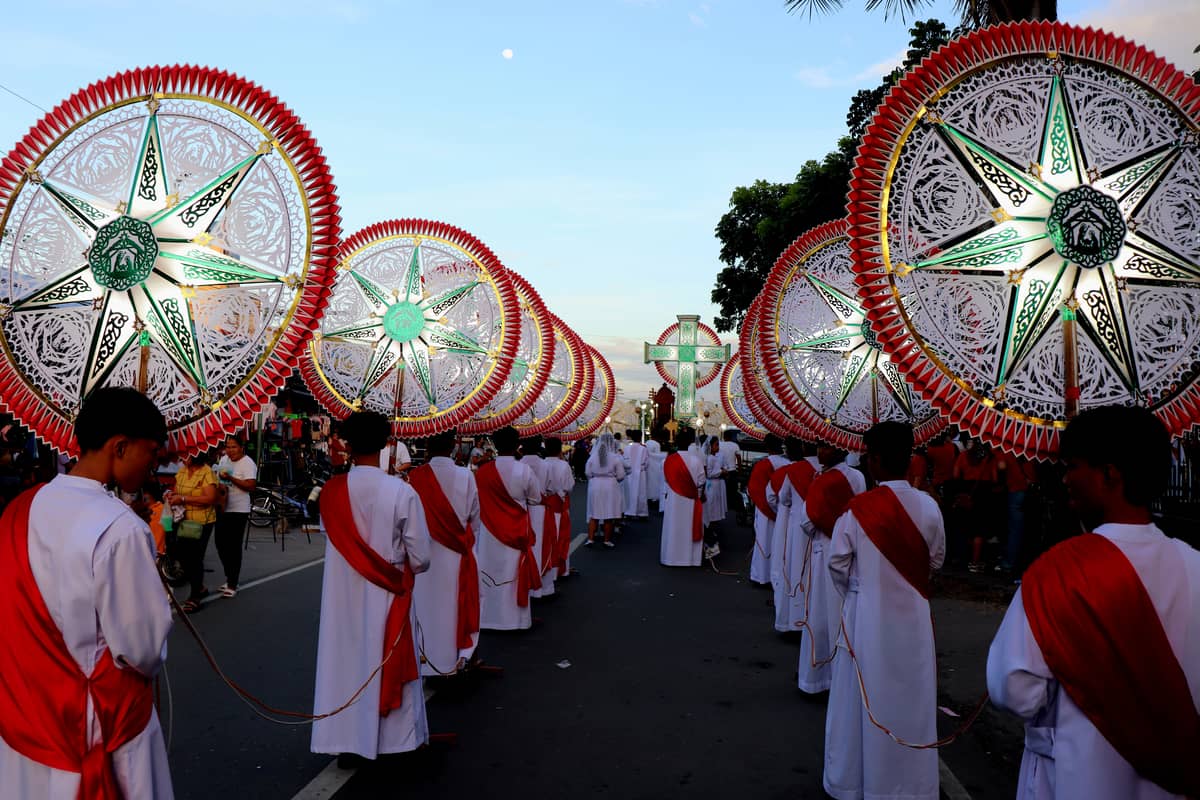
The 12 paruls represent the 12 apostles of Jesus Christ.
The lubenas tradition
Among Filipinos, Christmas, which commemorates the birth of Jesus Christ, is the most beloved festivity. It was introduced by the Spaniards during the Spanish colonization of the archipelago and more practices were introduced by the Americans, but Filipinos also added their own flavors to the celebration, particularly the Kapampangans, who introduced the lubenas most likely in the early 1800s.
The lubenas, whose name is said to be derived from the word novena, is a procession held in different barangays on eve of the simbang bengi, the dawn Mass, for nine days before Christmas. The final lubenas on 24 December is called maitinis in some towns.
The procession, a land-based kind called limbun, is led by a cross-shaped lantern, followed by people holding poles with 12 paruls or Christmas lanterns, arranged in two rows, representing the 12 apostles of Jesus Christ. It also includes lanterns in the shape a fish, a symbol of Christ, or other animals such as lamb, dove and those that usually figure in the Nativity scene; the image of the barangay’s patron saint, carried on the shoulder or mounted on a carroza, illumined by a giant lantern behind it; and singers singing “Dios te Salve.” Early paruls were simple, made of paper and lit by candle flames. Over the years, lanterns became bigger and more elaborate. Additionally, carbide lamps and then electric light bulbs were used.
The lubenas were practiced in several towns around the foot of Mount Arayat in Pampanga, and in some towns in the neighboring province of Tarlac. The devotional practice though has diminished over the years. The towns and cities with existing lubenas include Bacolor, Angeles City, San Fernando City, Mabalacat, Mexico, Magalang, Santa Ana and Santo Tomas in Pampanga; and Bamban, Capas and Concepcion in Tarlac. Santa Ana also practiced making the majigangga, giant scary puppets symbolizing evil, which danced on the streets of the town from 16 to 24 December and would be banished by the coming of Christ. The last known practice was held in 2021.
In recent years, there is renewed interest on the lubenas and its revival. A recent development of the practice is additions made to be a holiday attraction such as lantern competitions and touristic spectacles such as a grand gathering, like the “Ing Banal a Batuin ning Magalang,” which is considered as an introduction to the lubenas.
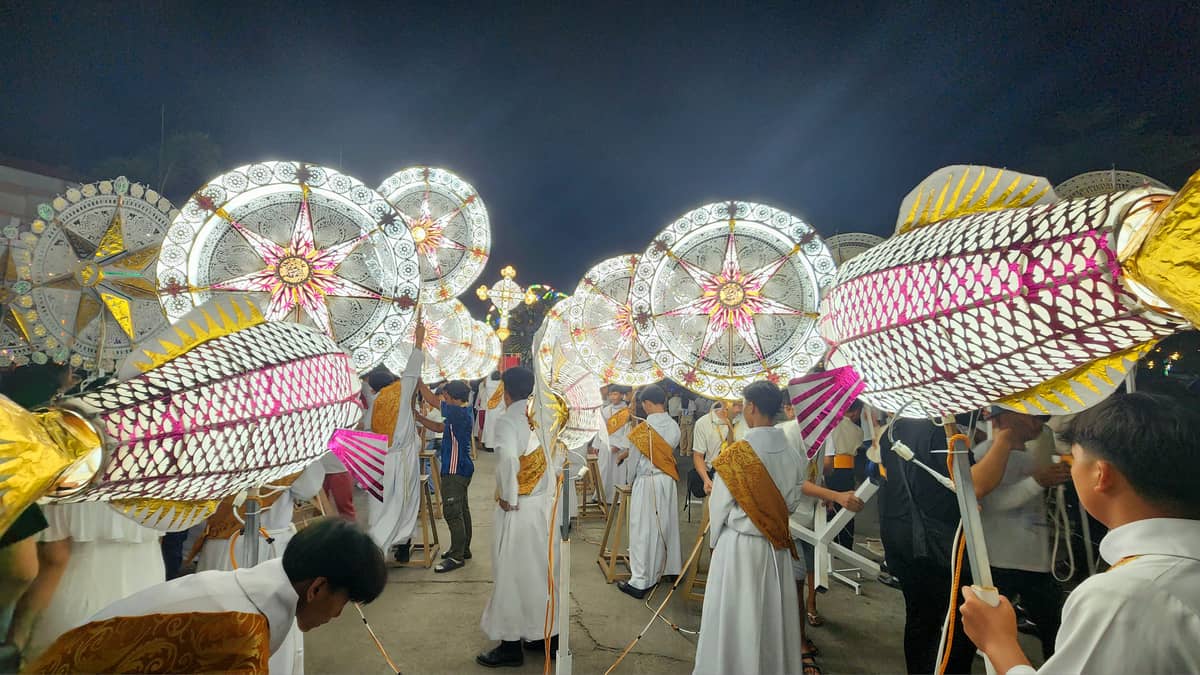
Fish-shaped lanterns of the Santa Lucia group.
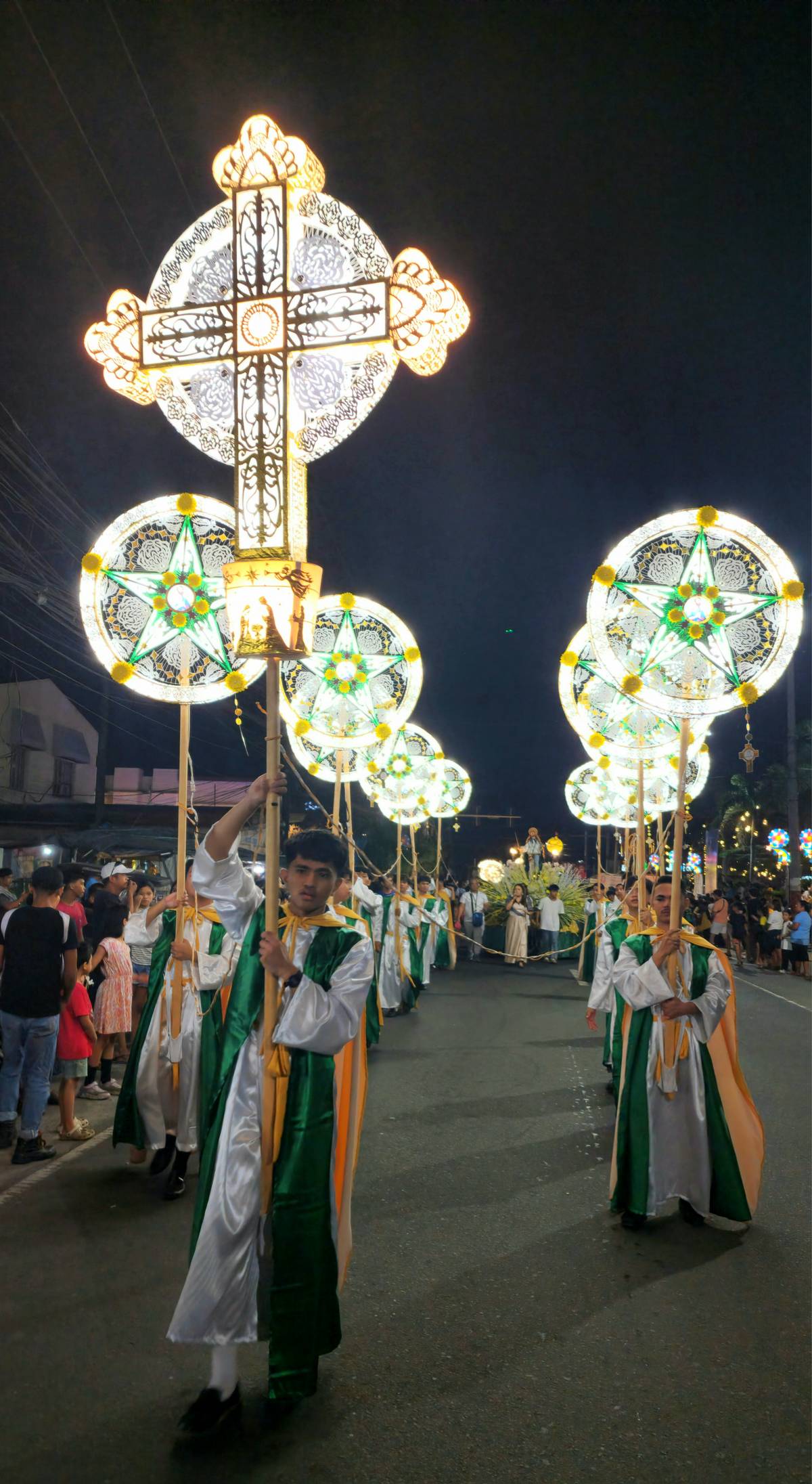
Eye-catching lanterns of the group from the barangay of San Isidro.
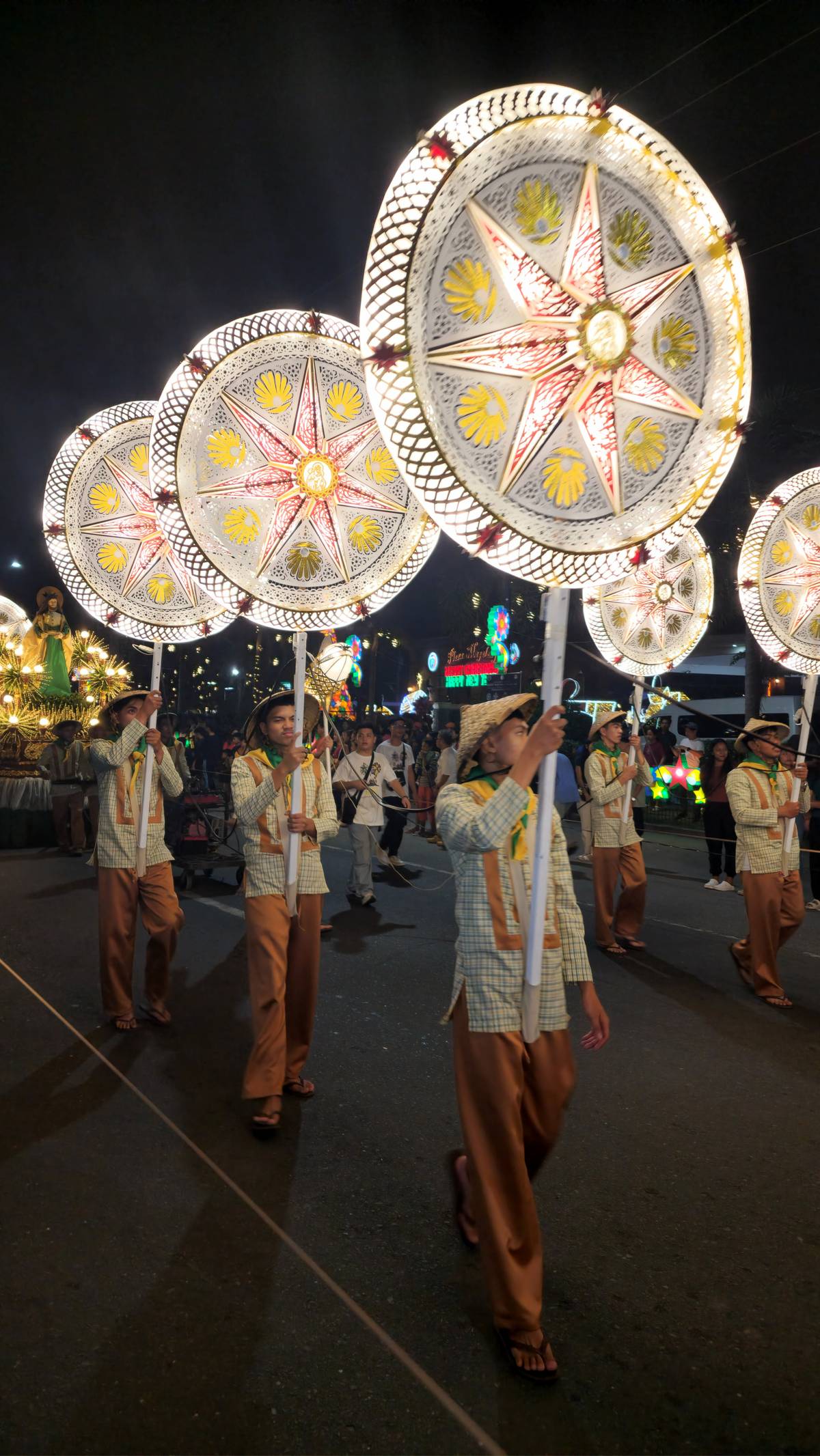
The group from San Jose was declared champion for the third time.
Reinvigorating the ‘lubenas’
For the reinvigoration of the lubenas and lantern-making in Magalang, master lantern maker Renato “Rene” Calma from Cutcut, Angeles City, was tapped to teach younger Magaleños how to make the parul, including techniques and decorative features that he himself devised.
The local government granted subsidies for the barangays for the making their lubenas lanterns, adding to the resources that residents were able to pool together.
At the “Ing Banal a Batuin” event, 26 contingents of procession participants converged at Magalang’s San Bartolome Church, many in costumes inspired by traditional Filipino or old attires, and religious imagery, bearing the lanterns they made in the past weeks.
A Mass was held in the early evening, followed by the lantern parade and a mini concert featuring the Philippine Philharmonic Orchestra and the vocal group The Nightingales, presented in partnership with the Cultural Center of the Philippines.
The event, led by Magalang Mayor Maria Lourdes Paras Lacson and tourism officer Ryan Miranda, was graced by local and national government officials and representatives as well as tourists, who were afforded a glimpse of the lubenas in a grand manner.
The night culminated with announcement of the winners of the lantern competition. The barangay of San Jose was again declared as the champion. The contingent was also judged champion in the last two years of the competition. The designer of the lanterns is Syrus Feliciano, who learned the craft from Calma. The lanterns were made by residents and young people led by the Sangguniang Kabataan of the barangay.
The other winners are contingents from the barangays of Santa Maria (second place), Santa Lucia (third), San Isidro (fourth), and San Ildefonso (fifth).
The San Jose group was invited to participate at the country’s biggest multi-arts festival, Pasinaya: The CCP Open House Festival, on 4 February at the Cultural Center of the Philippines Complex in Pasay City, promoting the Pampanga Christmas lanterns.
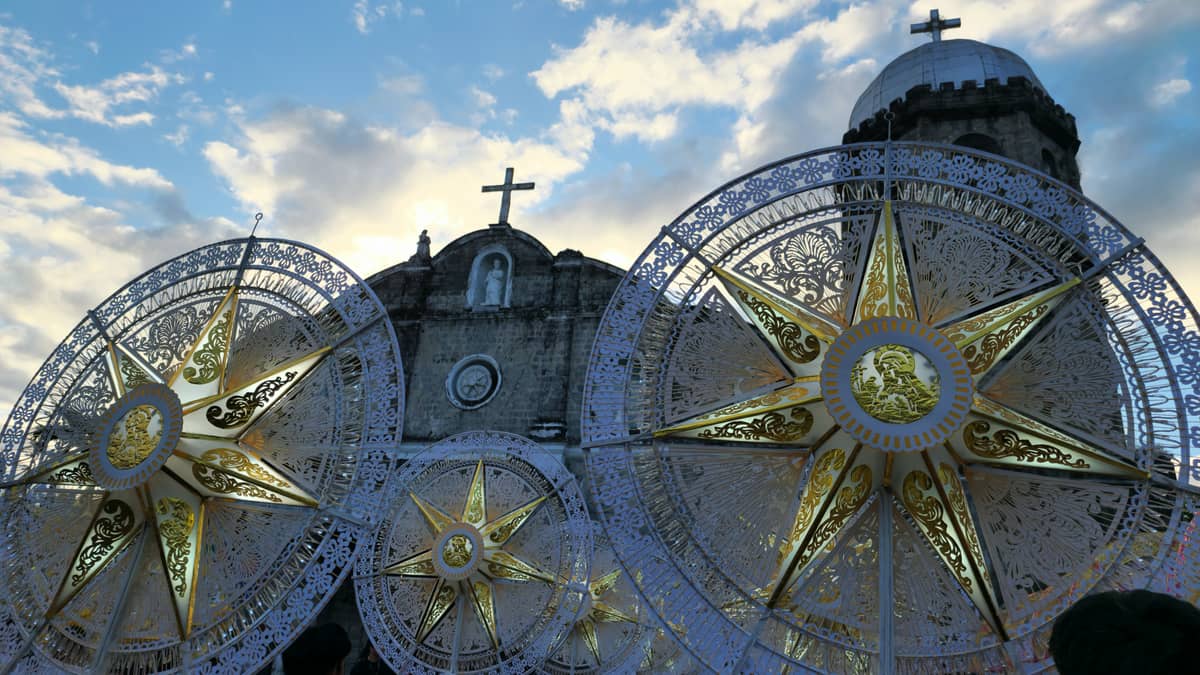
The lubenas lanterns are characterized by intricate patterns like the caladu, approximating the lace-like embroidery design.
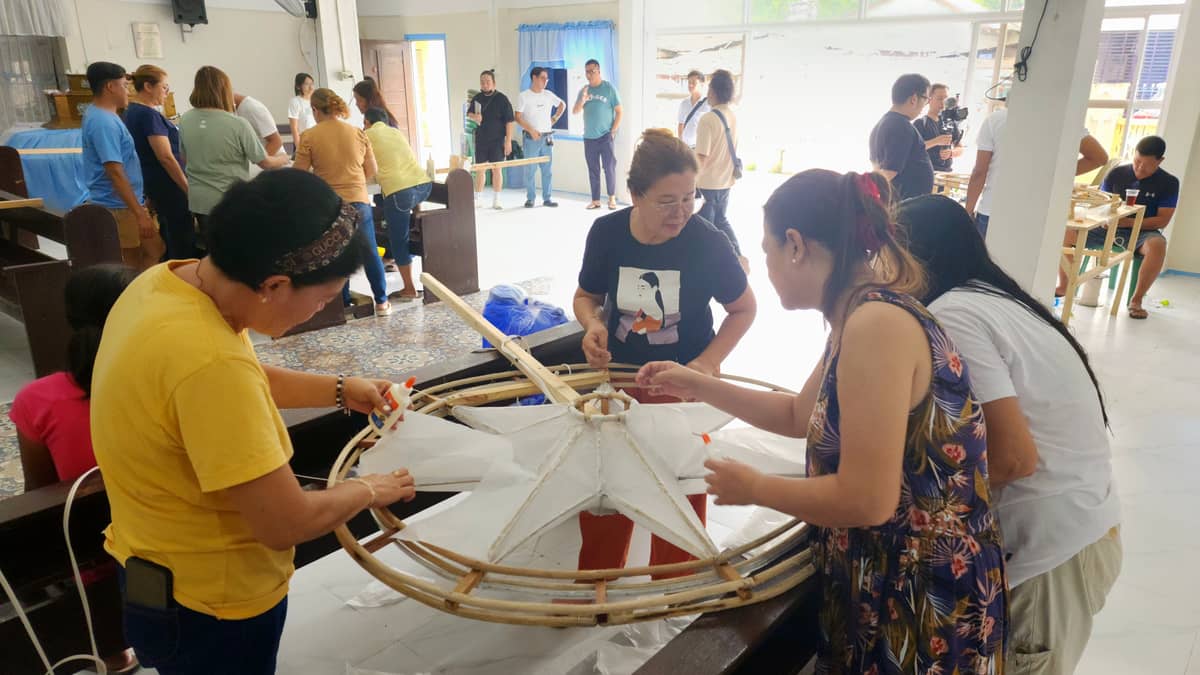
residents of Camias gathered at the Virgen de los Remedios Chapel to make their lanterns in early November.
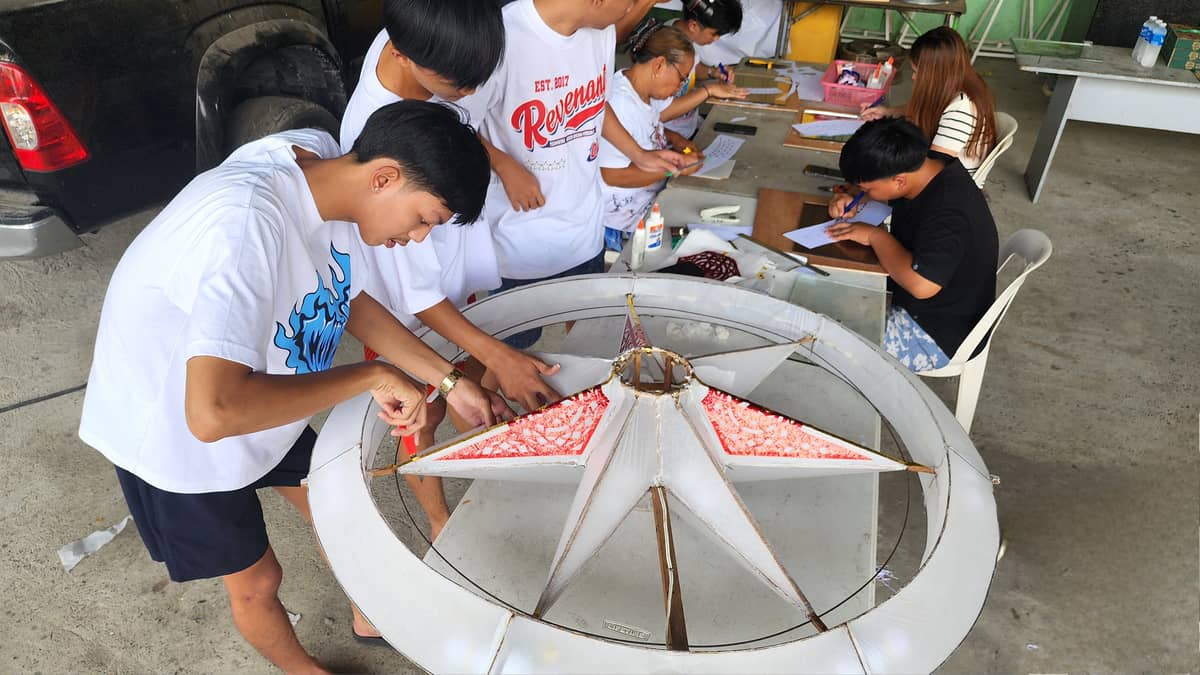
Young people of San Jose working on their lanterns on 10 November.
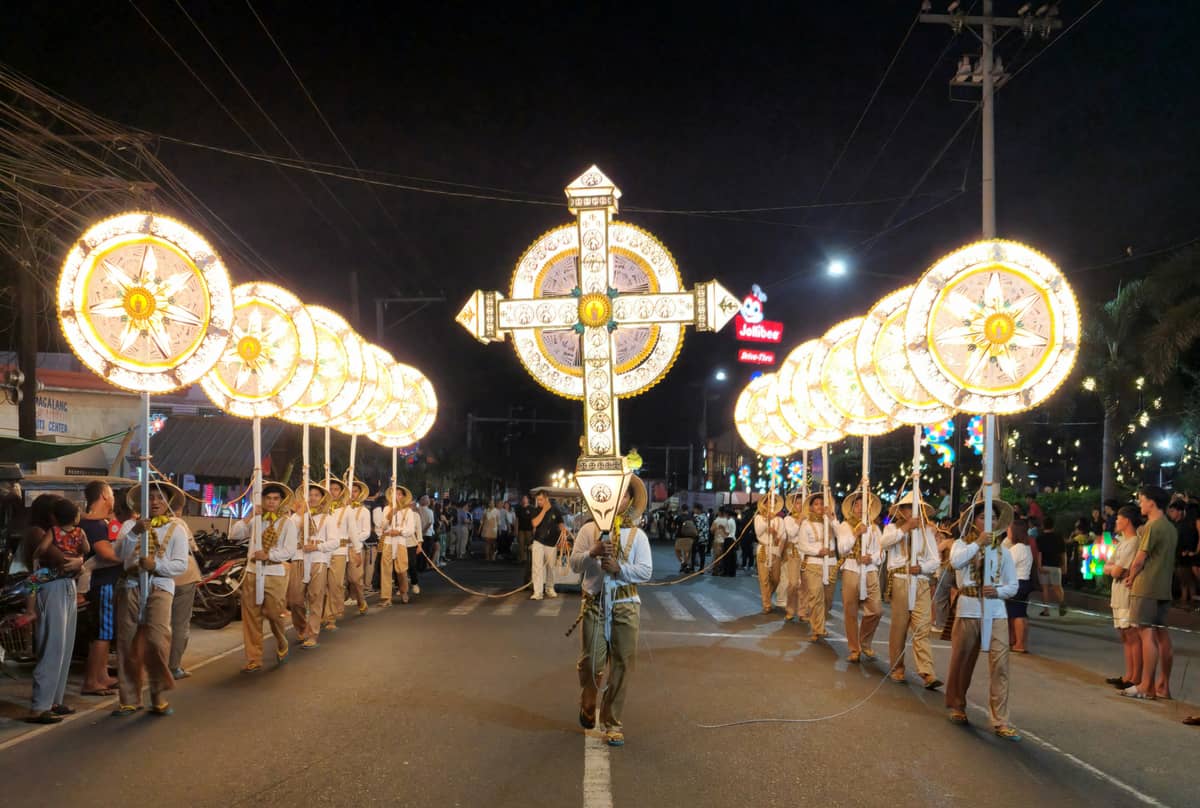
The San Ildefonso lubenas group at the ‘Ing Banal a Batuin ning Magalang.’
From Magalang to Milan
The local government of Magalang was able to promote the lubenas and the craftmanship in latern-making abroad. With the support of the Consulate General of the Philippines, led by consul general Elmer Cato, and the Filipino community in northern Italy, Pampanga lanterns made an appearance at the Basilica di Santo Stefano Maggiore in Milan during a simbang gabi on 15 December. The lanterns were designed and made by Calma, commissioned by the Magalang government.
The lanterns again appeared at the Duomo di Milano or the Metropolitan Cathedral-Basilica of the Nativity of Saint Mary for the second day of Simbang gabi.
The giant parul Sampernandu, which traces its roots to the lubenas tradition, has been showcased internationally several times in the past. The Milan events are said to mark the first time for lubenas lanterns to be shown internationally, bringing Filipinos abroad closer to home and their heritage in Christmas celebration.