
Assorted holiday moods for Thanksgiving Day — redux
For Democrats and their supporters, winning the last elections through a tsunami-style victory catapults them to the apogee of law-making power and glory. For MAGA Republicans and their followers, getting trashed at the polls is no excuse for throwing tantrums like shunned leprechauns.
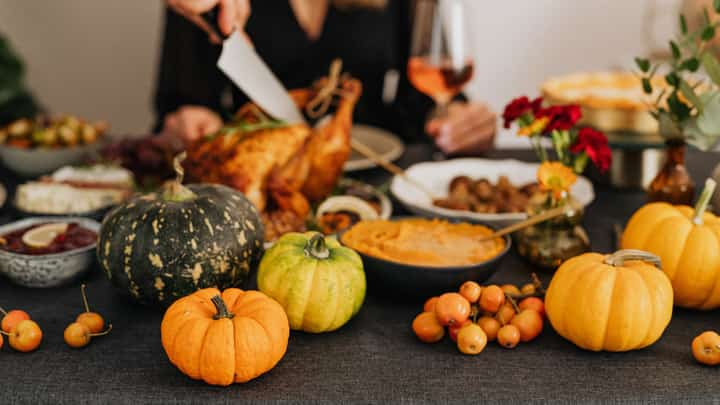
Last year’s holiday piece, at the risk of sounding self-aggrandizing, remains as relevant as ever. For both practical and sentimental reasons, therefore, said article is being revived in today’s column with minor revisions.
In America, the Thanksgiving holiday has always been observed, broadly and universally, by people of all faiths and colors, of every nationality and orientation, of every race and persuasion, its observance transcending the barriers of politics and religion, its celebrants bound together by a common motivation: to express gratitude for one’s blessings.
As this corner has pontificated quite a bit over the years, the Thanksgiving holiday, despite its semi-religious symbolism of families praying together over abundant food offerings, has its roots in the secular concept of migration.
Indeed, history books are replete with accounts indicating that the very first Thanksgiving feast was celebrated by a group of English settlers (or “immigrants”) during the 17th century in present-day Massachusetts, with some historians attributing the occasion to the Plymouth colonists’ celebration of their initial harvest in the New World.
Others credit the holiday’s origin to the English pilgrims’ celebration of the Mayflower’s arrival at Cape Cod.
Whatever the true genesis of the holiday was, a few stories highlight the presence of a local Indian tribe (Wampanoag) during the historic event, betokening the beginning of trust and cooperation, fragile and short-lived as it was, between the English immigrants and the land’s original occupants, the Native Americans.
Throughout the centuries, every Thanksgiving celebration has had its unique mood and spirit, whether subdued or lively, sad or merry, like being enervated by the wartime miseries of the forties and sixties, or muffled by the tragic events of 09/11/2001.
Conversely, vibrant merrymaking defined the holiday celebrations of the booming fifties and the roaring eighties, as moral victories and economic prosperity lifted the spirits of a grateful nation.
Fast forward to November 2026. What, for curiosity’s sake, is the Thanksgiving mood of the day? Is it thankful or is it mournful? Joyous or acrimonious? Ebullient or despondent?
It all depends on one’s personal circumstances. Or perspective.
Thus, for certain immigrants and citizens in the US, giving thanks at a time when their lives are trapped beneath the abyss of insecurity — fueled by ICE’s relentless attacks on their personal safety and liberty — masks their true feelings of dread and anxiety.
For Democrats and their supporters, winning the last elections through a tsunami-style victory catapults them to the apogee of law-making power and glory. For MAGA Republicans and their followers, getting trashed at the polls is no excuse for throwing tantrums like shunned leprechauns: their leader, Mr. Miller, still holds the reins of executive power.
For change-hungry Americans, the Democratic Party’s promise of affordability and accountability remains a distant reality. Yet it works as psychedelic therapy for two years of Republican apathy and inefficiency.
To the bombed-out Ukrainians, just being alive is a stupendous miracle. For Vladimir Putin and the Russians, Zelensky’s swarm of drones is a horrendous spectacle.
And for the typhoon-ravaged Filipinos, no Pinoy Thanksgiving is worth celebrating until all the flood control malefactors are imprisoned. As for the kickback megalodons, since prison life beckons with no turkey bacon, it would be a travesty of reality for them to say — Happy Turkey Day.