
VP Sara’s (mis)trial?
Apparently, one old lady prosecutor heavily banked on the purportedly expert opinion of a witness the prosecution presented under the mistaken notion that all that he said was gospel truth.
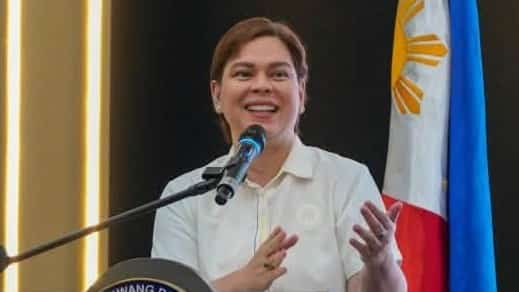
Without a fuss, an embargo of the sub judice rule was declared at the resumption, after a rather long recess, of the impeachment trial of Vice President Sara Duterte.
The court’s prior lifting of the rule was to give the defense recourse on social media to rebut the prosecution’s evidence following the latter’s withdrawal of the three Articles of Impeachment (AoI) it had already presented. But the defense did not regard the bar of public opinion as the proper forum other than the impeachment court itself.
Every well-meaning citizen of this country knows how to affirm or confirm if the conduct of the impeachment trial is proceeding fairly, justly and truthfully, precisely because fairness, justice and truth constitute the trifecta upon which any rendition of an acquittal or conviction must be based.
At the rate things are going, given that the remaining AoI is all that’s left, it must have dawned on the prosecution what a faux pas it was to have dropped the three AoIs, since their hope now perhaps hangs by a thread, a slow death or a mayday call from a Learjet in a catastrophic nosedive.
This lets me fondly recall one professor emeritus, Dr. Ariston Estrada, who always reminded students of philosophy and generations of thinkers about ambiguities, logical fallacies, clear writing, clear thinking, classroom debates, study clubs and how to speak of objective truth with confidence.
There was one thing beyond forgetting when he said, viz., “Argument from authority is the weakest form of proof.”
In the context of Sara’s trial, a whole lot of what Dr. Estrada taught is playing out, and one can just imagine what grades this terror professor would have given some senator-judges and counsels of both parties.
Apparently, one old lady prosecutor heavily banked on the purportedly expert opinion of a witness the prosecution presented under the mistaken notion that all that he said was gospel truth.
Despite her continuing objection, the defense appeared to have argued its case well, rendering as shaky, wobbly and, in fact, “inaccurate,” to use the defense counsel’s word, whatever claims were made by the referenced expert.
As philosophy is said to be the “love of wisdom,” it must also be the search for truth. The defense’s tact has faithfully followed this track and intellectual path, yet self-indulgent objections by the prosecution amounted to rocks being thrown its way, most of the time holding no water.
On reflection, methinks the amici curiae merely allowed the court to grab the brass ring on the matter of the conviction threshold. Certainly, the prosecution’s expert witness is a poor copycat.
As the impeachment trial resumed, the defense quickly gained much solid ground, establishing its case against the prosecution, which appeared to be unaware of what hit it. If that were any indication of the limited days of trial ahead, it seems clear that the prosecution has lost steam, is losing its grip and is drifting by the wayside.
Indeed, what “sensitivity analysis” was the expert referring to? What “conservative estimate of 20 percent” had he concocted? What conclusions could he construct without the most basic foundational support hypotheses could rest on beyond the materials sent to him? Can mere desk analysis by a typical so-called armchair forensic accounting expert do the trick without going to the “scene of the crime” or interviewing an authoritative witness?
It was established that forensic accountants should be certified by a cognizant professional society involved in the field. Earlier, it was rightly argued by another of the defense that unless and until there’s a licensure test akin to board exams to qualify an individual as an expert, such nominal claims are arguably hollow. Understatedly, the prosecution’s monolithic groupthink hardly makes data confess.