
Running on unregulated crowdsourcing, anyone? (1)
Early political advertising in whatever way, shape or form must be checked and curtailed. Signifying one’s desire in an unofficial or informal way ought to be beyond the pale.
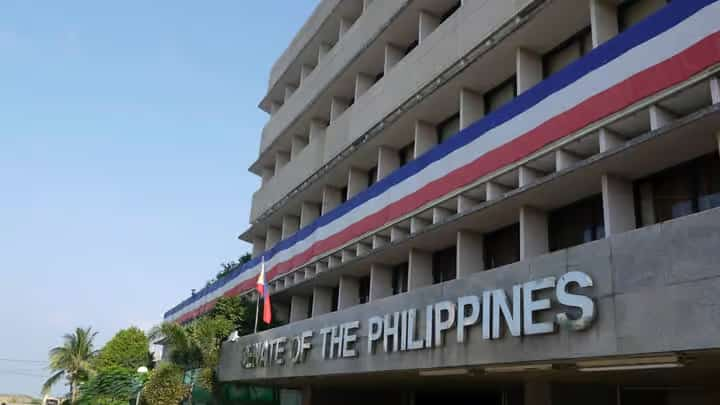
The Comelec cannot feign none the wiser the very moment it spots an individual who, as early as mid-October this year, announced before a community of overseas Filipinos in Milan, Italy, her untrammeled bid to run for the Senate. If there’s anything concerning election-related matters, it behooves the commission to perform its bounden duty, barring any jurisprudential restriction.
Early political advertising in whatever way, shape or form must be checked and curtailed. Signifying one’s desire in an unofficial or informal way ought to be beyond the pale; it gives her a comparative advantage over those who will signify their desire to do so only at the prescribed point in time.
There’s a rational basis for this rule to be rigorously observed from beginning to end lest it breach any norms of fair play, social equity, level field or logic.
For a bit of historical context, the former undersecretary of the Department of Finance was personally recruited by then Finance Secretary Benjamin Diokno straight from the UP School of Economics to head the Fiscal Policy and Monitoring Group, handpicked because she was an economist and policy expert.
The senatorial declarant herself revealed that certain “factions within Malacañang” wanted her out since she was perceived to be a supporter of ex-Vice President Leni Robredo. The tale has it that openly posting a supply-and-demand chart counterintuitive to the administration’s rice price settings finally led to her ouster. Interestingly, it was Rappler that broke the news of her political ambition.
Some encounter discomfort with those professing to be economists as though they are whom the country needs. This makes me fondly recall what Sergio Osmeña Jr. said when he ran in the 1969 presidential election against Ferdinand Marcos, viz., “I believe that because I am an economist, if given the opportunity by our people to serve you as president, I can contribute to the solution of our economic needs and give you my countrymen more jobs, more food, and a better life for all.”
Former PGMA was an economist but for naught. Benjamin Diokno is a much-reputed economist, along with Amenah Pangandaman, his former boss and mentor. What did these economists bring to the table for the betterment of our countrymen and our frail economy at those critical junctures?
Nothing guarantees effective governance simply based on one’s profession. Neither is there a consensus that nine out of 17 presidents who were lawyers or eight non-lawyers made good presidents. In relative terms, choosing economists over lawyers might either give the red or green signals to whoever chooses them for either the Senate or House of Representatives.
We are at a fast pace of AI technological evolution where information, news and stories — be they propaganda, disinformation or fake — spread like wildfire across platforms and media channels. Once something bursts in the quad-media landscape, it generates a butterfly effect such that even a virtual nobody could readily go viral and enjoy instant rock star status.
Isn’t a senatorial declarant prematurely using soc-med to gain media blitz in possible breach of Comelec laws and regulations, given a trained awareness of the psychology behind viral content, which “blends emotion, identity, timing and social behavior?”
Undoubtedly, the subject realizes the power of this social currency for every short speech or podcast she lays on the internet.
Social media is a bi**h. It spreads like “an epidemic, viral outbreak, tidal wave, chain reaction, echo chamber, forest canopy.” Most likely, she knows how to tame the beast, even follow the footprints of a trapo.
Dani Gentry said this in 2025: “People share what resonates, what reflects who they are, and what helps them feel connected. Whether it’s a meme, video, campaign, or TikTok, viral content often follows predictable patterns rooted in human psychology.”
When will the Comelec apply the brakes lest grifters go on overdrive in unregulated “circles, waves, swamps, chambers?” Glaringly, one navigating around a legal loophole leaves a lasting bad impression — the telltale sign of a trapo.
(To be continued)