
Random lessons Philippine realpolitik teaches
One might think he was the Naked Emperor, telling many unbelievable things, thereby passing off projects carried over from the last administration as his to speak of.
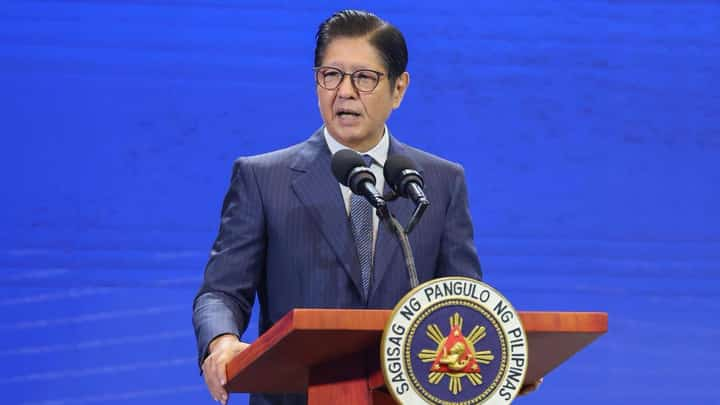
Be it confined that every lesson drawn from our collective experience occurred from the start to the near end of FM Jr.’s term — extracted from memory as it is from history. The Marcos administration has been a bizarre phenomenon in a broad variety of aspects — economic, social, moral, legal and political. Let government and governance be two concepts that could be used interchangeably.
The sweet romance between the presidency and the legislature has been characteristic of logrolling, whereby Congress serves as a mere rubber stamp of the Palace, in more cases than not. Every State of the Nation Address (SoNA)encapsulates the policy guidelines the legislature has to enact — those “certified as urgent” by the President, first and foremost.
How unthinkable to hear of the President’s overture, if not imprimatur, long before the next and last SoNA, wishing he could have another term to continue his legacy. One might think he was the Naked Emperor, telling many unbelievable things, thereby passing off projects carried over from the last administration as his to speak of.
The Cabagan-Santa Maria Bridge, which collapsed in February of last year due to “structural defects or an overloaded 102-ton dump truck,” was reopened only in March this year, except this time, it’s exclusively for light vehicles with a maximum gross weight of only three tons and a height of no more than 2.5 meters. Henceforth, heavy vehicles and trucks must find alternate routes.
The first Executive Order (EO) of FM Jr., contextualized as streamlining the bureaucracy, was the abolition of the Presidential Anti-Corruption Commission. EO 1 caused the demise of government-initiated EO 43 of his predecessor, designed to curb graft and corruption by presidential appointees in the executive branch.
Why find fault with Sen. Bato dela Rosa’s plea for the ICC-issued warrant to first go through our own domestic court? Perhaps, one need only examine his elementary grasp of basic freedom, his moral code and his conscience to realize that a repeat of what happened to DU30 must not happen again unless this government fully subscribes to a global criminal justice system as a superior mechanism to its own.
Unlike FM Jr., who’s a hard sell, DU30 captured the populist imagination, and the Dutertes, for that matter, have not ceased to enjoy high currency across intelligences and social classes to this day.
In fact, as the Senate impeachment trial of VP Sara Duterte resumes, the latest SWS survey showing “net satisfaction with the prosecution of the impeachment case at -5, with the defense of VP Sara at +23” should serve notice that the entire shebang might just be a classic exercise in futility.
Better yet, it should be an excursion to sanity rather than lunacy; a reality check between what reputable surveys indicate and the myth of the “bad guys” construct Duterte’s detractors peddle at government expense; a panic button to help good and bad politicians alike know where to place their bets.
Again, the resulting predicament of Bato, now raised to the level of a national security threat, has the man’s life and fate broken, fractured, crashed, reduced to smithereens. His universe is stood on its head now, probably the worst experience for a military sand police officer of a glorious past; to one of only two senators with a doctorate degree; a former chief of the PNP. For what use is a P50-million bounty on his head or sending a combined military and police contingent to capture him, dead or alive?
Still unsettling is the actual condition of the three withdrawn Articles of Impeachment, however stripped officially of any adjudicative value. Are they dead, merely archived, frozen or to be resurrected back to life? How can the general public delete every evidence, testimony and data flashed on the screen from their collective memory to the point of oblivion, as if 39 trial days never happened?
With the new head of all of the judiciary, are we in or are we out?