
ASEAN Summit
What’s unfortunate is that the government couldn’t seem to care less about the need to be judicious in spending limited resources.
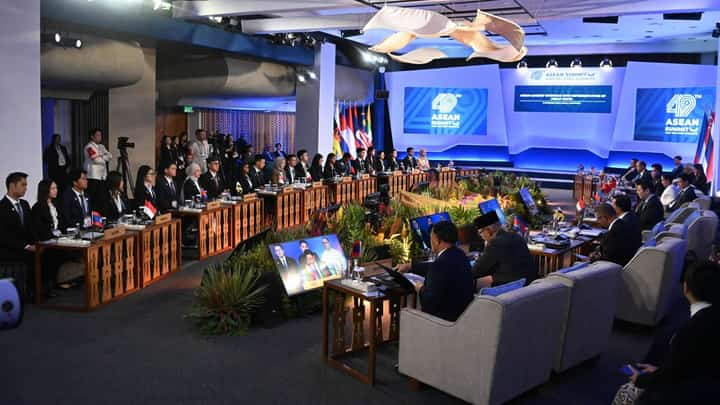
The Philippines’ hosting of the 49th ASEAN Summit and related meetings has drawn significant criticism from multisectoral groups, particularly lawmakers, human rights advocates, labor groups and student organizations. In fact, protest rallies have become intense, with demonstrators trying to march toward the summit venues in Pasay City and near the Philippine International Convention Center (PICC), leading to police blockades, scuffles and multiple arrests.
This is definitely not an encouraging sight, but the people couldn’t be blamed, for they’re just triggered to go out and protest because of several issues that obviously leave a bad taste in the mouth.
To begin with, the massive budget allocation of roughly P22.9 billion for hosting duties and venue renovations is way too exorbitant. In the past, the Duterte administration spent around P3.79 billion during its hosting, while the Arroyo administration spent roughly P1 billion. Albeit the government allocated P16.8 billion in 2017, it ultimately disbursed only about P8.6 billion.
Critics argued that billions of pesos are being spent not really for legitimate purposes but on “vanity” preparations while the country faced a declared national energy emergency and spiking fuel prices that have led to a massive inflation problem and other related concerns.
These vanity efforts are not only hypocritical but likewise harmful and disruptive. Those clearing operations that forcibly removed street vendors, informal workers and homeless individuals to “conceal” urban poverty have caused temporary loss of livelihood for these hapless folks.
Expectedly, Palace Press Officer Claire Castro denied these allegations, stressing that the clearing operations were not meant to hide poverty but were strictly tied to security protocols and safety measures for international delegates.
If that is true, then why install long stretches of tarpaulins and barriers along primary pathways near event sites? Clearly, the purpose is to use these as cosmetic screens to hide informal settlements, roadside vendors and urban poverty from visiting delegates. If that is not the case, I don’t know what is.
What’s unfortunate is that the government couldn’t seem to care less about the need to be judicious in spending limited resources. To be honest, the P22 billion spent for the ASEAN summits could have been reduced considerably to finance other urgent concerns.
By saving P15 billion, for example, they could instead build approximately 6,000 classrooms and sponsor 38 full editions of the Palarong Pambansa.
At any rate, this is not to say that the government should decline its commitment. Hosting the summit is an obligation, but one that shouldn’t be hugely expensive.
Besides, these ASEAN summits have not really produced anything significant. For the most part, they are just used for photo ops, cultural pomp and pageantry over concrete resolutions to regional crises.