
Offline in Manila
The press — Cayetano should be reminded — is not an auxiliary of the PCO, and a Malacañang accreditation does not come with a name tag reading ‘Hello, I’m your megaphone.’
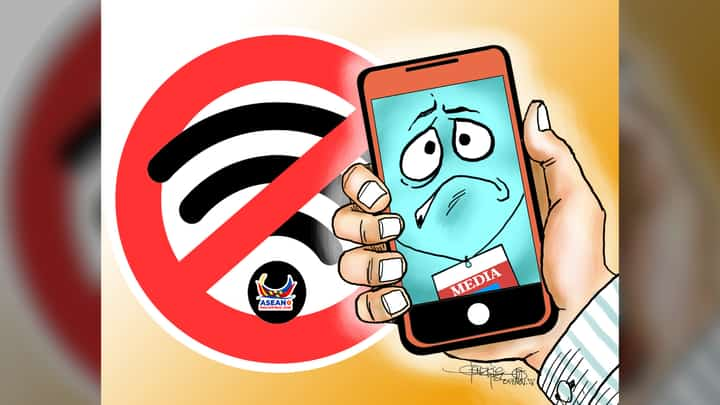
Nothing says “Welcome to the Manila ASEAN Summit” quite like a media center that cannot connect to the media.
Sure, the Philippines built the room to impress visiting reporters at the World Trade Center which, truth be told, looks more like a warehouse than its twin-tower namesake in New York before the 9/11 terror attacks.
Alas, foreign and local journalists arrived to find WiFi that sputtered, died, and sometimes revived just long enough to spit out a sentence from the press center. Some could not file their stories at all and went looking for a signal elsewhere.
The DAILY TRIBUNE was among the first — if not the very first — to write about this, which is what newspapers do when something public is broken and has to be reported.
This did not go over well. A member of the Malacañang Press Corps from this paper got a call from Lino Cayetano, the acting secretary of the Presidential Communications Office, who was not calling to apologize.
By the reporter’s account, Cayetano wanted to complain, and he pointed out that the media center was the “only” thing his office had contributed to the summit.
It’s an odd defense. A host who burns the dinner gets no credit for having cooked only one dish. When you contribute only one thing to the party, guests tend to notice if it doesn’t work.
The implication was plain: the problem could have been fixed quietly, with no one the wiser. But since when did reporting wait on the government’s schedule for embarrassment?
At the opening, Cayetano said the center would allow journalists to do their jobs “well and comfortably.” Reporters took him at his word, and when they could do neither, they said so. In Cayetano’s telling, this made them ungrateful. In theirs, it made them good reporters.
One then wonders what the Presidential Communications Office (PCO) and the Department of Information and Communications Technology (DICT) imagined journalists would do in a media center without the internet.
Admire the furniture, perhaps. Sample the cultural displays. Practice telepathy with their editors.
The explanation came from Robert Joseph de Claro, DICT secretary, who blamed extra cybersecurity measures and cited an incoming connection of 600 to 700 megabytes. This sounded ominous until you recalled that a teenager pulled down about that much before breakfast.
The PCO, for its part, acknowledged that no specific threat had been identified. Wait a minute. So the government protected the network against an enemy it could not name and made it useless to the people it had invited to use it?
Security matters, and no one is asking the government to leave the network unprotected, as it has already exposed its citizens’ data in countless prior cyber breaches. But surely it could be secured without being rendered unusable by the journalists who were relying on it.
What the communications and tech gurus of President Ferdinand Marcos Jr. seem to want is a press corps that waits patiently, says nothing, and writes warmly about the facility once the problem is fixed.
The press — Cayetano should be reminded — is not an auxiliary of the PCO, and a Malacañang accreditation does not come with a name tag reading “Hello, I’m your megaphone.” A facility paid for with public money invites more scrutiny, not less.
Communications, in theory, means moving information along, including the kind that makes officials wince.
Mr. Cayetano appears to have taken it to mean managing bad news until it goes away, which works only until a reporter without WiFi decides to type it out on her phone.