
CJ’s gauntlet
The current trial has been narrowed to Article II, covering allegations of unexplained wealth, SALN deficiencies and unlawful business interests.
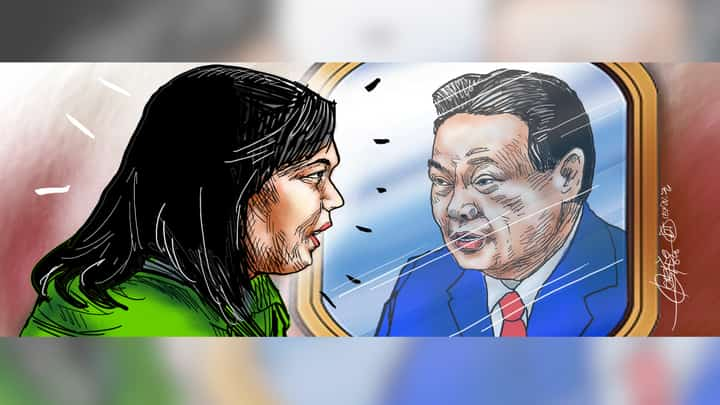
The focus of Vice President Sara Duterte’s impeachment trial has been narrowed to her alleged unexplained wealth and improper disclosures in her Statements of Assets, Liabilities and Net Worth (SALNs), the central issue under the second article of impeachment that could lead to her removal from office.
The development invites comparison with the landmark impeachment trial of then Chief Justice Renato Corona, which culminated in his removal from office over questions surrounding his SALN disclosures.
The parallel with the Corona impeachment is particularly worth examining. The proceedings that led to the removal of the then head of the judiciary made the two cases a compelling basis for comparison.
The contrast, however, should extend beyond the allegations to how evidence was presented, the defense’s response and how the senator-judges weighed the competing claims.
The current trial has been narrowed to Article II, covering allegations of unexplained wealth, SALN deficiencies and unlawful business interests.
Corona was convicted on Article II, concerning his SALNs. In the VP Duterte trial, the House prosecution withdrew three articles, leaving Article II as the only charge, which paralleled the Corona playbook.
His conviction, like that of VP Duterte, was imminent, with considerable political pressure coming from the administration of the late President Benigno “Noynoy” Aquino III, who regarded the chief justice as a political nemesis, and, in the ongoing case, from the Marcos regime.
In one of the defining moments of the impeachment proceedings, Corona signed a bank secrecy waiver on 22 May 2012 and challenged all 188 House members who endorsed his impeachment complaint, as well as the senator-judges, to sign identical waivers to demonstrate that they were equally willing to open their financial records to scrutiny.
Corona instructed his defense team, which brought together some of the best legal minds, to distribute blank waivers to the members of the House of Representatives, conditioning the formal submission of his own waiver on their signing theirs first.
The waiver allowed agencies like the Anti-Money Laundering Council, Bureau of Internal Revenue, Securities and Exchange Commission and Land Registration Authority to inspect his local and foreign accounts, assets and SALNs from 2002 to 2011.
The dare was deliberate. Corona was turning the demand for transparency back on his accusers, casting his waiver as proof of his good faith and their refusal as hypocrisy.
On that day, Corona made a dramatic exit from the courtroom. He left the session during his testimony, saying he was unwell.
Senate President Juan Ponce Enrile ordered security to lock the Senate gates to stop him from leaving the premises. Enrile called the exit “contrived,” noting that Corona left while still reading his last line and that his family rose as if on cue.
Corona then returned in a wheelchair. His lead counsel, Serafin Cuevas, told the court he was suffering from hypoglycemia.
That was after he delivered his accusing line: “I am no thief, I am no criminal, I have done no wrong. But dear senators, I am also no fool.”
The House prosecutors dismissed the move as a political distraction, but in reality it was an earnest challenge for transparency.
Afterward, on 25 May 2012, Corona dropped his reciprocity condition and submitted an unconditional waiver. He was convicted and removed from office on 29 May 2012.
Corona died on 29 April 2016. The Court of Tax Appeals dismissed his tax evasion cases under Article 89 of the Revised Penal Code, which extinguishes criminal liability upon the accused’s death.
The Sandiganbayan likewise dismissed the perjury and ethics cases because he had died. A prosecutor said he was legally presumed innocent because there was no judgment.
Ironically, it was now-detained Senator Jinggoy Estrada who later revealed that senators were bribed with P50 million each through the Disbursement Acceleration Program to convict Corona.
His removal was linked to the Hacienda Luisita land distribution ruling. The late Senator Miriam Defensor-Santiago, who voted to acquit, called conviction on impeachment “a stunning penalty, the ruin of a life.”
Recounting Corona’s ordeal is necessary since the political process is being cloaked in its description as sui generis, or a class of its own, to demolish a political opponent, then and now.