
Middle class faces extinction
When the economy slows, businesses stop hiring. They stop expanding, and some close. Middle-class families depend on those jobs and businesses.
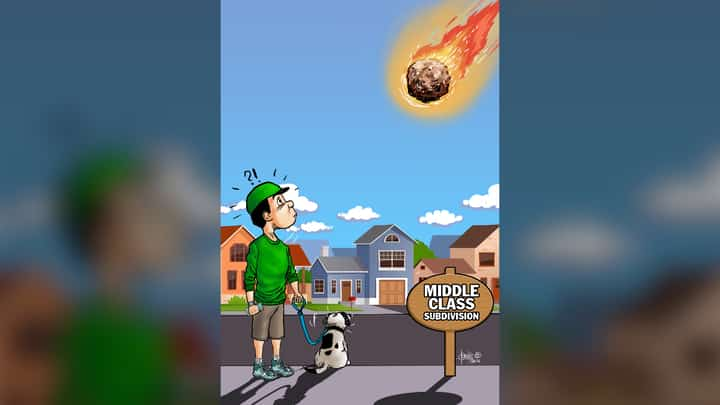
The middle class is the group in a pivotal position in the social strata. These are teachers, nurses, office workers, small shop owners and young professionals. They are not rich, and they are not poor. They work, pay taxes, and save a little. They send their children to school and hope to buy a home one day.
This group should be the main economic driver, as they spend money, and spending makes businesses grow. They pay taxes, and taxes run the government. They also keep society steady.
In the Philippines, this group was always small. Veteran economist Emmanuel Leyco calls it “the tiny middle class,” which is easy to crush, and it is being crushed now.
The economy grew only 2.1 percent in the third quarter. The quarter before, it grew 2.4 percent, while our neighbors are doing far better. Vietnam grew almost 10 percent and Indonesia expanded 5.47 percent. Even Laos grew faster.
When the economy slows, businesses stop hiring. They stop expanding, and some close. Middle-class families depend on those jobs and businesses.
Investments have fallen for four straight quarters; construction has fallen for five quarters; companies are not building or buying equipment, which means they do not expect good times ahead.
Stakeholders in the construction industry estimated that infrastructure development has fallen 90 percent since late 2025, when the flood control scandal broke.
Household spending makes up about 73 percent of the economy. It grew only 2.4 percent. Spending on transport, food, restaurants and health fell or stalled mainly because of higher prices.
When prices rise faster than pay, people can buy less. A family that once ate out now only cooks at home. A family that planned to buy a new car now keeps the old one. The middle class cuts its comfort first, because it still has some comfort to cut.
About 2.8 million Filipinos have no jobs. Another five million are underemployed, meaning they work but want more hours or better pay. That is roughly eight million people left out of the economy’s productive power.
Think about what this means for the middle class. Many of them have a relative who lost their job, and many support jobless family members. One paycheck lost can erase years of savings.
Overall inflation is about nine percent, but for the poorest 30 percent, it is about 9.5 percent, meaning those with little are hit first.
But the middle class stands one step above them; when the poor sink, the middle class has no cushion below them. When prices rise, families near the edge slide down. A family that once saved now borrows. A family that once borrowed now misses payments.
The middle class is hurting because they are not on the government radar for help, and they keep on paying taxes.
People experiencing poverty often get aid programs. The rich can protect themselves. The middle class is left in between. They pay taxes but get little back.
The fuel excise tax shows the problem. The government was given the power to remove the tax. It was removed from kerosene and liquefied petroleum gas but not from diesel and gasoline.
The reason given was that removing it would also help the rich. The people who buy diesel and gasoline every day, such as public transport drivers and small business owners, are largely middle class. They are left to pay.
Money meant for the public does not circulate in the economy and if corruption were not there, the economy could grow by double digits.
Funds for big train projects were removed from the budget and moved to local projects such as multipurpose buildings.
Yet the government must still pay commitment fees and penalties on the train agreements. So, the public pays for projects that are never built, and the middle class pays most of the taxes.
Meanwhile, money flows abroad into houses in Spain, condos in France, and holidays overseas. The money leaves, but the bills stay.
The red flag is up. A survey found that 65 percent of people are dissatisfied with the administration of President Ferdinand Marcos Jr. which the economist said was based on “lived experience.”
People are not angry because of a slogan. They are angry because of empty wallets.
The Philippines may soon be a country of the very rich and the very poor, with almost no one in between.