
DOJ convenes dialogue with BARMM and Mindanao leaders
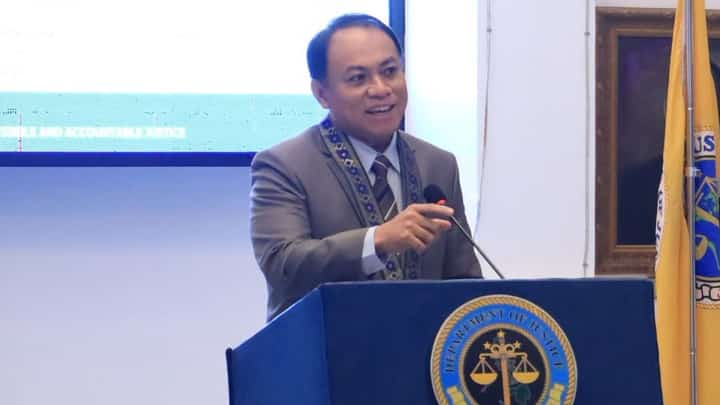
The Department of Justice (DOJ) successfully convened a high-level dialogue with leaders of the Bangsamoro Autonomous Region in Muslim Mindanao (BARMM) and local government officials from across Mindanao on 10 November 2026 at the Greenleaf Hotel in General Santos City.
The engagement aimed to address pressing regional concerns and bolster inter-agency cooperation in the delivery of justice services.
Led by Justice Secretary Fredderick A. Vida, the DOJ delegation included Undersecretaries Garney Candelaria and Francis John Tejano, alongside National Bureau of Investigation (NBI) Director Melvin Matibag.
They were joined by House of Representatives Senior Deputy Speaker Ferdinand Hernandez, BARMM Chief Minister Abdulraof Macacua, and local government representatives from Regions 9, 10, 11, and 13.
In his opening remarks, Secretary Vida expressed gratitude to the regional leaders for their active participation and underscored the vital role of sustained national-local dialogue in fortifying the justice system.
He reaffirmed the Department’s mandate to bring accessible justice services closer to grassroots communities and urged local chief executives to remain steadfast in upholding the rule of law.
Echoing the Secretary’s message, NBI Director Matibag pledged the Bureau’s full support in working alongside BARMM and Mindanao local government units (LGUs).
He noted that the forum served as a crucial platform to deepen institutional partnerships and streamline investigative and law enforcement services for communities across Mindanao and the nation.
For his part, BARMM Chief Minister Macacua conveyed his appreciation to both the DOJ and the NBI for their unwavering assistance to the autonomous region.
He highlighted the timeliness of the dialogue, noting that stronger institutional support is essential as BARMM builds upon the momentum of its successful parliamentary elections and continues to reinforce its governance structures.
The DOJ remains committed to fostering continuous collaboration with regional stakeholders to ensure swift, fair, and inclusive justice for all Filipinos in Mindanao.
He underscored the importance of sustained cooperation with national government agencies in promoting the rule of law, improving access to justice, and addressing longstanding concerns that have contributed to conflict and insurgency in some communities.
The dialogue also provided an opportunity to discuss the continued implementation of amnesty programs and the need to bring justice services closer to underserved communities, reinforcing the DOJ's commitment to supporting BARMM's development, promoting peace, and ensuring that its constituents have accessible avenues for justice.
He noted “Kaya dumadami ang mga rebelde kasi walang matakbuhang hustisya kaya sumasama sa mga rebelde noon,” highlighting the importance of ensuring that communities have access to justice and appropriate avenues for redress.
Ministry of the Interior Local Government (MILG) of BARMM Hon. Jordan Bayam highlighted
the need for additional justice services in geographically isolated areas, including the
establishment of a special provincial prosecutor for its Special Geographic Area, which consists of eight municipalities, to provide residents with a more accessible avenue for seeking legal assistance and reporting concerns.
The closed-door meeting also emphasized the importance of sustaining the amnesty program, noting that individuals, including former members of the New People's Army (NPA) continue to surrender and seek opportunities for reintegration.
Participants further discussed the need to harmonize investigative procedures and strengthen coordination among concerned agencies in addressing drug-related concerns and other law enforcement challenges.
One governor also raised the need to establish an NBI clearance office in a geographically isolated area to make the service more accessible to residents.
In response, the NBI Director committed to providing the requested service, underscoring the importance of bringing government services closer to communities, particularly those in geographically isolated and disadvantaged areas.