
Macalintal asks SC to reverse barangay poll postponement
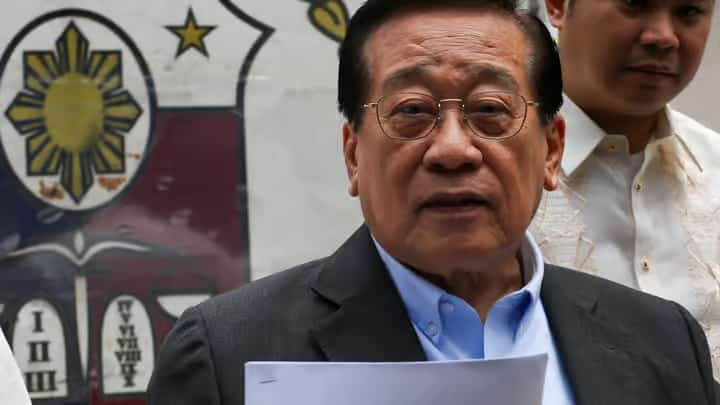
Veteran election lawyer Romulo Macalintal has asked the Supreme Court to reconsider its decision upholding the postponement of the barangay and Sangguniang Kabataan elections (BSKE) to November 2028, arguing that Congress cannot extend the tenure of incumbent officials without a fresh electoral mandate.
In a motion for partial reconsideration filed on 10 November, Macalintal urged the high court to declare unconstitutional the provisions of Republic Act 12326 that canceled the elections originally scheduled for 2 November 2026 and moved them to November 2028.
He proposed allowing Congress to retain its authority to set five-year terms for barangay and SK officials while directing the Commission on Elections (Comelec) to conduct the postponed polls at the earliest practicable date.
Under the proposal, the five-year term would apply to officials elected in the next BSKE, with subsequent regular elections held every five years.
Macalintal argued that Congress' authority to determine the length of an elected official's term does not include the power to extend the tenure of incumbents by canceling an election.
“Congress never delegated the power to choose who will govern a barangay. Congress cannot elect a punong barangay. It cannot reach the same result by statute, by declaring that the person the people chose for one period will also serve for another,” Macalintal said.
The lawyer maintained that the Supreme Court erred in treating the cancellation of the November 2026 elections as an incidental consequence of Congress' decision to establish five-year terms.
He argued that the postponement should have been evaluated under the guidelines established in the Supreme Court's 2023 ruling in Macalintal v. Comelec, which set standards for determining the validity of laws postponing elections.
According to Macalintal, those guidelines apply to any measure that delays elections, regardless of whether the postponement is its primary purpose or merely incidental to another legislative objective.
He also questioned the absence of compelling or justifiable reasons for moving the elections, saying the justifications cited by government respondents did not satisfy the standards established by the court.
Among the reasons he challenged were routine administrative duties, crime prevention, garbage collection, flood management, the oil crisis and conflicts in the Middle East.
Macalintal further argued that RA 12326 effectively grants incumbent officials additional years in office even though they were elected under laws providing for shorter terms.
He distinguished between an official's term of office, or the legally prescribed period for holding a position, and tenure, which refers to the actual period an official occupies that position.
The lawyer maintained that incumbent officials cannot claim an additional period in office without securing another mandate from voters.
He also questioned the law's constitutionality on the ground that its provision canceling the November 2026 elections was not reflected in its title, which refers to setting five-year terms for barangay and SK officials.
Macalintal described the election postponement provision as a prohibited legislative rider.
He argued that the five-year term could remain valid even if the provisions postponing the elections and extending the incumbents' stay in office were struck down.
The lawyer also requested oral arguments to examine whether Congress' authority to determine barangay officials' terms includes extending the tenure of incumbents and whether the postponement complied with the 2023 guidelines.
SC ruling
In its 14 October decision, written by then-Associate Justice and now Chief Justice Rodil Zalameda, the Supreme Court dismissed Macalintal's petition challenging RA 12326.
The court ruled that the law primarily establishes five-year terms for barangay and SK officials rather than postponing elections.
It held that adjusting the election calendar was incidental to Congress' authority to determine the length of those terms.
The court also found that the November 2028 election schedule was reasonable and did not violate voters' constitutional rights.
The ruling allows incumbent barangay and SK officials to remain in office under a holdover arrangement until their successors are elected and qualified.
Macalintal's motion seeks to overturn the portion of the decision sustaining the election postponement while preserving Congress' authority to establish five-year terms for future officials.