
Do disturb
Different countries. Different governments. Familiar problems. Students are leading. Workers are marching. Citizens are demanding answers.
Filipinos should be angrier. More aggressive. More disturbing. More willing to rattle the powerful and pound on the doors of institutions that refuse to listen.
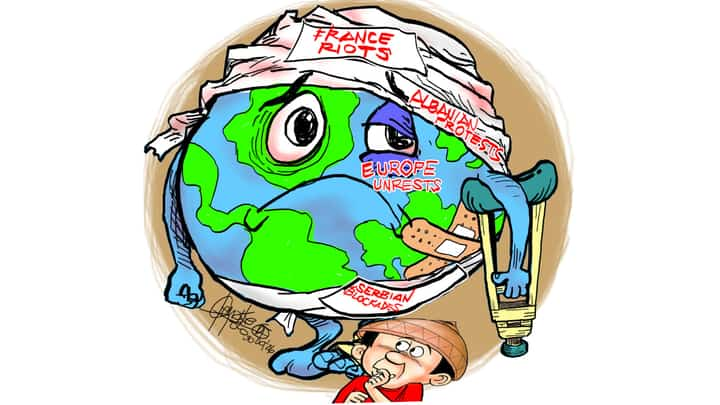
Across Europe, people are taking their anger to the streets. Some protests have turned vio lent; some have brought cities to a standstill. Behind the unrest is a familiar grievance: governments failing the people they are supposed to serve.
In France, students, teachers and parents have demanded better school conditions, more teachers and repairs to crumbling buildings, part of a broader wave of discontent over living costs and President Emmanuel Macron’s government.
In Serbia, a concrete canopy collapsed at the Novi Sad railway station in November 2024, killing 16 people. Grief turned into anger over corruption and infrastructure neglect. The student-led Students in Blockade movement turned campuses into centers of resistance, and two years later, President Aleksandar Vučić’s party was ousted.
In Albania, protesters have challenged Prime Minister Edi Rama’s government over corruption, rising costs and the concentration of political and economic power. Protests in Belgium, Italy, Portugal and Spain have exposed similar frustrations: unaffordable housing, stagnant wages and cuts to public services.
Different countries. Different governments. Familiar problems. Students are leading. Workers are marching. Citizens are demanding answers.
This is not about romanticizing Europe or subscribing to some colonial mentality that everything Western is better. It is about being pragmatic. Many of these countries have stronger economies and better-funded institutions than the Philippines. Yet their citizens are furious. They refuse to accept government failure as a part of life. They do not easily forget. And they have no intention of making those in power comfortable.
Filipinos are demanding better, too. But some let things pass, forget until the next scandal, or express outrage behind a screen with a furious Facebook post and a few hashtags. There is nothing wrong with digital activism, but outrage should not end with a post.
No bloodshed. No physical violence. But certainly, no silence. And let the young ones be fierce: relentless in criticizing the government, uncompromising in demanding accountability, fearless in expressing their opinions.
Education is not merely preparation for employment; it is preparation for citizenship. When it teaches students how institutions should function, they learn to recognize when those institutions fail. Why celebrate their intelligence but condemn their dissent?
In the Philippines, authorities have too often treated student dissent as a threat rather than a democratic freedom. The 2020 Anti-Terrorism Act raised concerns among lawyers and rights groups over its broad definition of terrorism and its chilling effect on legitimate dissent. Apparently, students yelling at uniformed personnel is more offensive than a public official killing innocents and plundering the people’s money.
Protests are not supposed to be convenient. They are supposed to be heard. Outrage must translate into collective action, peaceful demonstrations and sustained public pressure. Parents, let your children speak their minds, not only at the dining table but also in the streets.
To the government, universities and other institutions: make room for dissent. Protect peaceful assemblies. Stop treating young protesters as enemies. A government confident in its legitimacy should not be afraid of students carrying placards.
Because if the system is failing and failing and failing, then perhaps what this country needs is not more patience but more people willing to disturb the peace of those who benefit from its failures.
Disturb the comfortable. Comfort the disturbed.