
Ticking time bomb
If we want a future that avoids the fractures we are witnessing globally, we must first learn to look at our own misplaced patience.

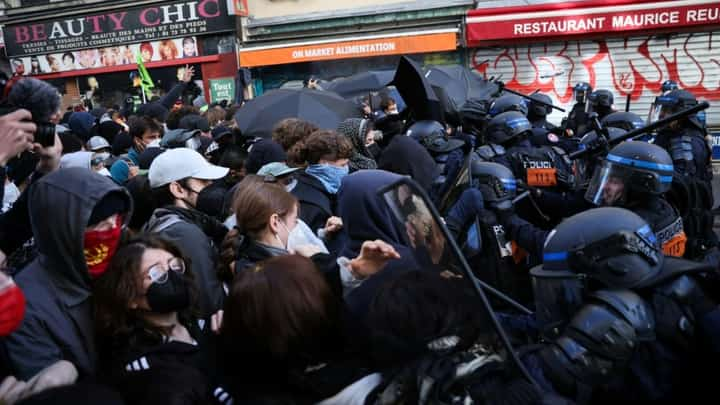
It is painful to look at, not just the burned remains of vehicles, the piles of bent and broken steel and glass, and the shattered facades of luxury stores, but the despair on the face of a Paris shop owner who told a news outlet: “A life of work gone in an instant.”
His place was wrecked. The floor was littered with the heedlessly destroyed remains of intense protesting that led to violence and massive looting. Trampled goods, spoiled food and surfaces black with soot. Cleaning up may take just days, but the stain of this recent violent unrest will stay for a long time.
The images present a jarring divide. On one side of the police barricades stand the facades of Paris’ most exclusive luxury houses — temples of gold, silk and leather where billions change hands under soft, amber lighting. On the other side stands the raw, venting anger of a populace crushed by the quiet, grinding violence of inflation.
When cost-of-living protests fracture into violence, it is rarely random that these pristine flagships become targets. They are more than just stores — they are towering, glittering symbols of an ever-widening chasm.
In times when everyday citizens feel they are running out of lifelines just to keep their homes livable and families fed, the glittering window displays of haute couture can feel less like national pride and more like provocation.
Yet, what is happening on the boulevards of Paris is not an isolated flashpoint.
The unmistakable throb of frustration has been breaking out from the streets of France, Italy, Spain, India, Madagascar and Nepal to our screens, giving us a front-row seat to youth-led mobilizations in various corners of the world. A generation is clearly telling us that the old social contract is broken.
Gen Z and younger populations, inheriting economies burdened by stagnant wages, housing crises and hyperinflation, are no longer content with quiet resignation. No more “it is what it is,” “c’est la vie.”
Whether they are marching against political corruption, legislative overreach, or the widening wealth gap, the message is universal: A system that protects luxury while starving security is fundamentally unsustainable.
This brings us back closer to home — to the stoic, daily resilience of the Philippine situation.
Here, the images look entirely different. There are no cobblestone streets of Paris or high-end European flagships smashed open in the dead of night. When ordinary Filipino families walk through local markets and watch their purchasing power evaporate over the price of basic commodities, or when typhoons wipe out years of hard work in a single afternoon, the reaction is rarely a riot in the streets.
Instead, we bear it. We stretch every peso, endure grueling commutes, watch our surroundings gather the grime of neglect, and rely on the “necessary” migration of family members looking for survival abroad.
Which leads us to a heavy, uncomfortable truth that seems to be gaining ground in cafe talk and social media comments: we are not angry enough.
In a society where billions vanish into questionable budget insertions and systemic anomalies while public hospitals lack basic medicines and families struggle to pay for specialized care, our default setting remains astoundingly at patience.
We smile through adversity, weaponize our resilience, and turn endurance into a national art form. But resilience, when pushed too far, stops being a virtue and becomes a cage. It cushions the blow for a system that counts on our tolerance to keep functioning.
The shattered glass in Paris is a symptom of a society boiling over. But the terrifying alternative — a society that absorbs every indignity without a spark of outrage — is its own kind of quiet disaster.
If we want a future that avoids the fractures we are witnessing globally, we must first learn to look at our own misplaced patience. True security doesn’t come from a population that suffers in silence, but from a people who realize they are worth fighting for — long before the breaking point is reached.