
Superficial bishops
Astonishingly, the bishops urged the military to refrain from undertaking destabilizing moves against President Ferdinand Marcos Jr. amid calls for his resignation.
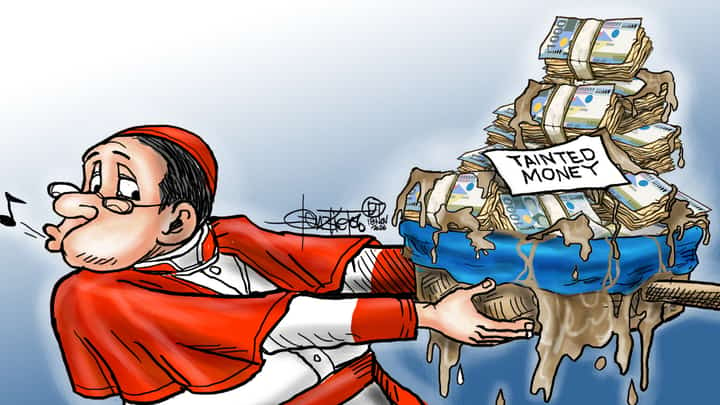
Many, including members of the clergy themselves, have criticized what they see as the Catholic Church’s muted response to the corruption scandal gripping the nation.
The rot’s consequences are borne most heavily by the poor, as the economy slowed to just 2.1 percent growth in the third quarter.
In September and October 2025, bishops issued some of their strongest public statements condemning what they described as the brazen plunder of public funds through flood control projects.
The alleged scheme, estimated to have involved as much as P1 trillion since the start of the Marcos administration in 2022, implicated government officials in what has become one of the country’s biggest corruption scandals.
Cardinal Pablo Virgilio David stood before the Trillion Peso March crowd at EDSA on 21 September 2025 to denounce the culture of corruption in government.
After that, the faithful expected a follow-through regarding names, deadlines and an honest accounting of what the Church itself accepted.
The tone dropped sharply after former Ako Bicol Rep. Zaldy Co revealed tainted money in parish projects.
In 2026, the Church’s agenda was redirected to the impeachment of Vice President Sara Duterte, a critique of political dynasties and elections, with flood control as only one item among many.
The Catholic Bishops’ Conference of the Philippines (CBCP) issued in September 2025 a pastoral letter, “Beyond Survival,” questioning how credible the Senate and House inquiries could be when their own members were implicated, and demanded an independent probe, criminal charges and the restitution of stolen funds while adding that the shame must reach legislators, district engineers, auditors and political patrons, not only contractors.
The shame being demanded then boomeranged, as those in the Church hierarchy admitted accepting donations from those who appropriated the yearly budget.
The bishops then conceded, erring “by silence, by tolerating corruption in our own ranks.”
In November 2025, the tone softened further. The Church hierarchy warned against the “political exploitation” of Co’s allegations, adding that social media claims could not replace testimony in proper legal venues.
Astonishingly, the bishops urged the military to refrain from undertaking destabilizing moves against President Ferdinand Marcos Jr. amid calls for his resignation.
The baffling call to the military came six weeks after a statement warning against cover-ups and after the most explosive claims linking government leaders.
On 20 December, David urged Catholics implicated in the scandal to confess, cooperate and make restitution.
Links between the bishops and the Floodgate mafia became apparent when a marble marker at a new church in Bachawan, San Agustin, Romblon, expressed gratitude to donors, including lawmakers and contractors who were prominent figures in the racket that stole public funds.
Bishop Narciso Abellana of Romblon said the donations came before the scandal broke, which did not absolve the clerics of accepting corrupt money or even extolling the thieves.
After the lid was blown open, a parish in Obando, Bulacan, returned a pickup truck donated in September 2025 by dismissed Department of Public Works and Highways engineer Henry Alcantara, who had turned state witness.
On 30 October, the CBCP doctrine commission published guidance on Church institutions’ need to return donations from morally compromised sources and to publicly apologize. Buildings that could not be returned may stay if put to public or reparative use.
At a January plenary, the bishops said they were open to a dialogue with President Marcos, disappointing rights activists who urged them to confront the corruption more directly.
The sharpest language of 2026 was reserved, however, for the impeachment trial. On 12 May, a day after the House voted 257 to 25 to impeach Vice President Sara Duterte, the CBCP urged the Senate to convene as an impeachment court without delay.
A week later, Archbishop Alberto Uy of Cebu appealed to Marcos to pursue the flood control investigation “without favoritism” and asked fellow bishops to be just as strong on it as they had been on impeachment.
He noted the conference’s flood control statement was dated back in 2025 and nothing substantial had followed.
By late August, bishops’ remarks were unrecognizable in condemning corruption in the Marcos administration; instead, they tackled flooding centered on climate and forest protection, with general appeals against profiting from public projects.
The most startling revelation came in June, when former Marine Joely Cadiao claimed he delivered money to Fr. Flaviano “Flavie” Villanueva. Cubao Bishop Elias Ayuban called the claim disinformation, and Cardinal David vouched for Villanueva’s integrity.
The Romblon parish funding controversy offered one of the clearest documented examples of how donations from personalities later linked to the Floodgate probe exposed the Catholic Church to uncomfortable scrutiny and apparent internal divisions.
The group Clergy for Good Governance has urged cardinals, bishops and priests to “cut ties with political dynasties” and reject patronage money from individuals implicated in Floodgate and other corruption scandals.
An estimated 80 percent of the Philippine population is Roman Catholic, yet fewer than 40 percent attend Sunday Mass.
The widening disconnect between religious affiliation and church attendance raises troubling questions about the institution’s moral authority, particularly as allegations of hypocrisy and political accommodation reach the pulpit.