
Marcos, budget gang face justice
No one’s getting away from this. Former Speaker Martin Romualdez can’t find any excuse because they designed the UA’s expansion. Now, the President’s signing of it ended up being unconstitutional, so maybe (he could be accountable.)

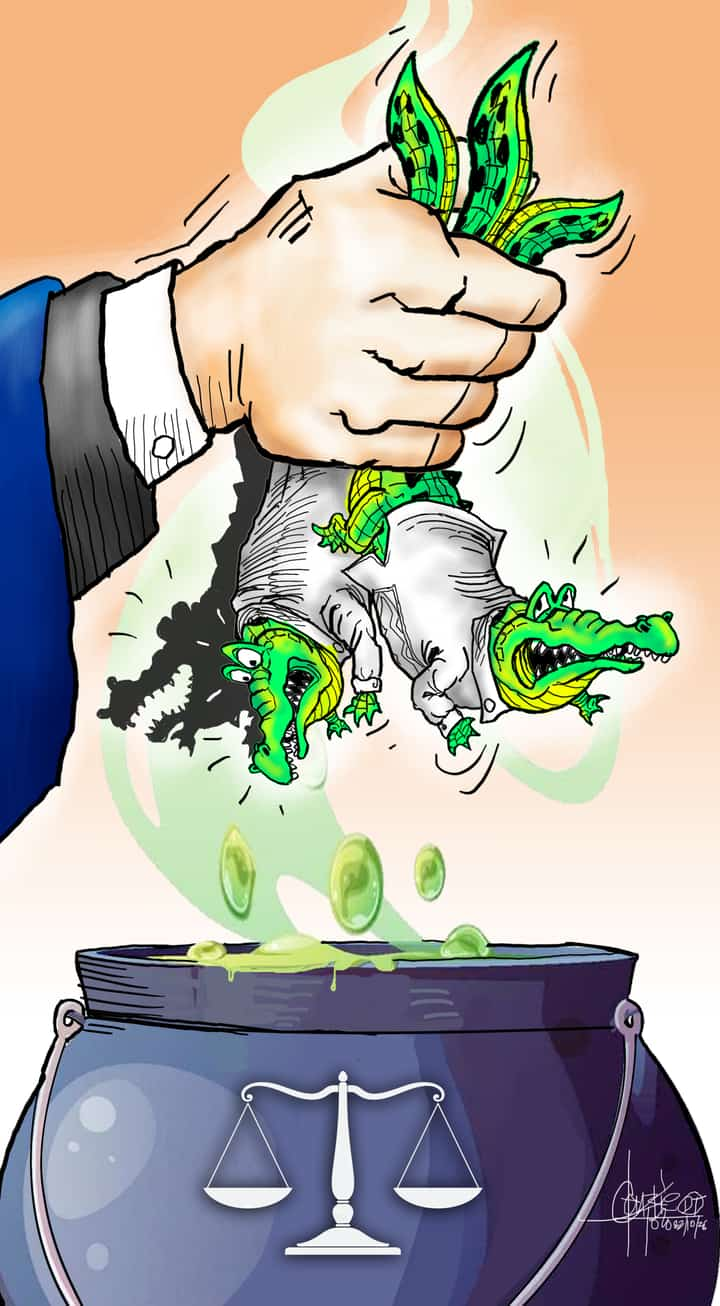
The Palace is desperately seeking to preempt the backlash against President Ferdinand Marcos Jr., whose survey numbers have plunged to dismal levels, by asking the Supreme Court (SC) to reconsider its decision voiding the 2024 and 2025 national budgets, which appeared to have been manipulated for the pork barrel.
Malacañang said Solicitor General Darlene Berberabe will appeal the recent Supreme Court decision that declared the 2024 and 2025 General Appropriations Acts (GAA) and certain provisions in the 2026 budget unconstitutional.
Palace Press Officer Claire Castro issued a pathetic statement that said Malacañang “respectfully” accepts the SC decision but still contests it.
Castro expressed confidence that Marcos will not be held liable since he did not violate any laws regarding the use of the Unprogrammed Appropriations (UA) in the budgets, as he merely complied with and implemented the law.
Another SC decision ordering the return of the P30 billion surrendered to the National Treasury by the Philippine Health Insurance Corp., however, junked a “special provision” in the 2024 GAA that allowed the “fund balance” of government-owned or controlled corporations (GOCCs) to trigger a new source of financing for the UA.
It told the Department of Finance (DoF) to issue implementing guidelines within 15 days. The DoF circular that followed mandated transferring PhilHealth’s fund balance of P89.9 billion to the National Treasury.
The High Court declared both the Special Provision 1(d) in the budget law and the DoF circular unconstitutional.
Navotas Representative Toby Tiangco, who was among the first to challenge the use of the UA to insert pork barrel projects in the budget, said the President could be held liable.
“No one’s getting away from this. Former Speaker Martin Romualdez can’t find any excuse because they designed the UA’s expansion. Now, the President’s signing of it ended up being unconstitutional, so maybe (he could be accountable).”
Even the fine print in the recent SC decision pointed to some form of reckoning for the President.
As in its ruling that voided the methods used to create the Disbursement Acceleration Program, the Supreme Court applied the doctrine of operative fact when it struck down the 2024 and 2025 budgets as unconstitutional.
The canon recognizes that, before being declared unconstitutional, a law or executive act is an “operative fact” that produces consequences that “cannot always be erased, ignored, or disregarded.”
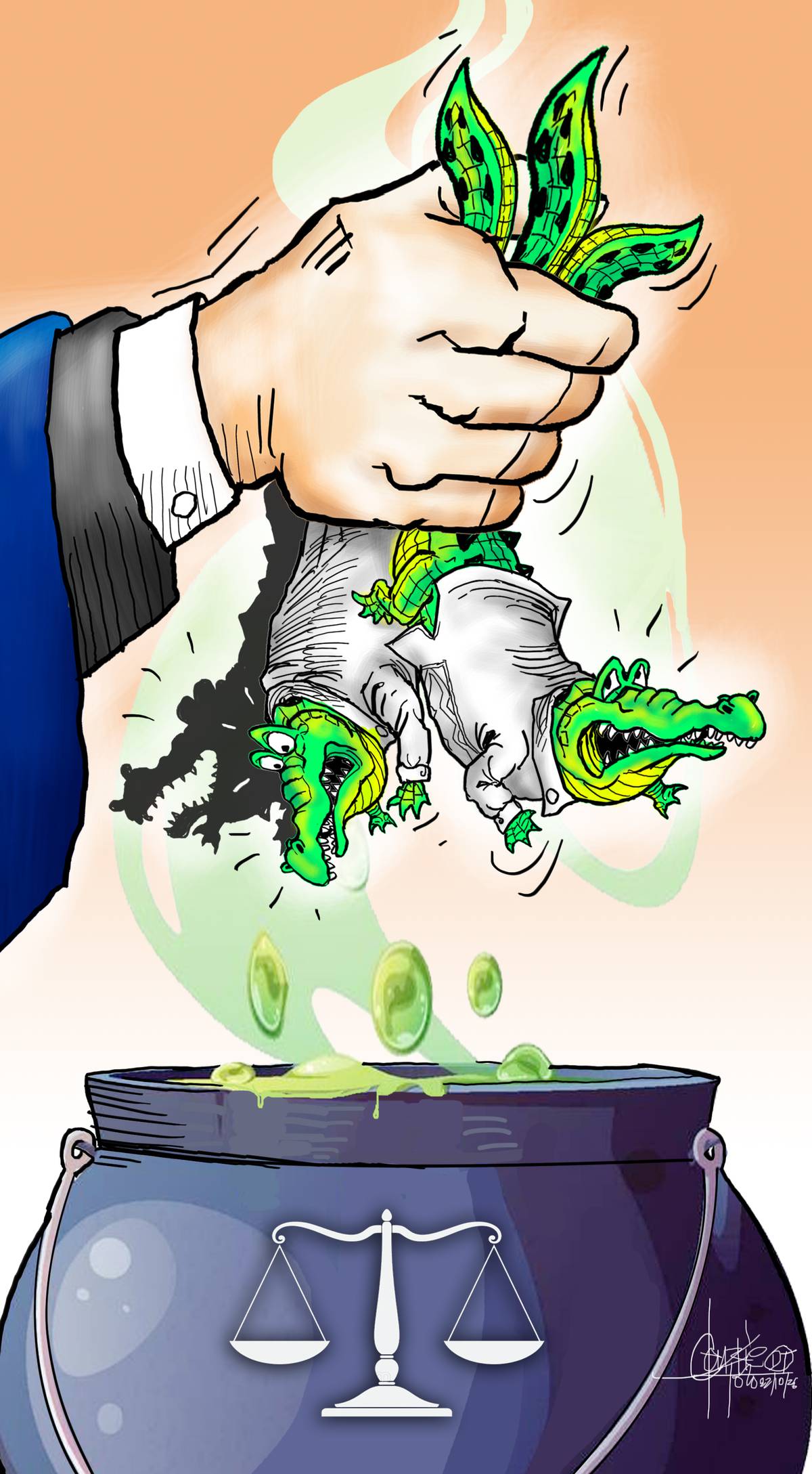
In short, it nullifies the voided act but sustains its effects. It rests on “equity and fair play,” not on any validation of the act itself.
The ruling initially appeared to wipe the slate clean for those who manipulated the public funds. However, its final substantive section suggests that those who tampered with the budget could still face accountability, leaving the door open for further legal action.
The UA in the 2024 GAA, the special accounts, and the Special Road Fund under the 2025 GAA have been disbursed. Unwinding them, the Court reasoned, would punish the public for the political branches’ sins.
The SC decision drew the line by saying that operative fact applied only to programs, activities and projects that could no longer be undone, “provided the beneficiaries acted in good faith based on the presumed validity” of the void provisions.
The protection, the Court said, “does not extend to the authors, proponents and implementors” of those laws. They “remain subject to criminal, civil and administrative liability unless the proper tribunals explicitly find that they acted in good faith.”
Thus, the High Tribunal laid down the conditions under which those who conspired to misappropriate the budget could still be held accountable, denying them refuge in the ruling.
Good faith is not presumed for the officials. It must be found “explicitly” by a tribunal. Silence, delay, or a lapsed investigation is not clearance; it means the SC’s default exposes, not immunizes.
The way the UA was used, according to former Finance Secretary Gary Teves, does not reflect regularity or good faith.
He described the UA in yesterday’s Straight Talk interview as akin to a company’s contingency fund, which should be tapped only when revenues exceed expectations or additional funding becomes available.
“I thought that principle was pragmatic or practical, except from 2023 to 2026 the program became so large. And one of the reasons is Congress tried to really move a lot of the programmed to unprogrammed funds and inserted their own pet projects. So there has to be some discipline associated with the budgetary process,” he said.
It all boils down to President Marcos’ resignation as the only way his administration can demonstrate good faith and restore public confidence in its handling of the national budget.