
This toothbrush grows into a tree
‘We really want to create economic opportunities for marginalized people.’
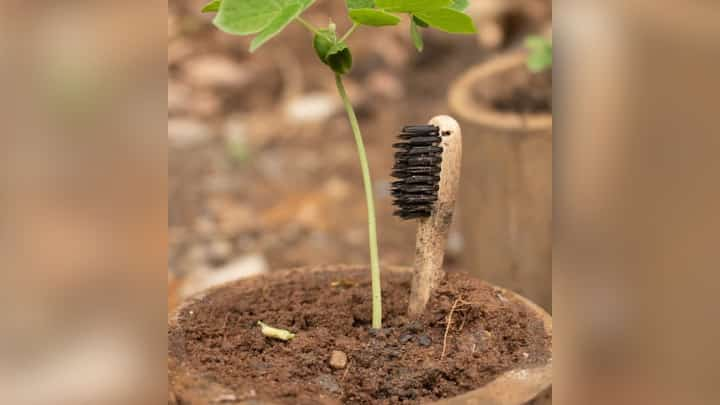
On the final day of the Sustainability Solutions Exchange 2026, held from 15 to 17 October October at the Philippine Trade Training Center in Pasay City, a plantable bamboo toothbrush won the top prize in the event’s pitching competition.
The product of Philippine social enterprise Bambuhay took the spotlight at the exhibition of circular-economy solutions organized by the Center for International Trade Expositions and Missions.
Beyond supporting dental hygiene, the toothbrush offers a more sustainable alternative to conventional plastic toothbrushes. After about three months of use — the period recommended for replacing toothbrushes — users can plant its bamboo handle in soil, where an embedded seed can grow into a native tree or bamboo plant.
The toothbrush is produced with the participation of indigenous peoples in Nueva Ecija, including members of the Bugkalot, Dinagat and Igorot communities.
Bambuhay founder and chief executive Mark Sultan Gersava, who pitched the product, said the company will next participate in SDG Asia 2027 in Taiwan, which will showcase sustainable-development initiatives from across Asia.
Aside from the plantable bamboo toothbrush, Bambuhay produces bamboo straws, its first product and an alternative to plastic drinking straws. It also makes an earlier, non-plantable bamboo toothbrush.
The difference between the two toothbrushes is that the plantable version’s bamboo handle is embedded with seeds of narra, acacia, alibangbang, mamalis, pine, wild berry, or bamboo. Once the bristles wear out, users can plant the handle to help support local reforestation.
Gersava said he developed the bamboo straw and toothbrush to help reduce the Philippines’ plastic waste and to promote tree-planting and reforestation.
Bambuhay’s production facility is in Barangay Joson, Dig-dig, Carranglan, Nueva Ecija. It sources bamboo from the nearby Talavera Watershed Forest Reserve and produces bamboo straws, toothbrushes, and other eco-friendly products there. Members of the Bugkalot, Dinagat and Igorot communities help make the toothbrushes and straws to earn a living.
“We really want to create economic opportunities for marginalized people who are left behind by modernization,” Gersava said.
Bambuhay supplies its products to select hotels and shopping malls in the Philippines and has begun shipping to Brunei, according to Gersava. He added that the company’s bamboo products are being tested in Canada, Europe, and the United Kingdom in preparation for possible exports to those markets.