
Rice inflation soars to 26.3% for Lucena's poorest
PSA data show low-income households in Lucena City and Quezon province facing higher food prices in September.
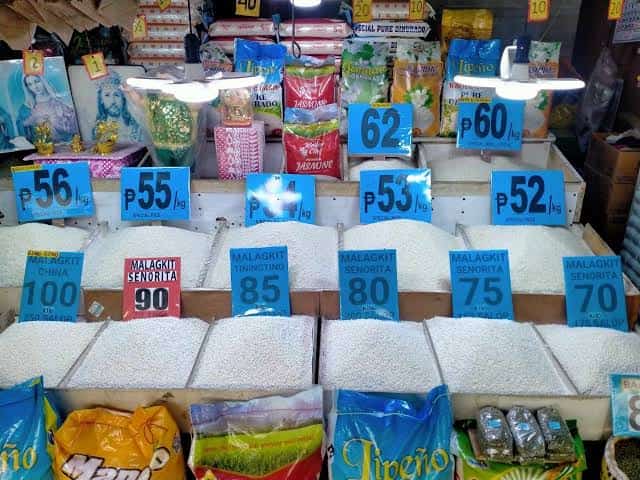
FILE PHOTO — Different varieties of rice are displayed at a market stall, with posted prices ranging from ₱52 to ₱100 per kilogram. Philippine Statistics Authority data show rice inflation among the bottom 30 percent of income households reached 26.3 percent in Lucena City and 25.3 percent in Quezon province in September 2026.
LUCENA CITY, Quezon — Rice inflation among the poorest households in Lucena City reached 26.3 percent in September 2026, exceeding the 25.3 percent recorded in Quezon province, according to separate reports released Friday, 16 October, by the Philippine Statistics Authority (PSA).
The figures highlight mounting pressure on low-income families as rising rice and other food prices continue to drive inflation across the province.
In Lucena City, rice inflation among the bottom 30 percent of income households accelerated from 21.5 percent in August to 26.3 percent in September.
Quezon province registered a similar increase, with rice inflation rising from 20.8 percent to 25.3 percent during the same period.
The increases contributed to higher food inflation in both areas, with Lucena recording 9.8 percent in September, up from 8.3 percent in August.
Quezon province posted food inflation of 8.6 percent, compared with 5.3 percent in the previous month.
Overall inflation among the bottom 30 percent of income households in Lucena increased to 7.4 percent from 7.2 percent in August.
In Quezon province, inflation for the same income group rose more sharply to 7.8 percent from 6.4 percent.
The PSA identified rice and vegetables among the principal contributors to the acceleration in food inflation.
In Lucena, inflation for vegetables, tubers, plantains, cooking bananas and pulses increased to 6.5 percent in September from negative 6.8 percent in August.
Corn inflation also accelerated to 26.1 percent from 17.3 percent, while inflation for fruits and nuts reached 23.3 percent.
Meanwhile, Quezon province recorded vegetable inflation of 1.4 percent, reversing the 13.7 percent annual decline registered in August.
Corn inflation in the province increased to 11.1 percent from 6.4 percent.
The latest figures also reveal that low-income households experienced greater overall price pressures than the general population.
Lucena’s headline inflation for all income households stood at 5.7 percent in September, compared with 7.4 percent among the bottom 30 percent.
The disparity underscores the greater burden of rising prices on families whose budgets are heavily concentrated on food and other basic necessities.
At the national level, inflation among the bottom 30 percent of income households reached 9 percent in September, up from 8.2 percent in August.
National rice inflation for the same income group stood at 23.6 percent, lower than the rates recorded in both Lucena and Quezon province.
The PSA figures represent year-on-year changes in consumer prices and do not indicate that rice prices increased by the same percentages within September alone.
The reports were issued by PSA Quezon under Officer-in-Charge Normita D. Pagkatipunan.
The latest data underscore the continuing challenge of protecting the purchasing power of low-income households as food prices rise.