
Philippines tightens border security after drug shipments intercepted in Laos, Thailand

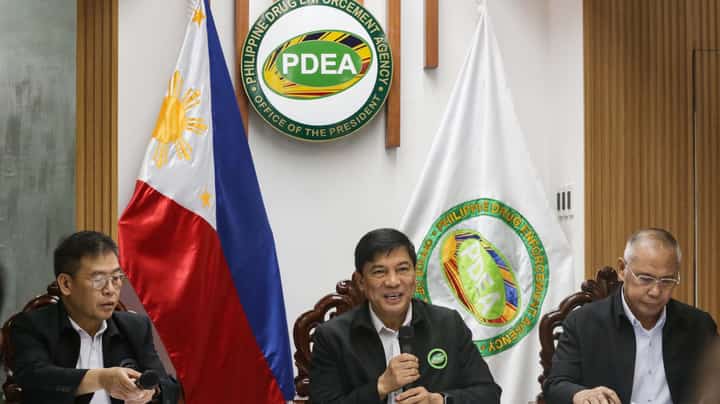
Philippine authorities are investigating possible links between domestic drug syndicates and illegal drug shipments intercepted in Laos and Thailand that were reportedly bound for the Philippines.
Officials from several government agencies met on 14 October at the Philippine Center on Transnational Crime (PCTC) headquarters in Camp Crame, Quezon City, to assess the shipments, identify potential security vulnerabilities and strengthen border controls.
The meeting was led by PCTC Executive Director Undersecretary Romeo Prestoza, Philippine Drug Enforcement Agency (PDEA) Director General Undersecretary Isagani Nerez and Presidential Anti-Organized Crime Commission (PAOCC) Executive Director Undersecretary Benjamin Acorda Jr.
Representatives from the Bureau of Immigration, Philippine National Police-Aviation Security Group and Civil Aviation Authority of the Philippines also attended.
Discussions focused on intelligence-sharing with international counterparts, possible connections to local drug syndicates and measures to prevent illegal drug trafficking through Philippine ports and airports.
Authorities agreed to examine the immigration status, travel history and cross-border movements of individuals potentially linked to the intercepted shipments.
Civil aviation records, including aircraft details, flight manifests, passenger information, flight plans and airport movements, will also be reviewed to determine whether Philippine aviation facilities were involved.
Acorda said the investigation would help identify security gaps and establish possible connections between foreign trafficking networks and domestic criminal groups.
“The intercepted illegal drug shipments are not merely an isolated law enforcement matter. It is a test of the country’s capacity to secure its borders and protect its community from exploitation by transnational and organized criminal groups. A whole-of-government approach is a vital instrument in safeguarding national security. Through government unified efforts, we can strengthen our border security,” Acorda said.
He warned that the government would not allow foreign or domestic criminal networks to use the Philippines as a destination or transit point for illegal drugs.
The participating agencies pledged to pursue all leads connected to the intercepted shipments and hold accountable anyone found to have participated in or facilitated the trafficking operations, including government personnel.
Acorda said the PAOCC would continue strengthening cooperation with local and international law enforcement agencies to combat transnational drug trafficking and organized crime.