
Cagayan Valley ramps up ube production for export markets

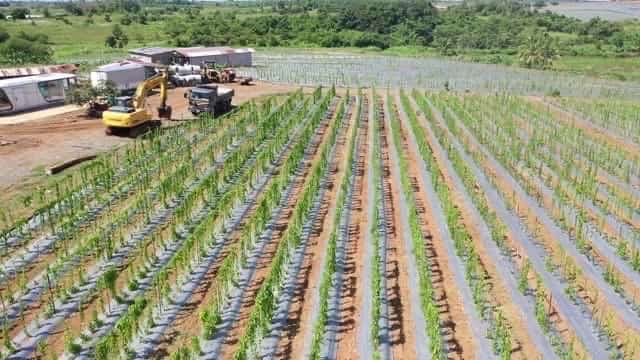
The Department of Agriculture (DA) is expanding ube production in Cagayan Valley, targeting 500 hectares of cultivation by 2028 as it seeks to meet rising international demand and create more export opportunities for Filipino farmers.
In Echague, Isabela, the DA Regional Field Office II is working with the municipal government, farmer cooperatives, private investors and potential institutional buyers to increase production and establish stronger market connections.
Agriculture Secretary Francisco P. Tiu Laurel said cooperation among government agencies, local governments and private businesses is essential to building a competitive ube industry.
“By combining the DA’s technical expertise and production support with the LGUs’ capacity to mobilize farmers, identify suitable areas, and provide local support, we can accelerate expansion, respond to growing global demand, and develop a bigger export market that will translate into higher and more sustainable incomes for our farmers,” Tiu Laurel said.
As of 7 October, the DA had allocated P3.7 million to produce 420,000 ube setts weighing about 100 grams each through six research centers and stations. Of these, 211,180 had been delivered to Echague, while the remaining 208,820 were expected to follow.
The initiative is intended to support an additional 70 hectares requiring 1.4 million more setts. The DA aims to meet the requirement by December through increased propagation and supplemental sourcing.
The region is also developing its processing capacity. A facility at Quirino State University, funded by the DA-Bureau of Agricultural Research, serves as a shared learning and technology business incubation center where ube powder quality is evaluated for export.
The facility has produced samples that met Japan’s quality requirements, with marketing assistance from the Department of Trade and Industry.
Cagayan Valley Regional Executive Director Rose Mary G. Aquino said the region had laid the groundwork for ube production and exports two years before the crop gained global popularity.
The initial target is to cultivate 100 hectares in Isabela before expanding to 500 hectares by 2028. Small farmers are also being linked with private investors to help secure market outlets.
Meanwhile, Korean investors from Carnot Fleet, together with DA RFO II and the Echague local government, assessed Simon’s Farm on 1 October to identify development requirements.
Discussions with the Agricultural Credit Policy Council also covered potential support for cold storage, mechanization, automated irrigation, consolidation facilities, processing and carbon-credit opportunities, subject to further assessment.
The DA said production expansion must be matched with dependable markets, infrastructure and processing capacity to turn global demand into sustainable income for farmers.